Grow Something That Feeds You
Right now, in the middle of August, is probably the best week of the year to eat a tomato. It’s also one of the best weeks of the year to think about next year’s tomato — and about more than tomatoes.
That’s a strange thing to say in the middle of harvest. But the gardens that keep producing well, year after year, usually aren’t the ones planned in a rush each spring. They’re the ones where a few quiet decisions get made in August, while everything else is still ripening.
We came across a piece recently from Arthur’s Point Farm, a plant nursery over in Ghent, New York, that put words to something we think about a lot. It’s easy to feel powerless about the state of things — the food system, the climate, the slow erosion of the natural world.
The scale of it can make a single yard feel pointless. But the piece made an argument we believe: the answer isn’t despair, and it isn’t waiting for someone else to fix it. It’s participation. One planting, then another.
It doesn’t have to look like a farm — it can look like your own yard.
That’s the idea behind edible landscaping — growing food on plants that also earn their place in an ordinary yard. A blueberry bush that turns scarlet in October. A serviceberry tree that flowers in spring and fruits by June. A rhubarb plant with leaves the size of umbrellas. You don’t need a vegetable garden to grow real food. You need a few well-chosen plants and the patience to let them do their work.
Two things are worth doing this week if that idea appeals to you: what to do with the beds you already have, and what to plant next.
If you have a garden bed emptying out, cover crop it.
We cover almost every bed on this farm at the end of the season. We push our own harvest late into fall using season extension, so by the time a bed opens up, we’ve only got a short window to get something established before frost. We manage to cover crop about a quarter of our beds each year. The rest get mulched with hay we cut ourselves, or tarped if they’re first in line for spring planting.
Here’s what we’ve noticed after nearly twenty years of building this soil: the beds that get cover cropped grow the healthiest crops. Our soil is healthy across the whole farm at this point, so the difference is subtle. But the plants in those beds seem a little more resistant to disease, a little more vital.
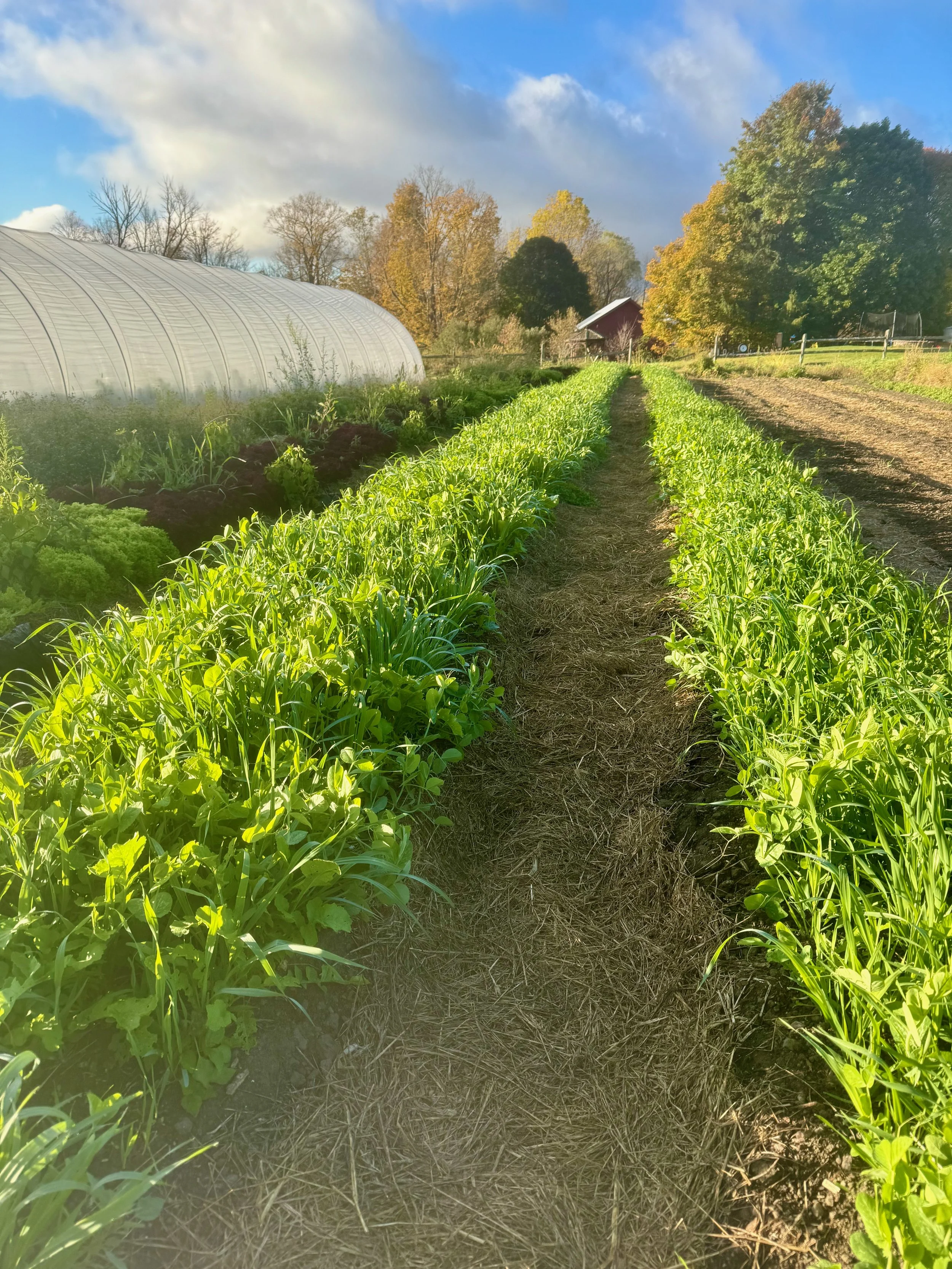
A cover crop of oats, field peas, and radishes on our Fall beds.
Across studies, cover cropping has shown up as one of the few practices with a measurable, if modest, positive effect on nutrient density in vegetables and fruit.
If you’ve got an empty bed at home, you’re right at the edge of the window. Past the third week of September, it’s largely too late to get a cover crop established before hard frost. If you plant this week, you’ve still got time for a fast crop of greens or radishes, but if you want to protect that soil over winter, this is the week to decide to put in a cover crop.
You’ve got two honest options. Winter rye germinates fast, puts on a little growth before going dormant, then wakes up again in early spring to keep protecting your soil until you’re ready to plant.
The tradeoff: you’ll need to mow or till it under before it goes to seed, and most guidance recommends waiting two to three weeks after that before planting your first crop, since the decomposing rye ties up nitrogen the new planting needs.
That’s a real delay to your spring schedule. Oats and field peas are simpler. They grow fast, then winter-kill on their own once it turns cold, leaving a bed that requires only a light raking to be plantable the moment the ground is workable in spring. No mowing, no tilling, no waiting.
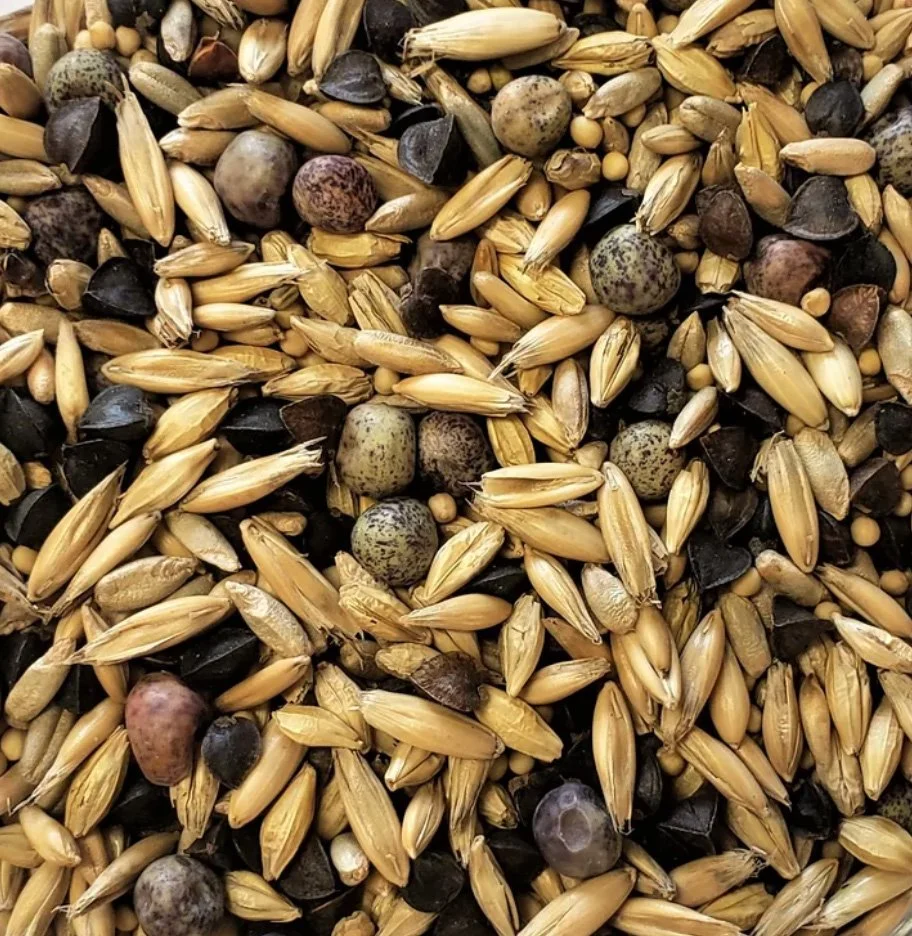
A cover crop mix: oats, field peas, buckwheat and radish seeds
Nothing in nature grows as a single species. A two-species mix, like oats and peas, feeds a wider range of soil microbes than either one alone. Farms sometimes go further and plant complex, multi-species blends, but the research on exactly how many species is ideal is still thin. For a home garden, going from one species to two is the meaningful step.
Johnny’s Selected Seeds and High Mowing Seeds both sell cover crop seed in home-garden quantities. Covering more ground? Sustain Seed + Soil sells in bulk.
If you’ve been meaning to plant something that feeds you for years, start planning now. Plant in spring.
Fall is nursery-ordering season. It just isn’t nursery-planting season, not for most of what people actually want to grow. Bare-root fruit trees, berry bushes, asparagus, rhubarb — nearly all of it does better going into the ground in spring here in Zone 5. Plant a bare-root tree in October and you’re asking its roots to survive a Berkshire winter before they’ve had a season to settle in.
What fall is good for is deciding what you want and getting your order in before the good varieties sell out. Here’s a rough order of difficulty, easiest first.
Berries come easiest. Blueberries and raspberries are about as forgiving as edible perennials get: compact, no trellis needed to start, tolerant of a range of conditions. Blueberries do want acidic soil, so it’s worth testing yours before you plant.
Rhubarb and asparagus ask for more patience. Both are one-time investments that pay off for fifteen years or more, but neither gives you much right away — no harvest the first year, a little by the second, a real crop by year three.
Fruit trees take the most planning. They need the right sun, the right space, sometimes a second tree nearby for pollination. But a well-sited apple or pear will outlive most of what else you plant this year.
For a regional plant list, Edible Berkshires put together a solid rundown of what does well here: American hazelnut, beach plum, black chokeberry, highbush cranberry, juneberry, paw paw. All cold-hardy, all low-maintenance once established.
For the plants themselves, Arthur’s Point Farm in Ghent grows native and edible trees and shrubs suited to our climate. Closer to home, Ward’s Nursery in Great Barrington carries native perennials and can special-order what they don’t stock. For a wider selection by mail, Stark Bro’s, EdibleLandscaping.com, and Fedco all ship bare-root stock timed for spring planting. (For a treat, order the Fedco catalog—once you see it, you’ll know what I mean.)
Next August, there’s a decent chance you’re eating a better tomato because of what you do this week. Not because of anything dramatic. Just a bag of oat and pea seed in an empty bed, or an order placed with a nursery before the good varieties sell out.