
A Helping Hand from Nature: The Wasp That Does Our Dirty Work
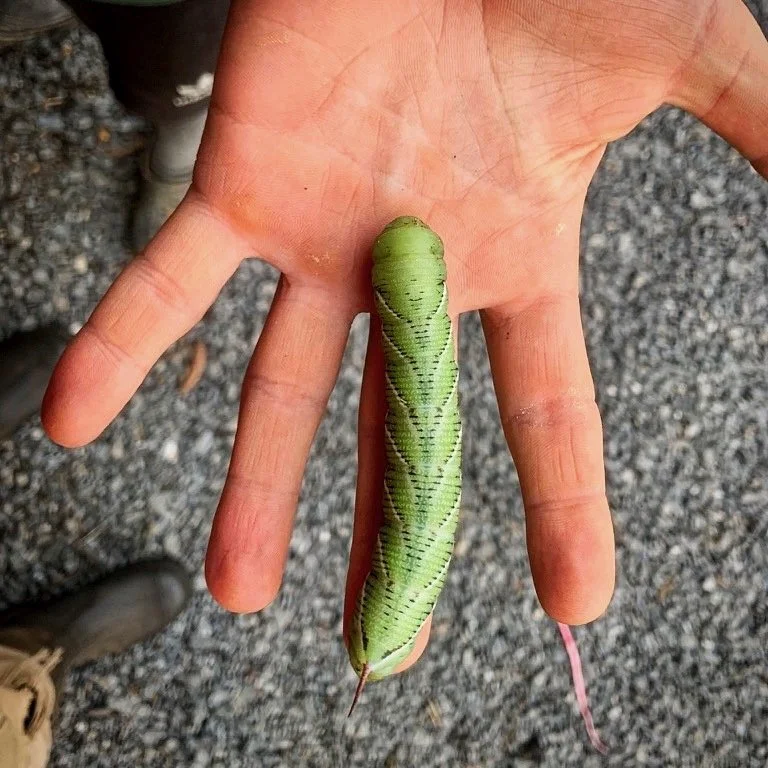
A tomato hornworm: green, banded and about to ruin a tomato plant.
Nothing grosses me out. I’ve slaughtered chickens and turkeys, had my arms inside a cow up to the shoulder trying to pull a calf, picked up piles of pig intestines with my bare hands after processing. None of it bothers me.
Squishing a tomato hornworm does.
They’re out in abundance in the tomato rows right now — thick, green, the length of a finger, and when you press one under a boot it doesn’t crunch. It gushes. I do it anyway, because a hornworm can strip a tomato plant bare in a couple of days, and there are a lot of them this year.
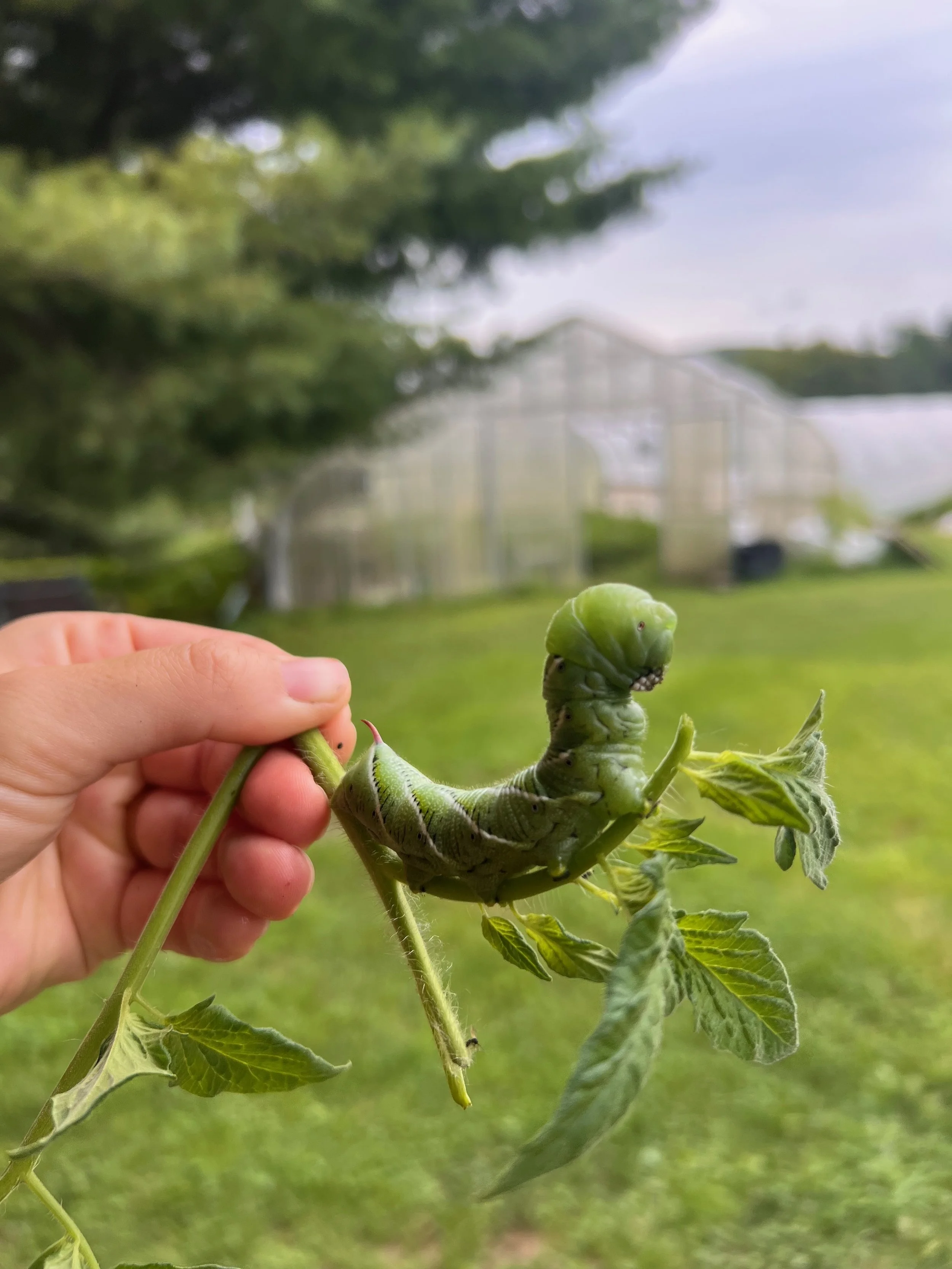
Caught mid-meal on a tomato plant this week.
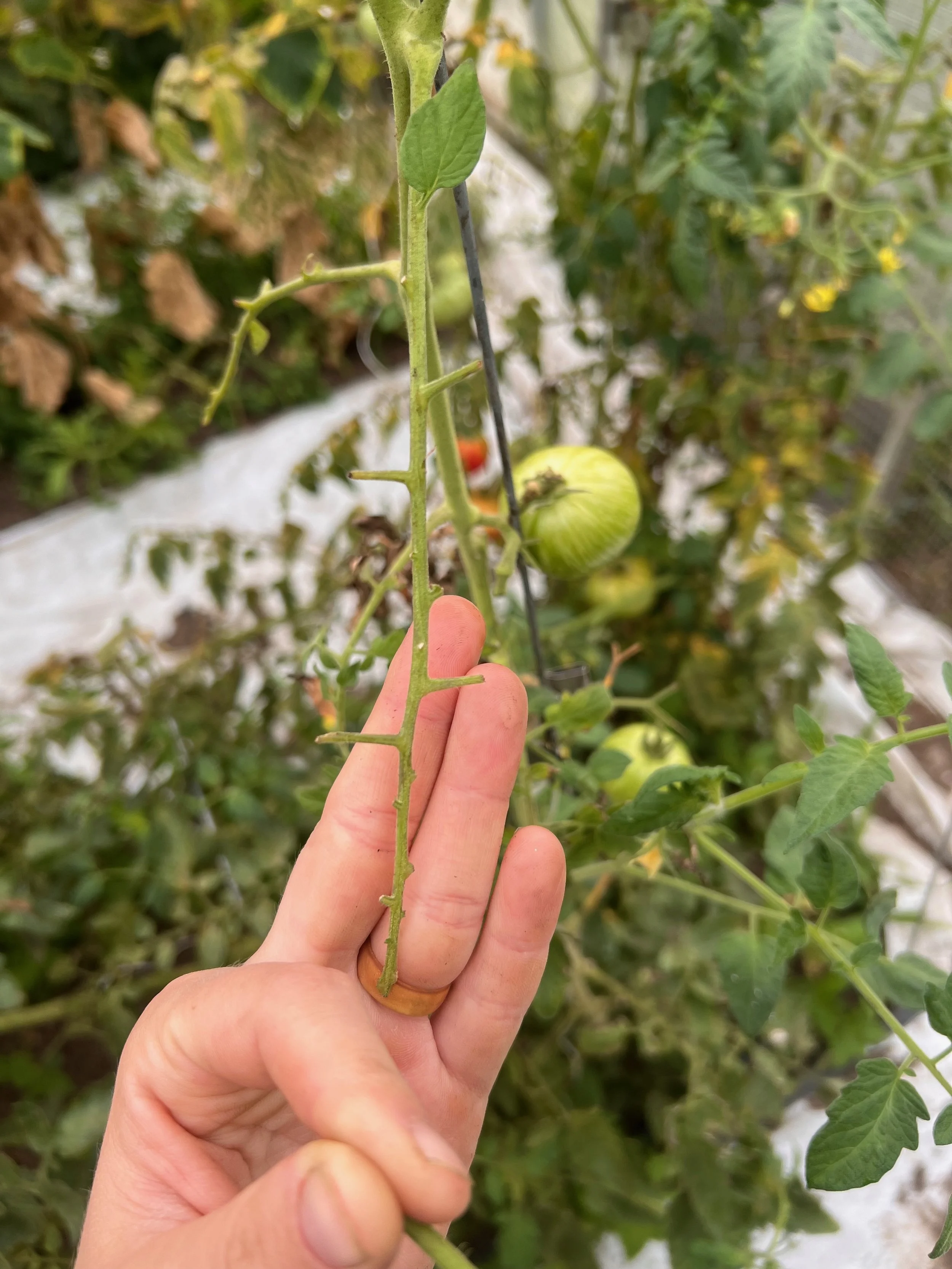
This is one hornworm’s worth of damage. Not from the whole season, from one caterpillar in a day or two.
But I don’t do most of the killing. That job belongs to something I can barely see.
Her name is Cotesia congregata. She doesn’t have a common name, which seems like an oversight for an insect this important to a tomato farmer. She’s a wasp, black, about the size of a gnat, and she spends her short life finding hornworms and climbing onto their backs.
Then she goes to work. Using her ovipositor, a needle-thin egg-laying tube, she injects a hornworm with somewhere between fifty and a hundred eggs, along with a virus that shuts down the caterpillar’s immune system so it can’t fight back. The eggs hatch inside the hornworm and the larvae eat it from the inside for about two weeks, carefully avoiding the organs that would kill it too soon. When they’re done, they chew their way out and spin small white cocoons along the hornworm’s back until it looks like it’s studded with grains of rice.
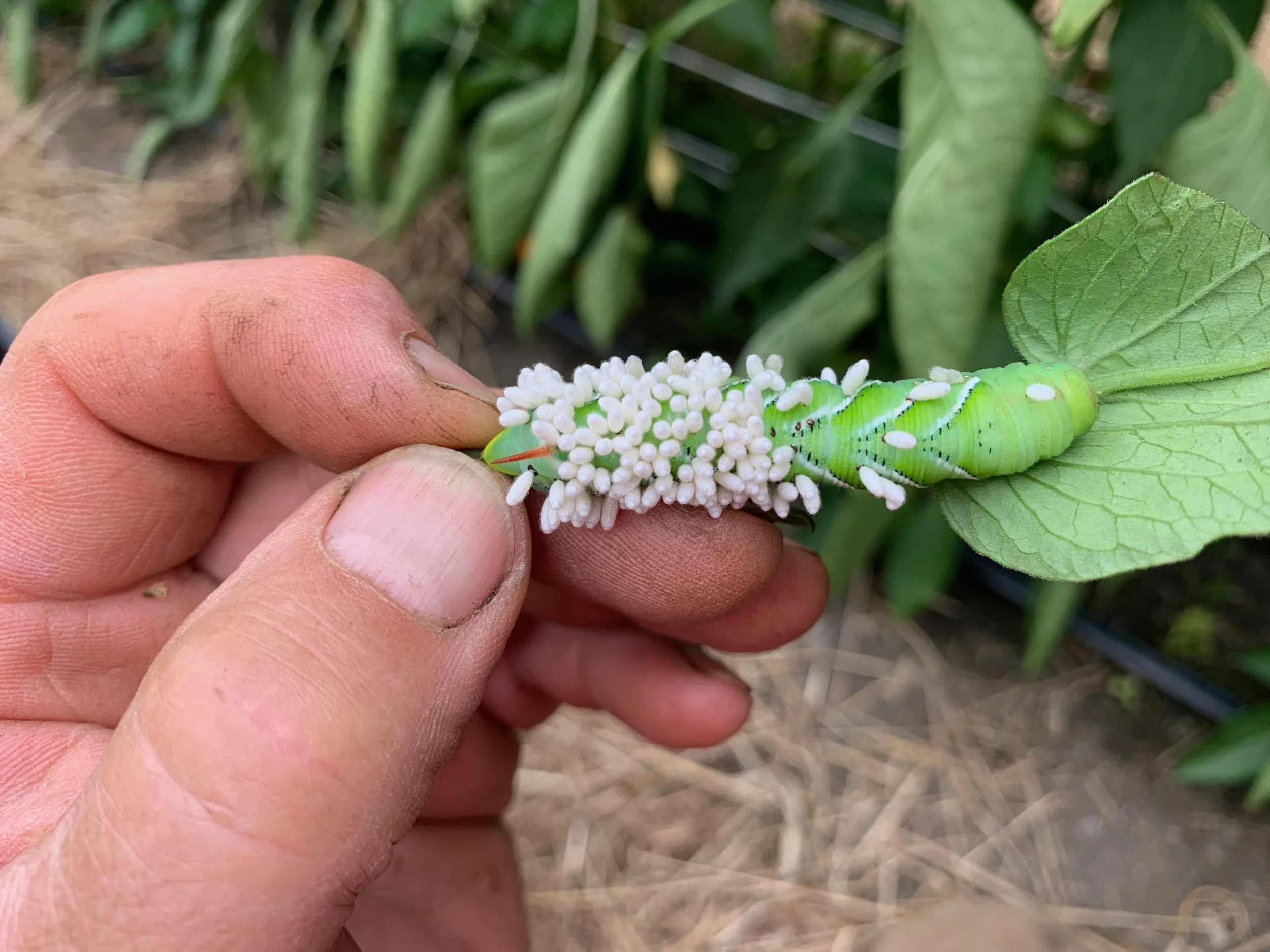
Larvae eating their way out of a tomato hornworm and killing it in the process. Each larva will develop into another wasp that will take on more hornworms.
It’s the most horror-movie thing that happens on this farm every summer.
It’s also the reason we don’t spray.
We help her do it. Along the tomato rows we plant a low border of sweet alyssum, tiny white flowers that don’t feed us or sell for a dollar at the register. They feed her. The wasp needs nectar to survive long enough to find hornworms and lay her eggs, and alyssum is one of the best sources there is. That border feeds her, not us.
We do our part too. When Sarah or one of our workers find a hornworm and it’s clean — no cocoons — we squish it, because left alone it’ll do real damage before the wasp gets to it. And every spring, working the beds before planting, we turn up the wasp’s pupae overwintering in the soil from last year and crush those as well, so we’re not accidentally wiping out our own workforce along with the pest.
If you find a hornworm in your own garden this week, look at its back before you do anything. If it’s smooth, it’s fair game. If it’s covered in small white cocoons, leave it. That hornworm is already finished. It’s just waiting to make more wasps.