
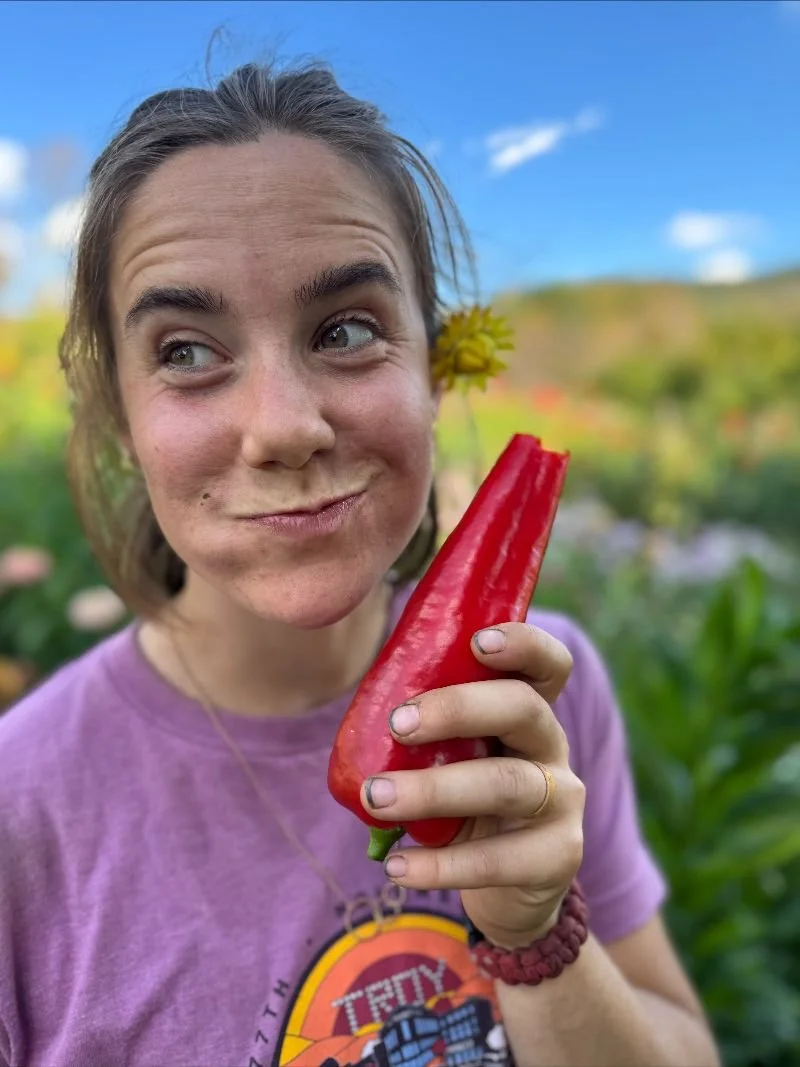
When I’m harvesting peppers, I move steadily down the row, filling the crate one by one. Then I see it: the perfect Carmen. Deep red, glossy skin, the shape just right. I can’t resist. I bite into it right there in the field.
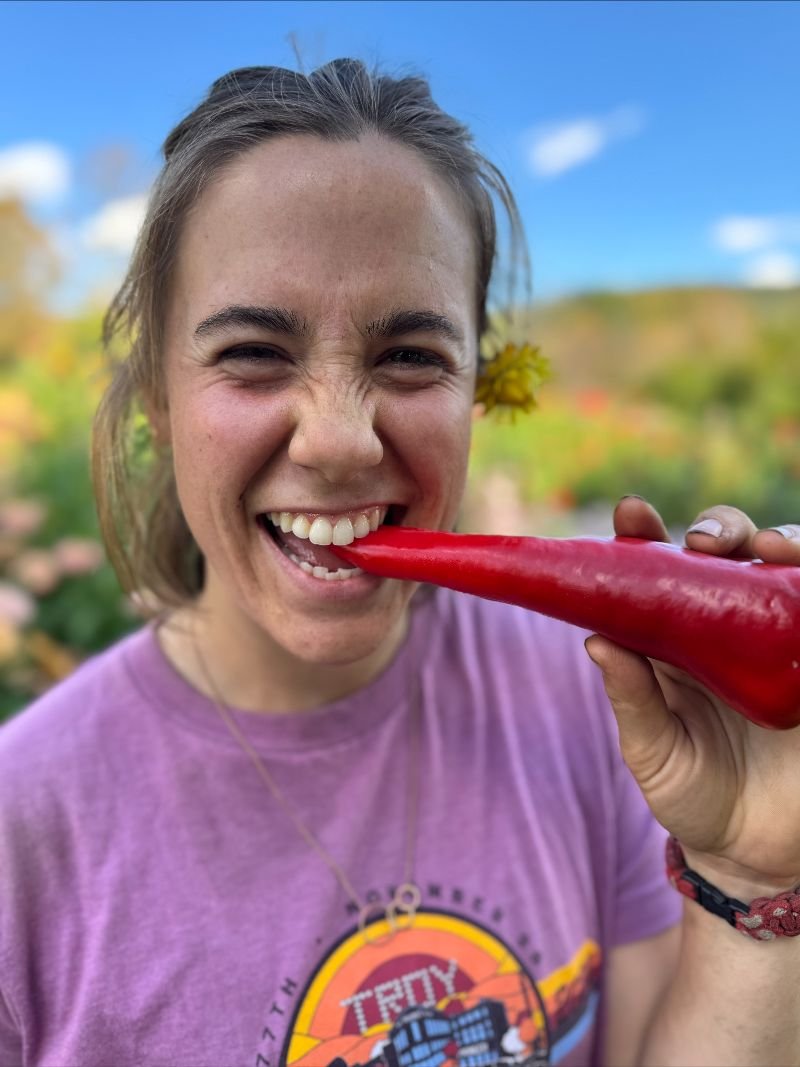
Sarah takes a break from harvesting peppers to savor the pure goodness of a Carmen straight off the plant.
The flavor floods in, sweet and bright and almost fruity, with just enough earthiness to remind me where it came from.
In that instant I don’t need a nutrition panel or a lab test. My tongue tells me this pepper was grown well and picked at its peak.
Franco Fubini writes in his new book, In Search of the Perfect Peach, that flavor is a compass. It points us toward farming that respects soil, seasons and biodiversity. When food tastes alive, it usually means it was grown that way.
For decades we’ve let the industrial food system strip flavor away, breeding crops for shipping and shelf life instead of ripeness. The result is tomatoes bred to bounce but not to taste, and peaches that look good but never reach sweetness.
This week’s proof points
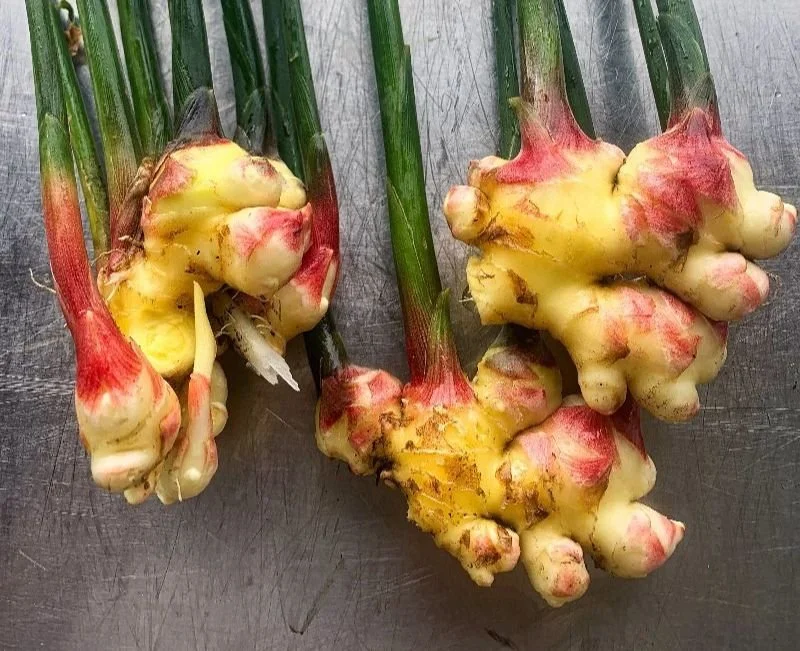
Fresh ginger. Harvested now, young ginger carries a clean, citrusy heat. It’s tender enough to slice without peeling, and its bite is softened by sweetness. The compounds the plant makes to protect itself are what give ginger its fragrance.
Delicata squash. Unlike hard-skinned winter squash, delicata has thin, edible skin and creamy flesh that turns honey-sweet when roasted. The sweetness is no accident: as the squash cures after harvest, starches convert to sugars. Roast the seeds too. They crisp into nutty little treats.
Carmen peppers. These Italian roasting peppers turn deep red on the vine before we pick them, trading grassy bitterness for sugar. Industrial peppers are bred for uniformity and shipping, and are often harvested green. Ours hang until ripe, when the flavor peaks: sweet, smoky and ready to roast.
Each meal is a small vote. Come taste the ginger, the peppers and the squash in the farm store. More from the farm is in Field Notes.