Pies and Pawpaws, Worth the Time
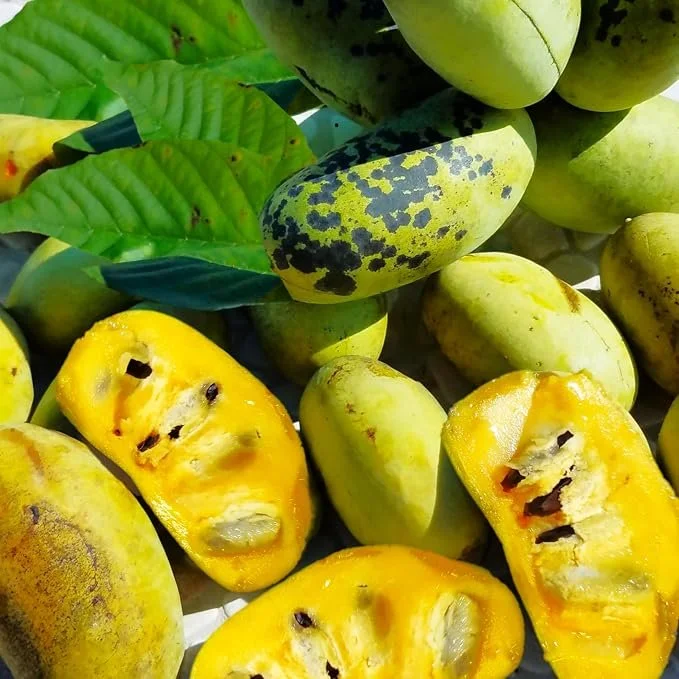
The day before the pie class, Brian Huebner walked into the store with a smile and a crate of fruit I had never seen before.
Brian makes the Shire City Fire Cider we carry. He planted pawpaw trees almost ten years ago at the recommendation of a friend, and this fall the first one started to bear. He brought us what it gave. I had heard of pawpaws, but I had never held one or eaten one.
From the outside a pawpaw is completely unassuming and a little unappealing. It’s lumpy and about the length of a hand, shaped like a short fat banana, with a thin green skin that picks up brownish blotches as it ripens.
A ripe one smells fresh and sweet and fruity before you cut it. You slice it lengthwise, which gives you two small bowls, and you eat it with a spoon. The seeds are a surprise. They’re as big as kidney beans, and you work around them with the spoon, or put one in your mouth, suck the pulp off and spit it out.
The flavor is hard to describe. There’s banana in it, but say banana and you put the wrong texture in your head. The sweetness is fruity and doesn’t overpower, and the flesh is smooth and creamy, like custard.
We made a fuss over them, and they sold out in a day. There won’t be more until next year. Brian has more trees coming into fruit.
The next day, Jill Weinberg taught pie crust in our kitchen. A handmade crust is a small work of art: the edge pinched by a thumb and finger and a little uneven, the top golden and blistered, the layers breaking into flakes at the touch of a fork.
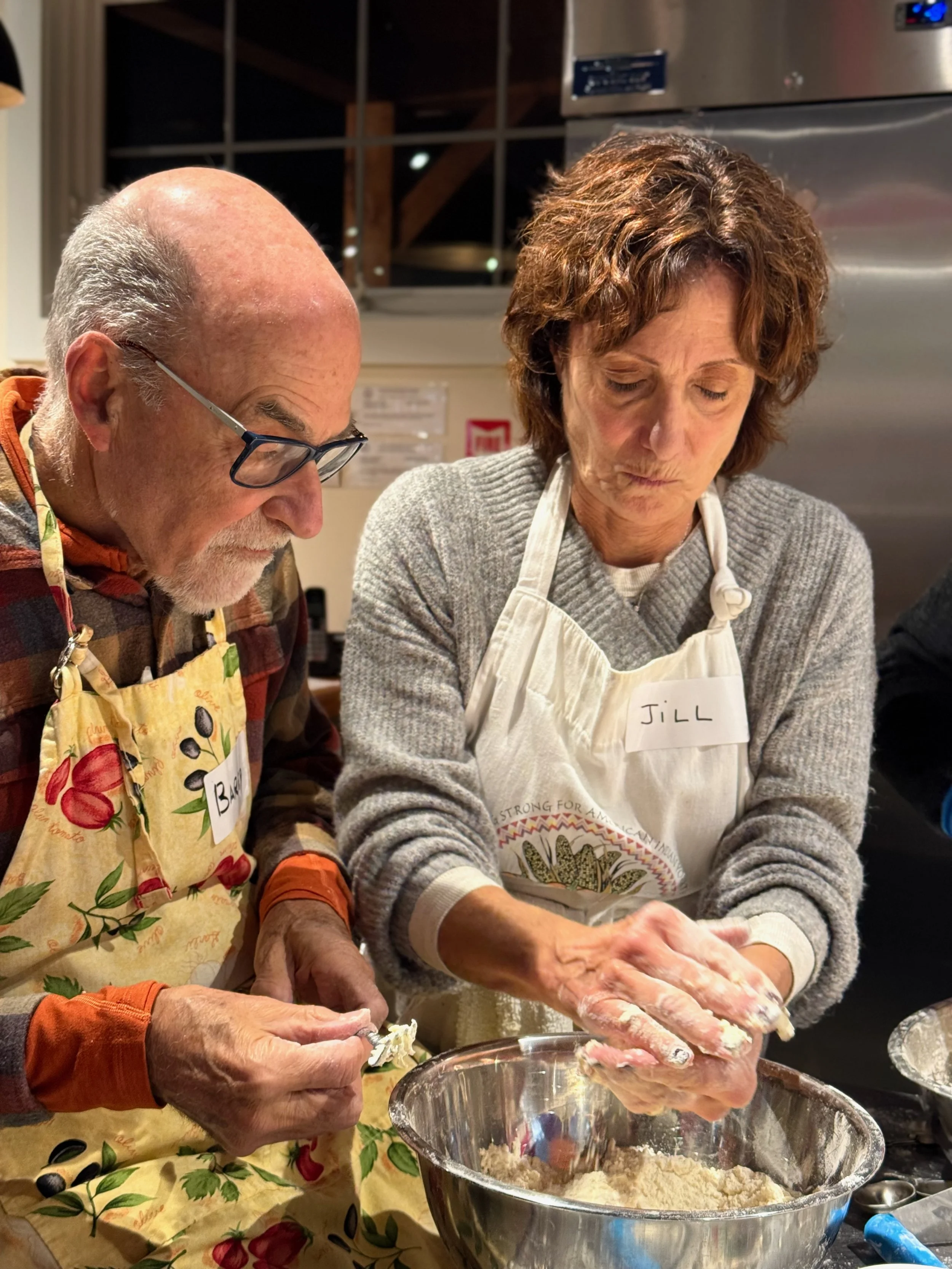
Making one takes touch more than a recipe. You work cold butter into flour until it’s still in flecks you can see, then add water a spoonful at a time. The dough should feel too dry, crumbs and shaggy clumps that barely hold, and everything in your hands says to add more. You squeeze a handful instead and stop when it holds.
Then you turn it out and push the heel of your hand through it, away from you, so the butter smears into the flour in long thin sheets. You scrape the dough back together, fold it over on itself and push again. Those sheets are the flake, because the butter melts between them in the oven and the steam lifts them apart. The dough has to stay cold, and if it’s worked too long the layers disappear and the crust bakes tough.
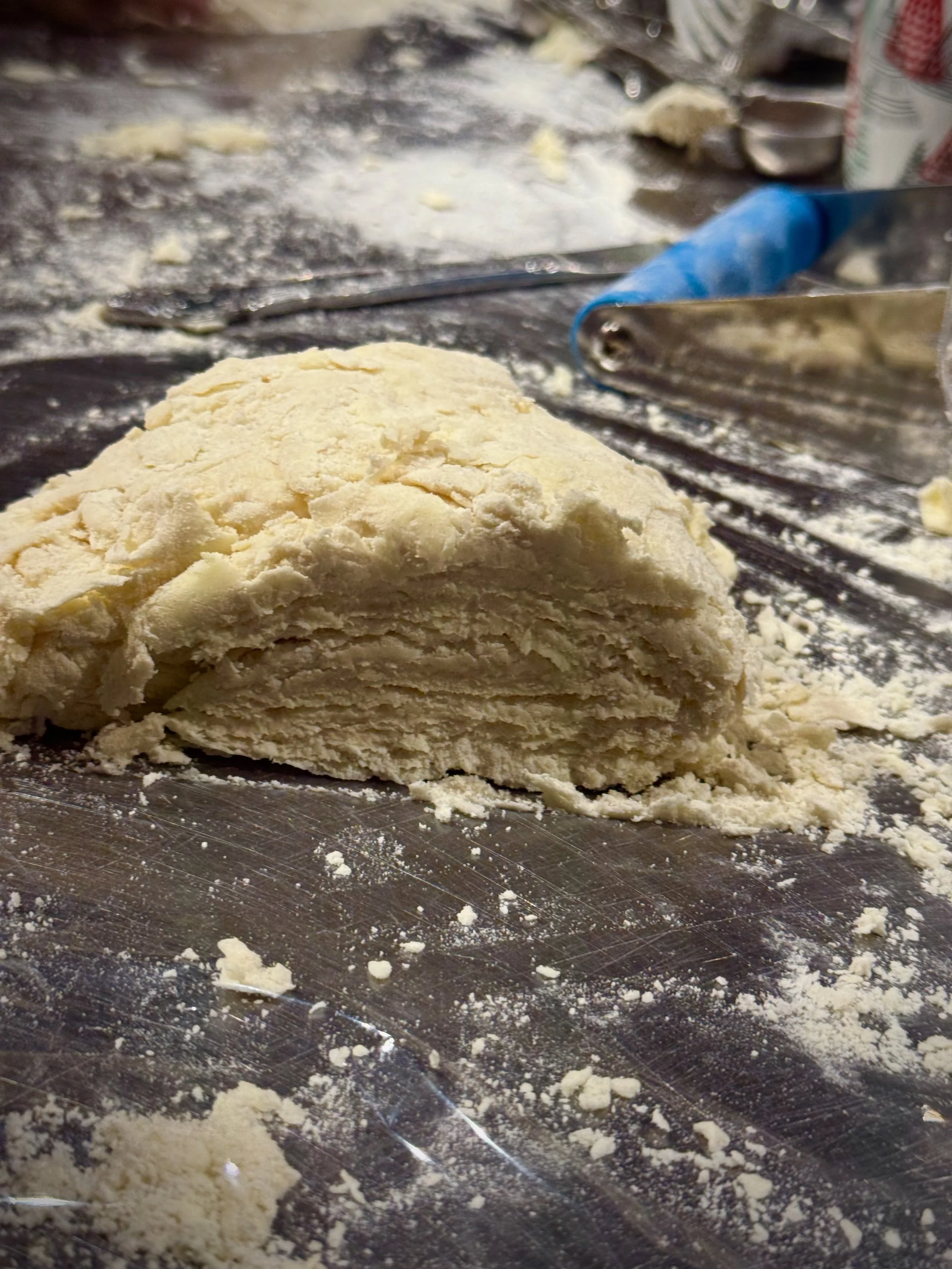
What struck me most was watching people learn it. These were accomplished adults, most of them at home in a kitchen, and they came to something that looks simple and isn’t. It was humbling, and you could see it. They were willing to get it wrong, the way a child learning to walk is willing to fall.
The most novice person in the room ended up making the most perfect crust. Everyone had the same instruction, so perhaps it was beginner’s mind, and having no preconceived notions, that did the trick. The acquired skill is the reward and the process is the lesson. I had been a beginner myself the day before, with a spoon and a fruit I had never opened.
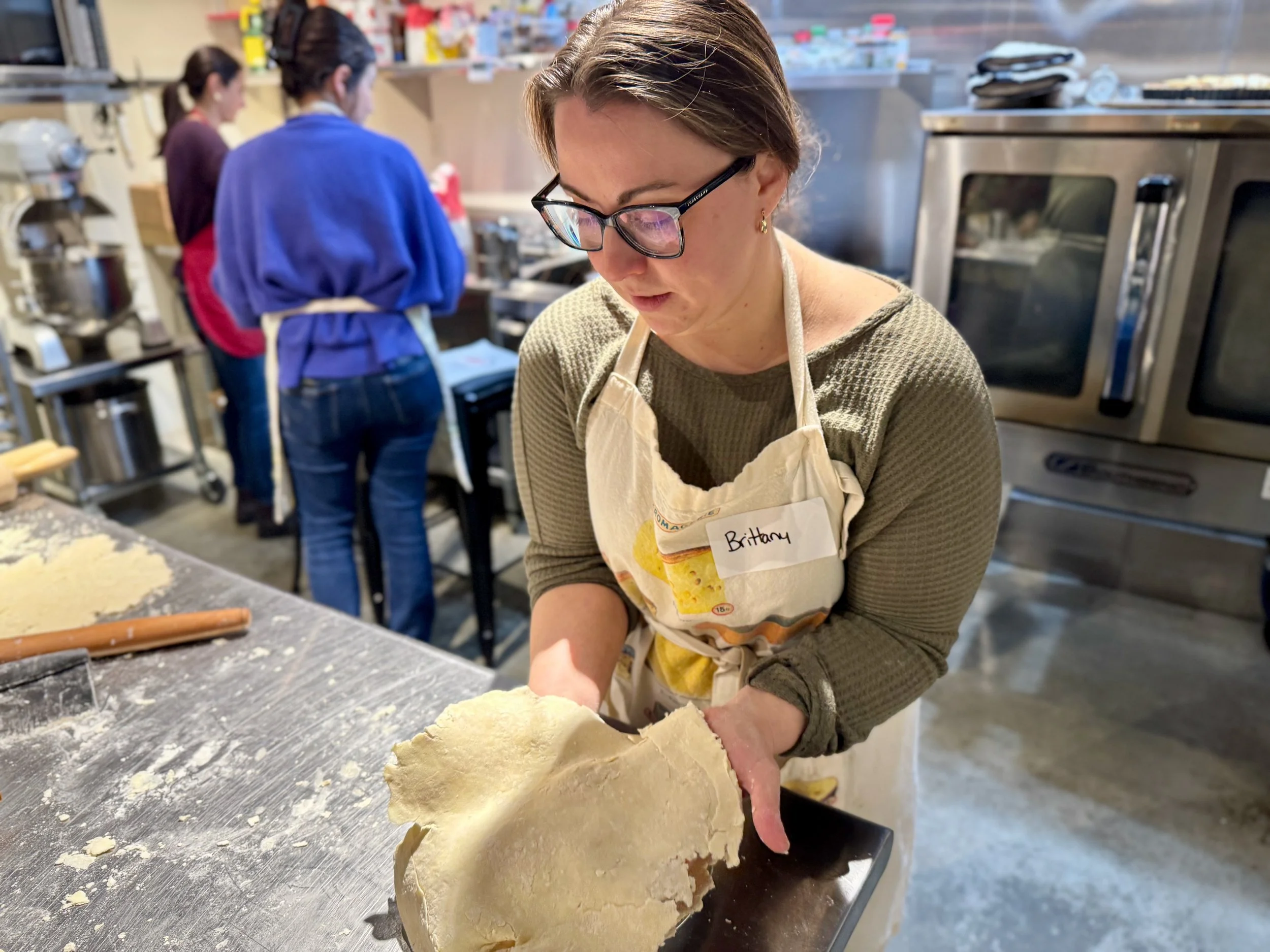
I have never seen a handmade crust on a pie in a grocery store. Nearly every pie I’ve seen for sale has the same machine-pressed rim, identical all the way around, and the filling is often poured from a can. A real pie takes hours of hand work, and that includes peeling and slicing a ton of apples, which cook down to a fraction of what you started with. Add real butter and quality flour and the cost comes to $30 or more.
We’re deciding whether we can make them for the store, and that number is a big part of why it’s a question. A factory can turn out a crust and a canned filling faster and cheaper than anyone can by hand. It also doesn’t need anyone to learn anything, and people have gotten used to what it makes.
The pawpaw has no place in that kind of system either. It’s the biggest fruit native to this continent, and people were eating it here long before anyone planted an orchard. Nearly everything about it works against a store shelf. The flowers are dark maroon and smell faintly of rotting meat, and flies and beetles pollinate them, so many never set fruit. A tree needs pollen from a genetically different tree to bear. Brian waited almost ten years for his first fruit.
Once a pawpaw is ripe it lasts a few days, and the skin is too soft to survive a truck. Apples, peaches and strawberries were bred over generations to ship and sit on a shelf. The pawpaw never got that treatment.
What gets lost is flavor, and with it a good deal of the joy of eating. Once something is gone from the store we forget it, and accept that what’s left is the way things are. A pie with a factory-pressed rim is what most people think pie is. Until Brian walked in with that crate, I didn’t know I was missing anything.
The crate is gone, and there won’t be more until next fall, when more of Brian’s trees will be bearing. I’ll be waiting for them.