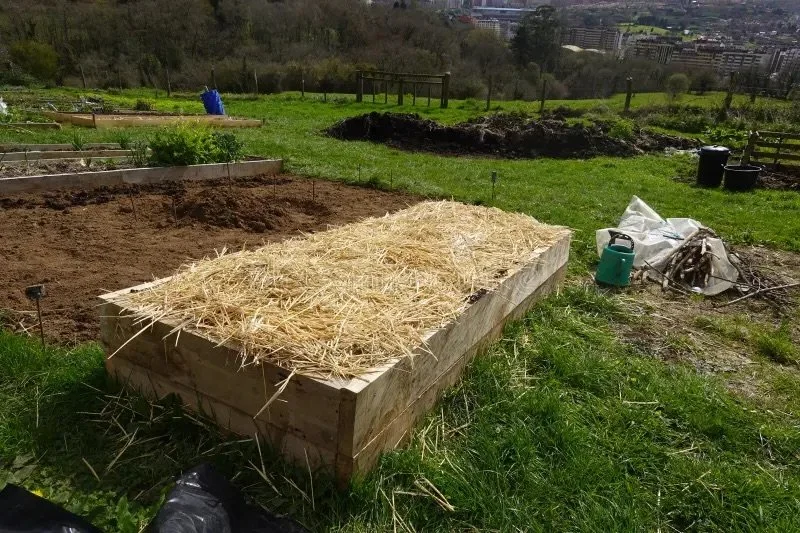
Straw or hay mulch can protect and feed your garden over the winter
The window for sowing a cover crop has mostly closed, but bare soil is still worth covering. A layer on top keeps rain and wind from carrying it off over the winter, and it gives the microbes where the soil meets the mulch something to eat. Come spring, whatever you used can go in the walkways or the compost pile.
Leaves work well, and there are plenty of them. Wet them down after you spread them. Dry leaves blow away.
If you have a pile of dried grass clippings, those can also make a great mulch. Just make sure the lawn where they came from wasn’t treated with herbicides.
Hay or straw works too, if you can find an inexpensive source. Ask a local farmer. Hay that got rained on during cutting or baling is often sold as mulch hay, and it goes cheap. Some sources tell you not to use hay because of weed seed. We’ve used it for years and never had a problem, as long as we put it on thick. I’d rather have my soil covered and pull a few weeds in spring than watch it wash away.
Hay is dried grass. Straw is the stalks of grains like oats, wheat, and rye after the grain is taken off. Straw gets recommended over hay because it’s supposed to be free of weed seed, but there’s often a fair amount of grain left in it, so you may be pulling sprouting oats, rye, or wheat.
For a small garden, cardboard works. So does a layer of compost under a tarp, which feeds the soil while it protects it. Composted wood chips on top will hold the cardboard down.