
Racing the Daylight
We pulled the tomatoes out of one of our greenhouses last week. They were still producing.
But they’d already done what we planted them for. Those plants went in back in late March, timed to give us tomatoes early — before most tomatoes around here are anywhere close to ripe. By late August, that job’s finished, even if the vines haven’t gotten the message.
The kale, chard, and collards that replaced them had already been seeded into trays about a month before, so the seedlings were ready to go into the ground the moment that bed opened up.
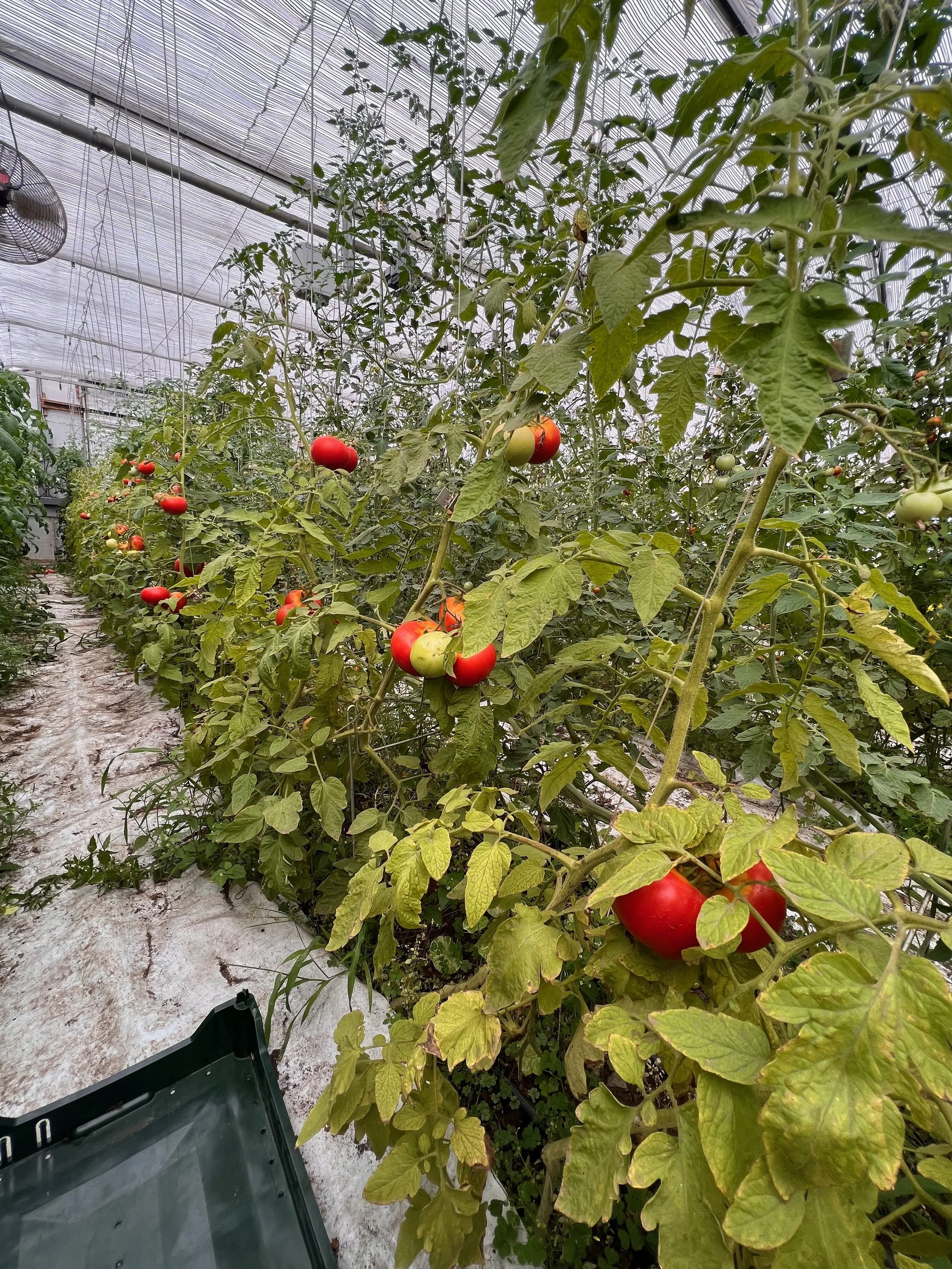
The same rows, two weeks apart: tomatoes on the vine,
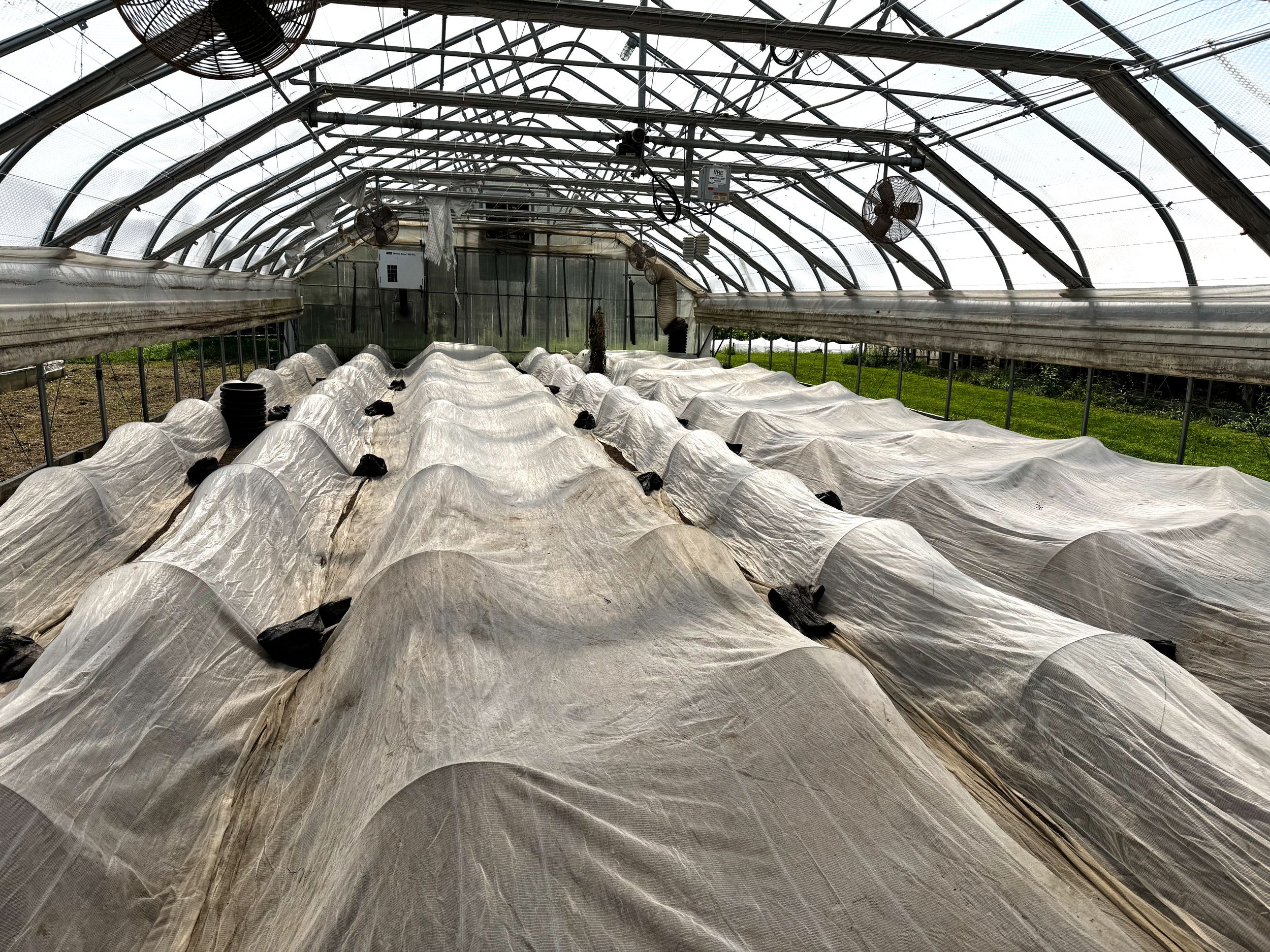
then netting over the kale and chard that replaced them.
These are the greens that will carry the store through winter — kale, chard, and collards now, with more going in behind them as the weeks go on. Very few growers around here manage fresh produce through the cold months. Missing the planting window isn’t a small thing.
Walk into that greenhouse now and half the beds are covered in netting — a physical barrier against two of our biggest pest problems this time of year, flea beetles and cabbage moths.
The moths lay their eggs right on the brassicas, and the caterpillars that hatch out can strip a young kale plant bare in no time. Even inside a greenhouse, which feels like it should be a protected space, those pests still find their way in and do real damage. We’d rather cover the beds than spray them.
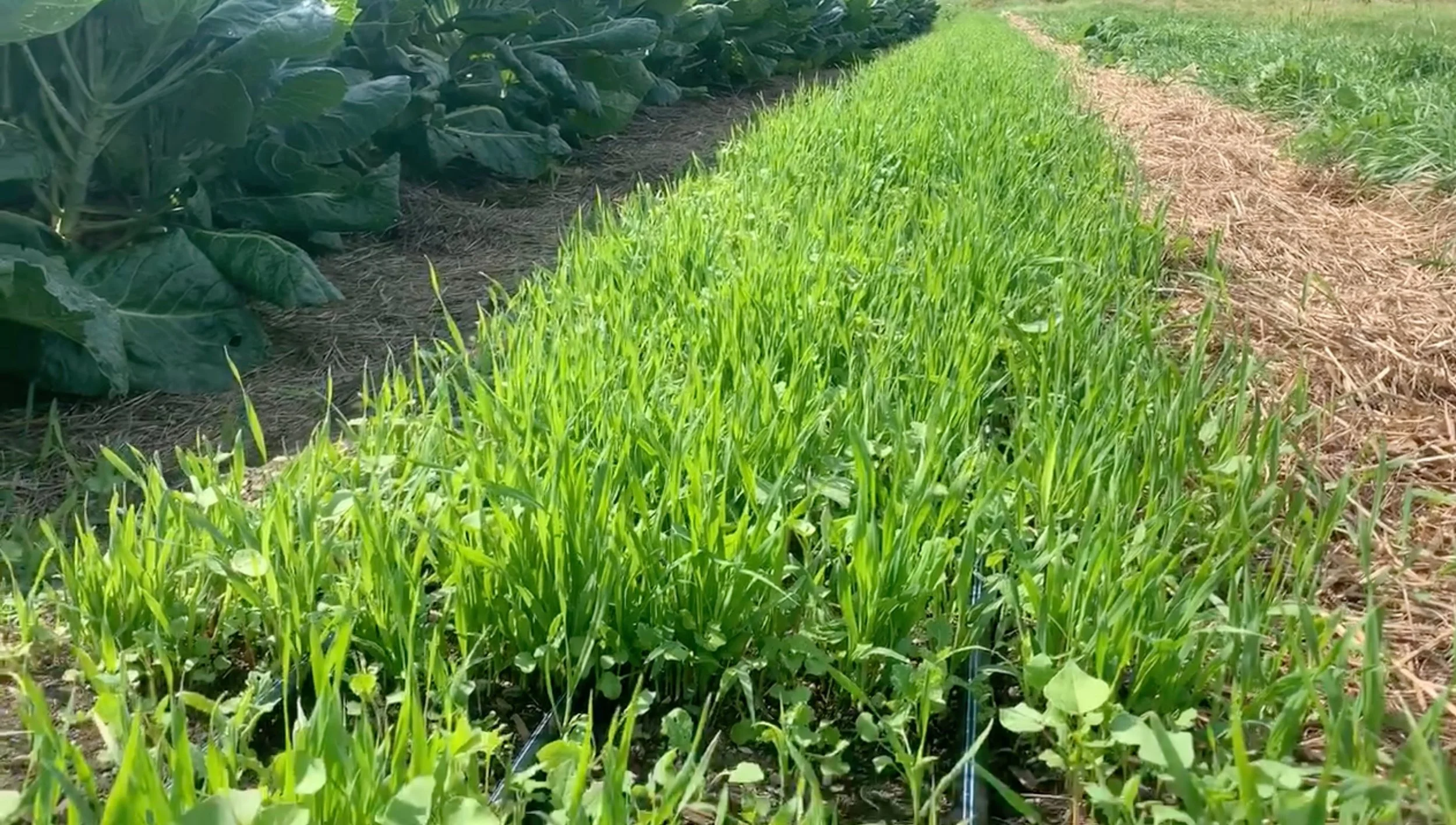
Cover crop coming up beside the kale.
Out in the fields, it’s a different calculation. Instead of squeezing in one more crop, most of those beds are going to cover crop.
Here’s why. A crop that takes 60 days to mature in full summer light can take 70 to 75 days once the days shorten and the temperature drops — light and cold both slow a plant down, and they do it at the same time.
Push a planting in this late, and it risks not maturing before the first real frost, which these days isn’t the fixed date on the calendar it used to be. Cover crop doesn’t have that problem. It just goes in, builds the soil back up, and gives the ground a rest before next year.
A few other things turning over:
The summer mainstays are slowing down: tomatoes, peppers, eggplant, and summer squash
Fingerling potatoes are abundant, and the winter squashes aren’t far behind
Peaches, nectarines, blueberries, and melons are on their way out — apples are just starting
Mums and pumpkins aren’t far behind
Arugula and Asian greens are coming back too, and the cooler weather actually makes them better, not just possible. Cold slows down bolting, and it takes some of the bitterness out of the leaf — a little chill in the air brings a little sweetness with it.
Beans slowing down isn’t the end of them, either. Most nights this time of year, once the store closes, somebody’s in the kitchen blanching and bagging beans for the freezer. That’s where the “fresh” Red Shirt beans in your freezer in January actually come from.
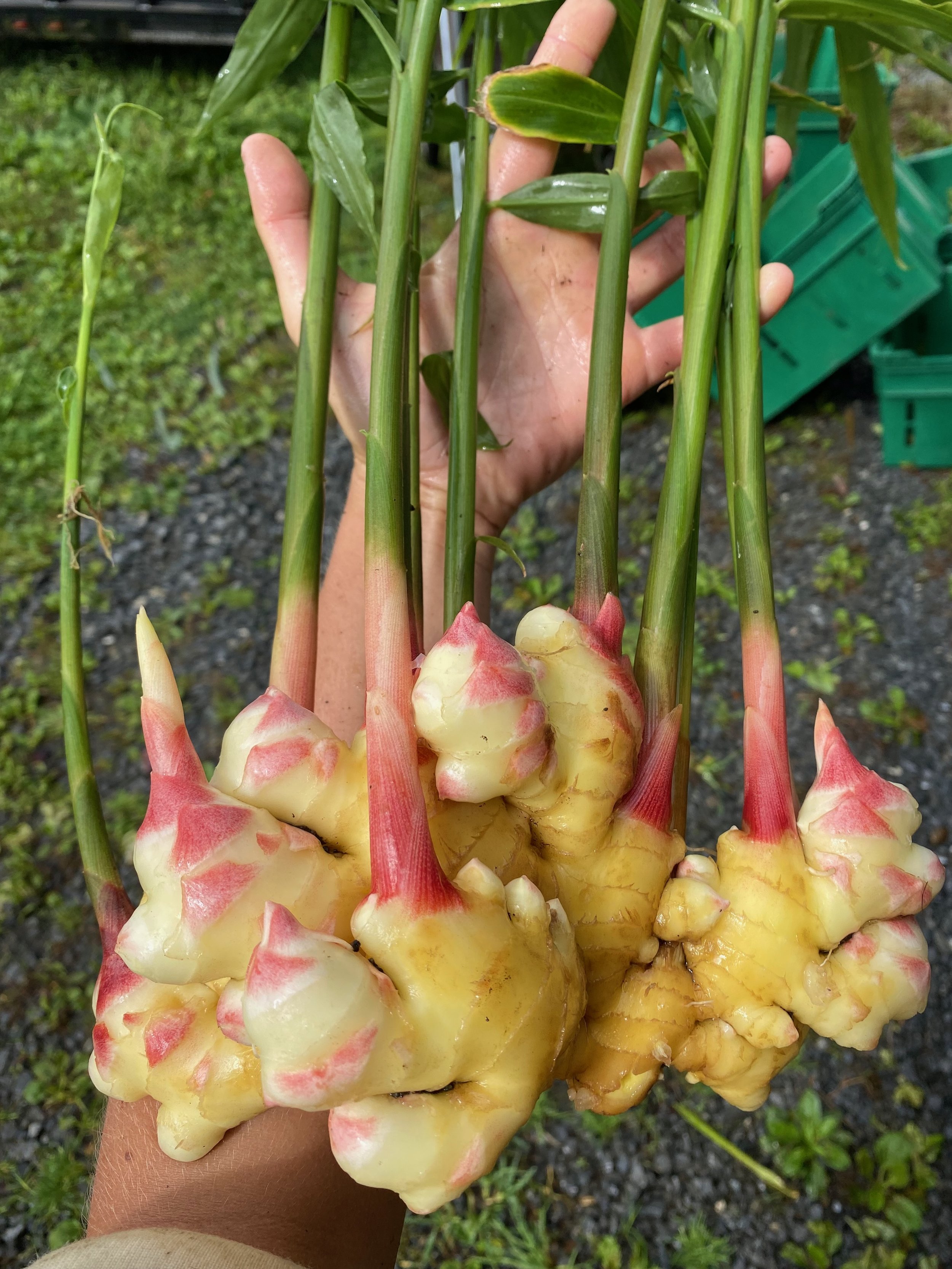
Planted in mid-February, this fresh ginger is now ready and in the store.
Our first ginger of the season is in the store too, planted all the way back in mid-February. If the ginger you know is the tough, shriveled knob from the grocery store, ours isn’t that — thin skin, no peeling required, a bite that’s sharper and brighter right out of the ground. Slice it for tea, grate it into a stir-fry, shave a little into whatever’s already on the stove.
That’s what’s happening across the whole farm right now — one thing finishing while the next is already going into the ground, bed by bed, right up until frost.