The Real Cost of Real Food
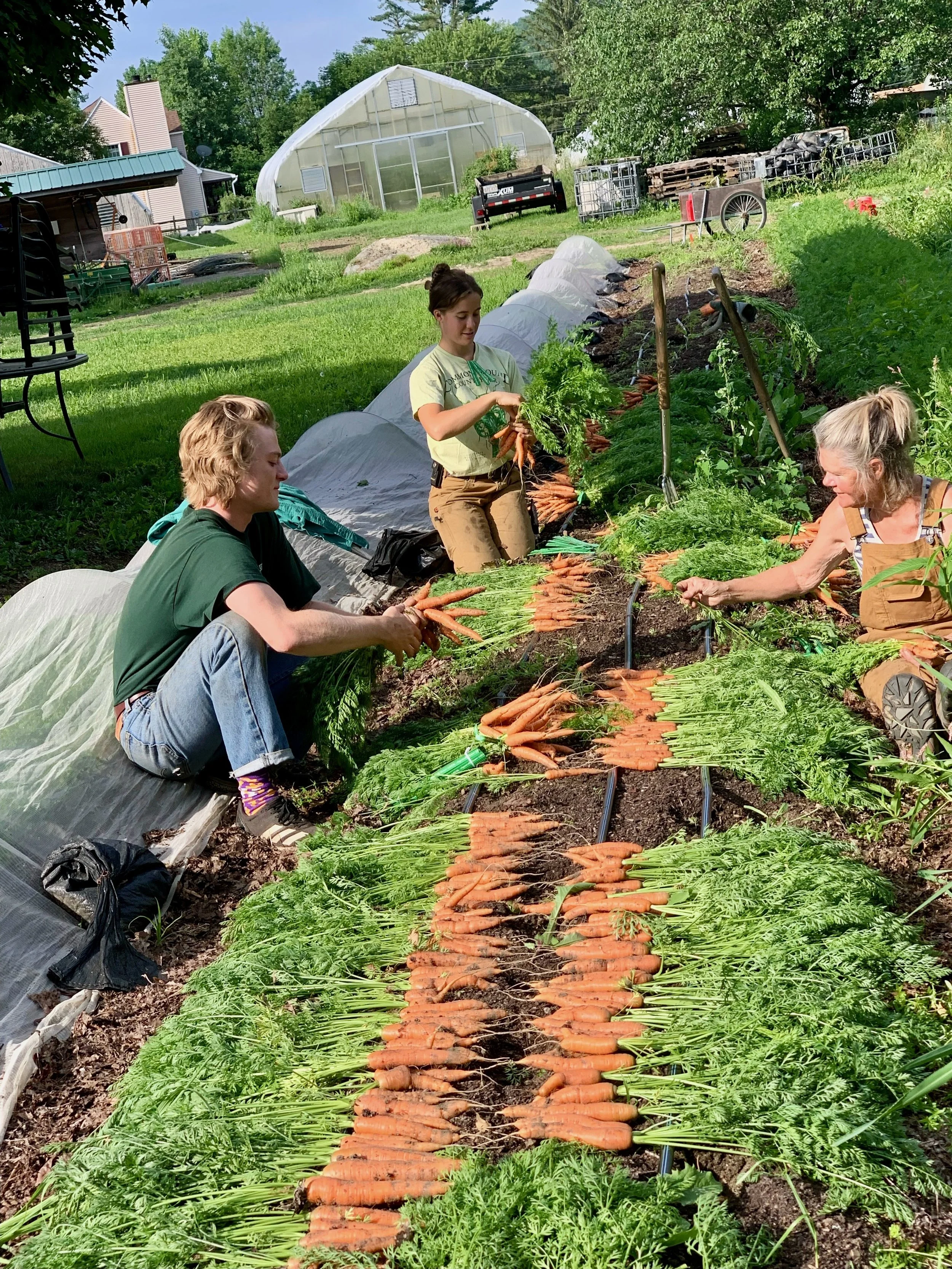
Bunching carrots one row at a time.
I was at a local building supply store this week picking up materials for a project at home. The guy at the counter saw my Red Shirt Farm T-shirt and asked about the farm, then the store. Then he paused and asked, “Is it as expensive as Guido’s?”
(We love Guido’s, for what it’s worth. This isn’t about them.)
I told him we try to keep things affordable, but there are real costs to real food. Then somebody else stepped up to the register and that was the whole conversation. I’ve been finishing it in my head ever since.
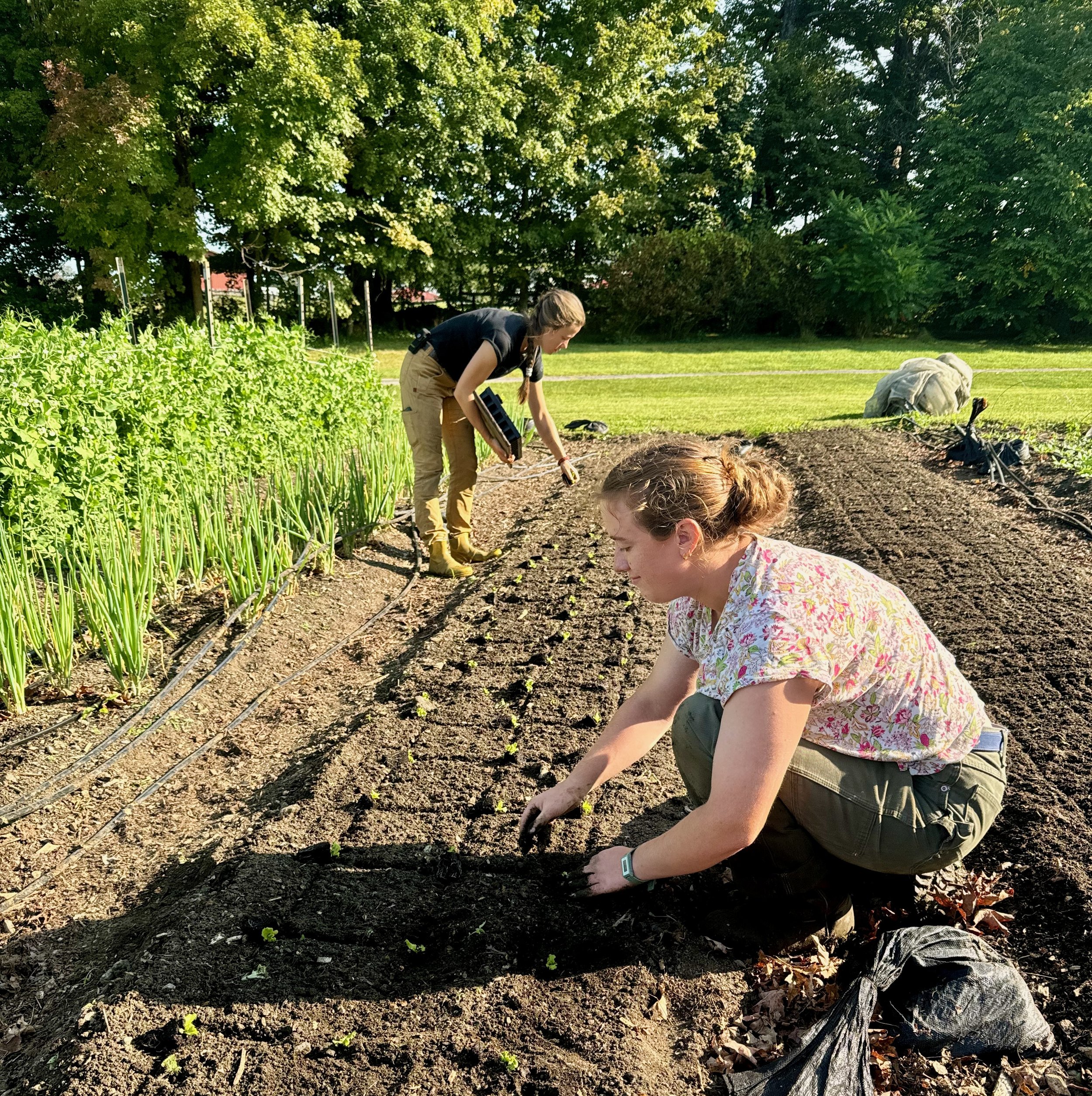
This is the part of the job nobody sees on the shelf: somebody kneeling in a bed, hands in the soil, one seedling after another.
Almost everything on this farm gets grown and picked by a person, not a machine — somebody hand-weeding the beds, hand-picking the tomatoes, hand-digging every carrot out of the ground. That costs more. It also means the ground here is better than it was ten years ago, the water leaving this property isn’t carrying fertilizer and pesticide runoff on its way out, and our shelves have thirty kinds of vegetables on them instead of one.
A big commercial farm, running on machines instead of people, can’t do that. A combine can only do one thing, the same way, every time — which is why it needs one crop, planted the same day, ready together. Everything else on that ground has to get out of the way, including the bugs and the weeds. That’s where the chemicals come in.
Add it up — the healthcare, the eroding soil, the polluted water, everything cheap food costs once it leaves the register — and it runs about three times what shows up on the receipt. Multiply that across everyone eating in this country and you’re talking trillions of dollars a year. We still pay for it. It just shows up later, on a different bill.
Drive through the places that grow the most food in this country — the thousand-acre farms out West, corn and soy as far as you can see — and a lot of those towns don’t have a decent grocery store. All that land, and they’re trucking in lettuce and tomatoes from California and Florida, because a thousand acres of one crop doesn’t feed anybody dinner.
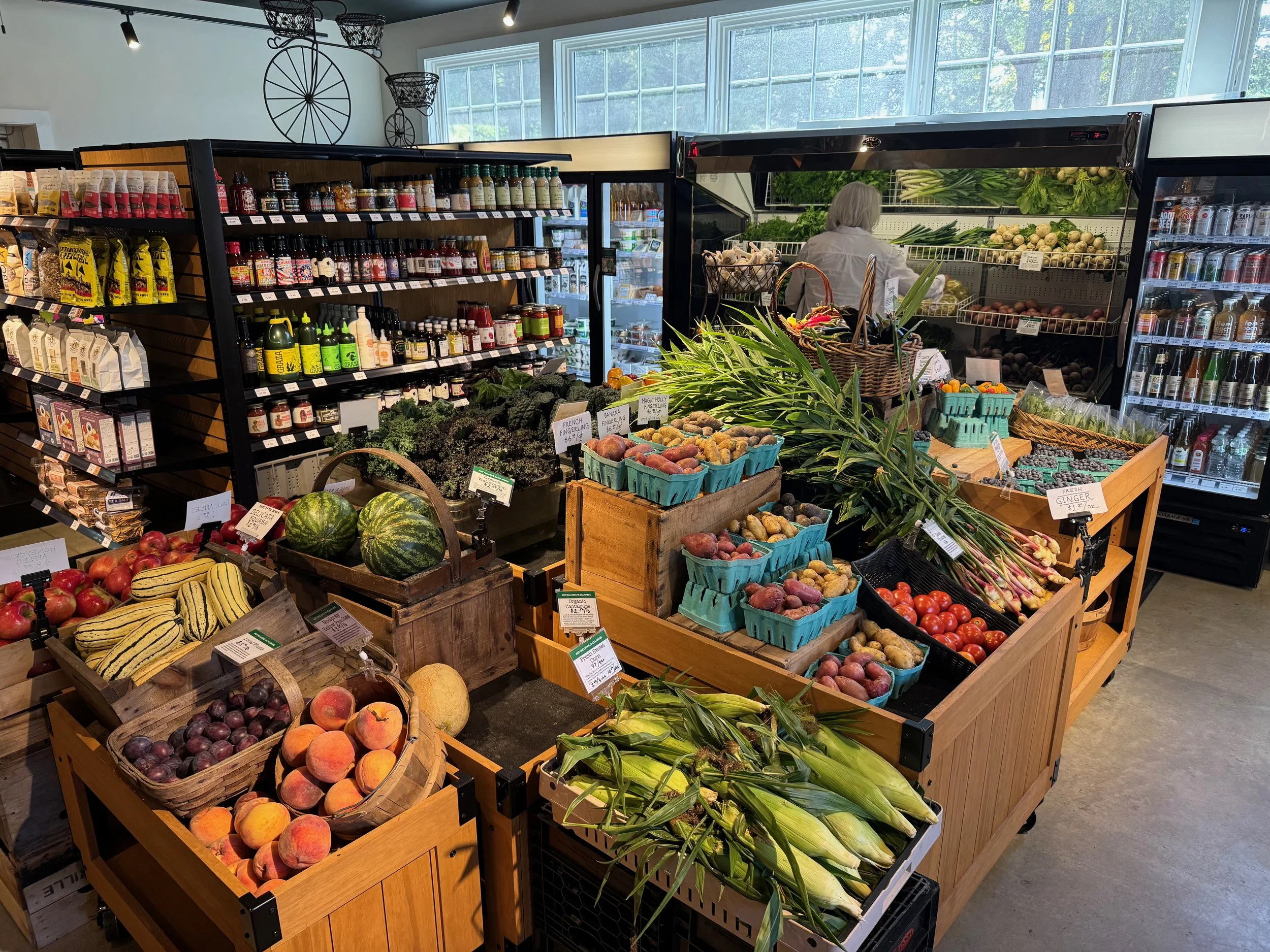
Variety like this doesn’t happen by accident — it’s the direct result of growing dozens of crops instead of one.
That’s the job we’re doing instead. It’s slower, it takes more people, and none of the subsidies built for a thousand-acre operation reach a farm our size. We don’t get them. What we get instead is a farm that can actually feed the people who live here, with the kind of variety a one-crop farm never could.
The money mostly stays in this community, for one — spent again at the next business over, instead of leaving for a corporate office somewhere else.
And the food tastes different, because it was picked the day it was ready instead of stripped off a field on somebody else’s schedule.
I hear that from customers most weeks, usually about the carrots: “These are hands-down the best carrots I’ve ever tasted.”
So next time you’re weighing whether it’s worth what it costs, don’t take it from me. Grab a carrot on your way out and taste it yourself.