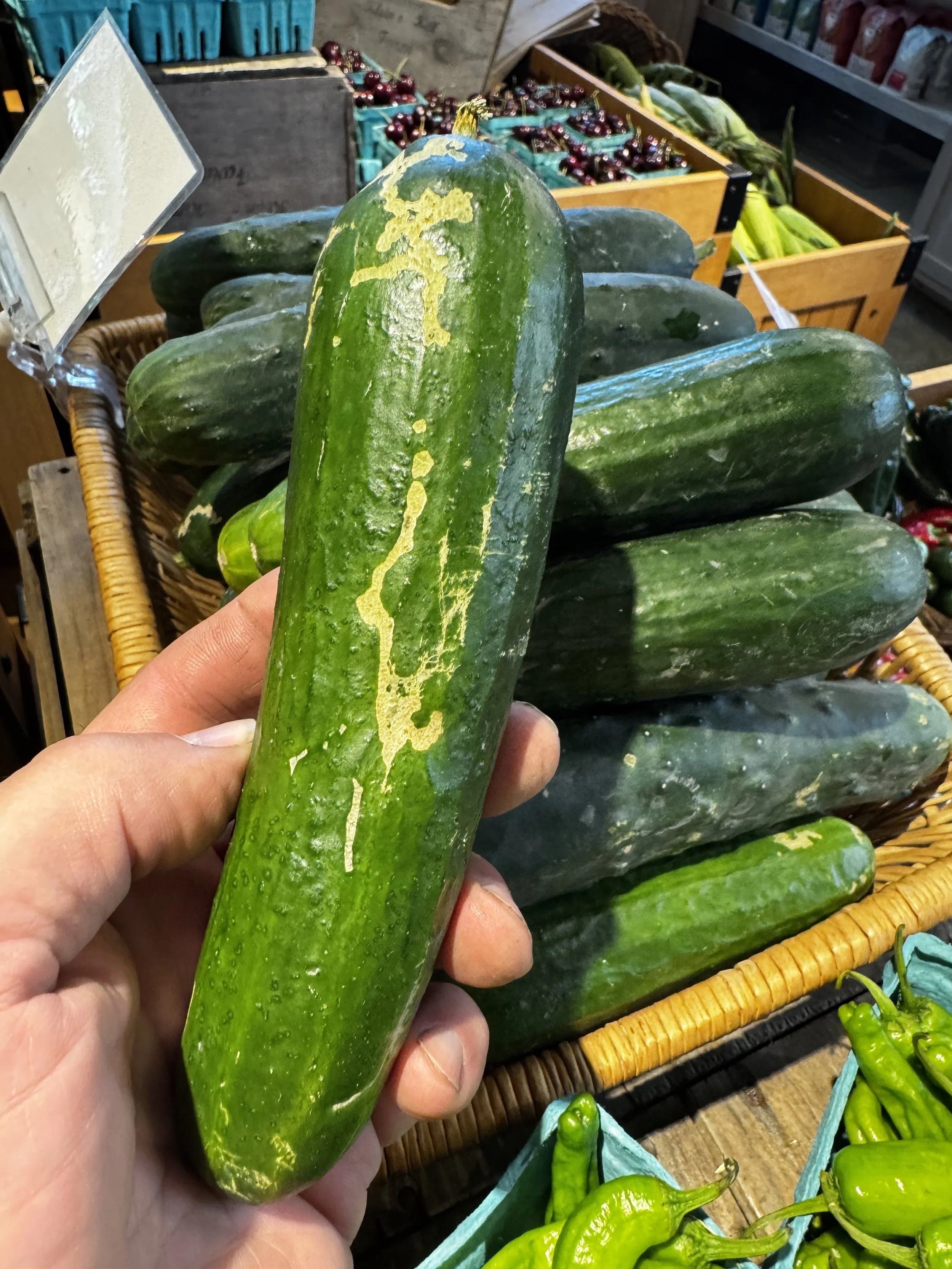
Pick up a cucumber with pale scars across the skin and you might set it back for a smoother one. That’s fair. It looks like a flaw. But the scarring tells you something worth knowing.
Cucumber beetles feed on the skin while the fruit is young and still sizing up, weeks before we pick it. The plant heals the way skin does. It scars over. By the time the cucumber reaches the store, you’re looking at a healed mark, not an open wound, and the beetle is long gone. It’s the plant’s own repair.
The easier fix, if we wanted one, is a spray. We don’t use synthetic sprays. We’re not certified organic, so I’ll leave that word alone. That’s why you’re seeing the scar.
A smooth cucumber and a scarred one taste the same, cook the same and last the same in your fridge. The only difference is which one would win a beauty contest. Peel it, or slice it into rounds the way most people do anyway, and you couldn’t tell which was which.
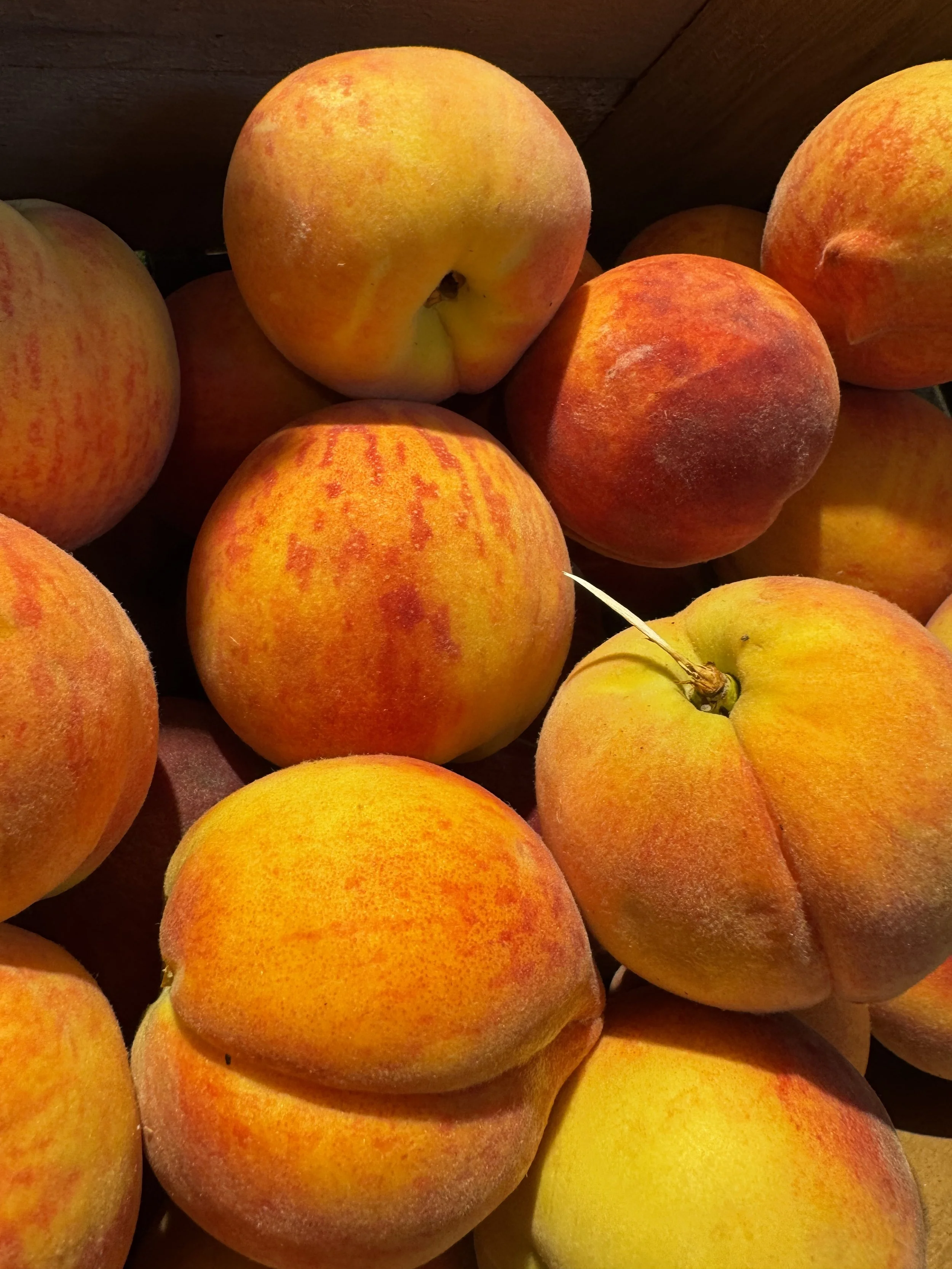
A cucumber is easy that way. What you see is what you get. A peach isn’t. Firmness and color get you close, but the difference between a syrup-sweet peach and an okay one is on the inside, and you find out when you bite. A cantaloupe or a watermelon gives you nothing to go on. You’re guessing until the knife goes in, even for us.
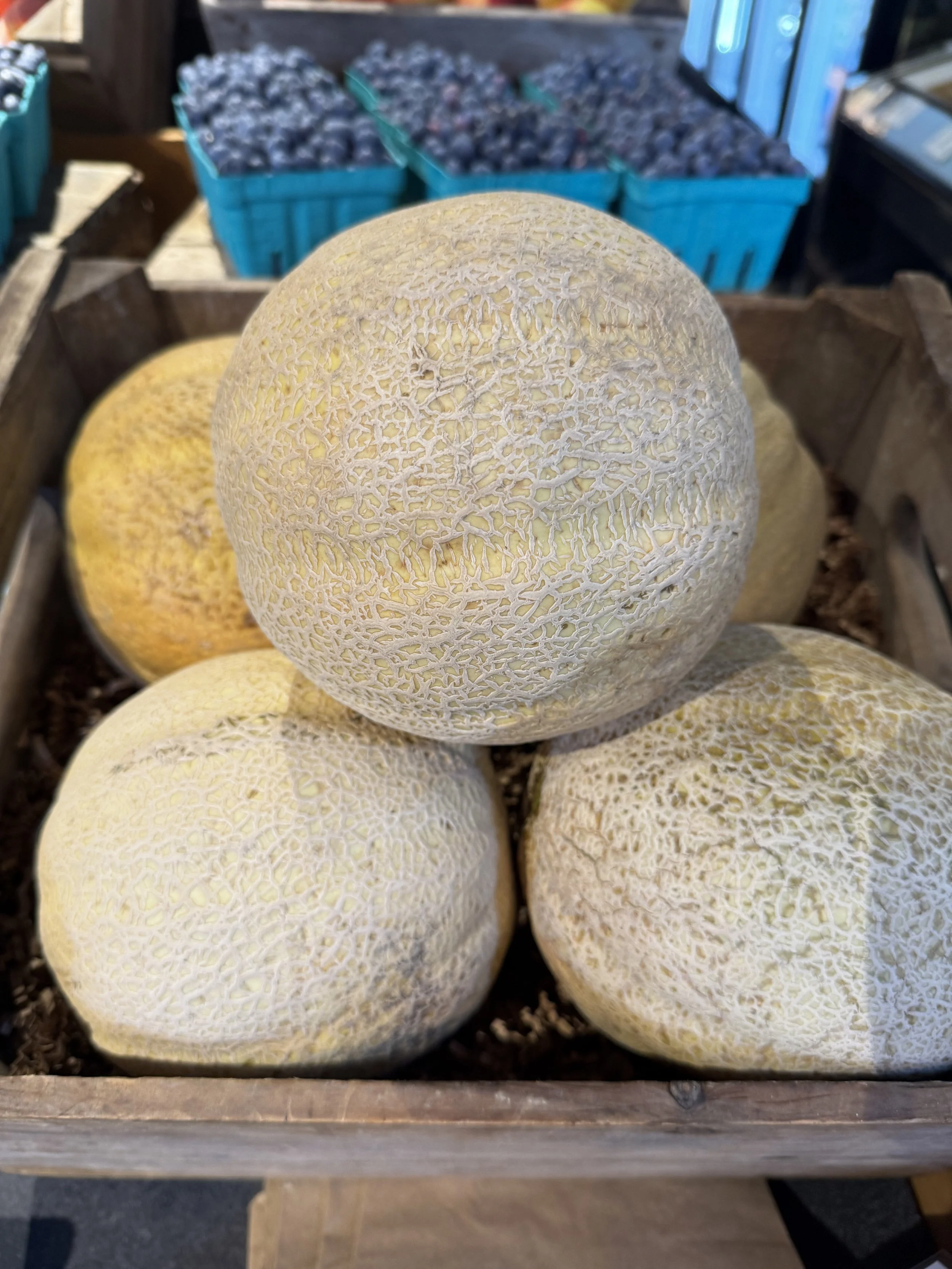
Reading a melon before you cut it
Watermelon: look at the field spot, the pale patch where it sat on the ground. Creamy yellow means it ripened in the field. White or pale green means it was picked early.
Cantaloupe: smell the stem end. If it already smells like cantaloupe, it’s ready. No smell, no rush.
Both: heavier for its size is a decent sign, because more water usually means more ripeness. Thumping is mostly folklore. It tells you the melon is hollow, which every melon is.
For more on how growers decide when to spray, read Are These Organic? If you want to taste the lack of difference, ask for a scarred cucumber in our farm store. More from the farm is in Field Notes.