She’s usually standing at the peach table, turning one over in her hand, checking the color on the far side. Then she looks up, sometimes across the whole store, and asks, “Are these organic?”
They’re not. The honest answer takes longer than the question.
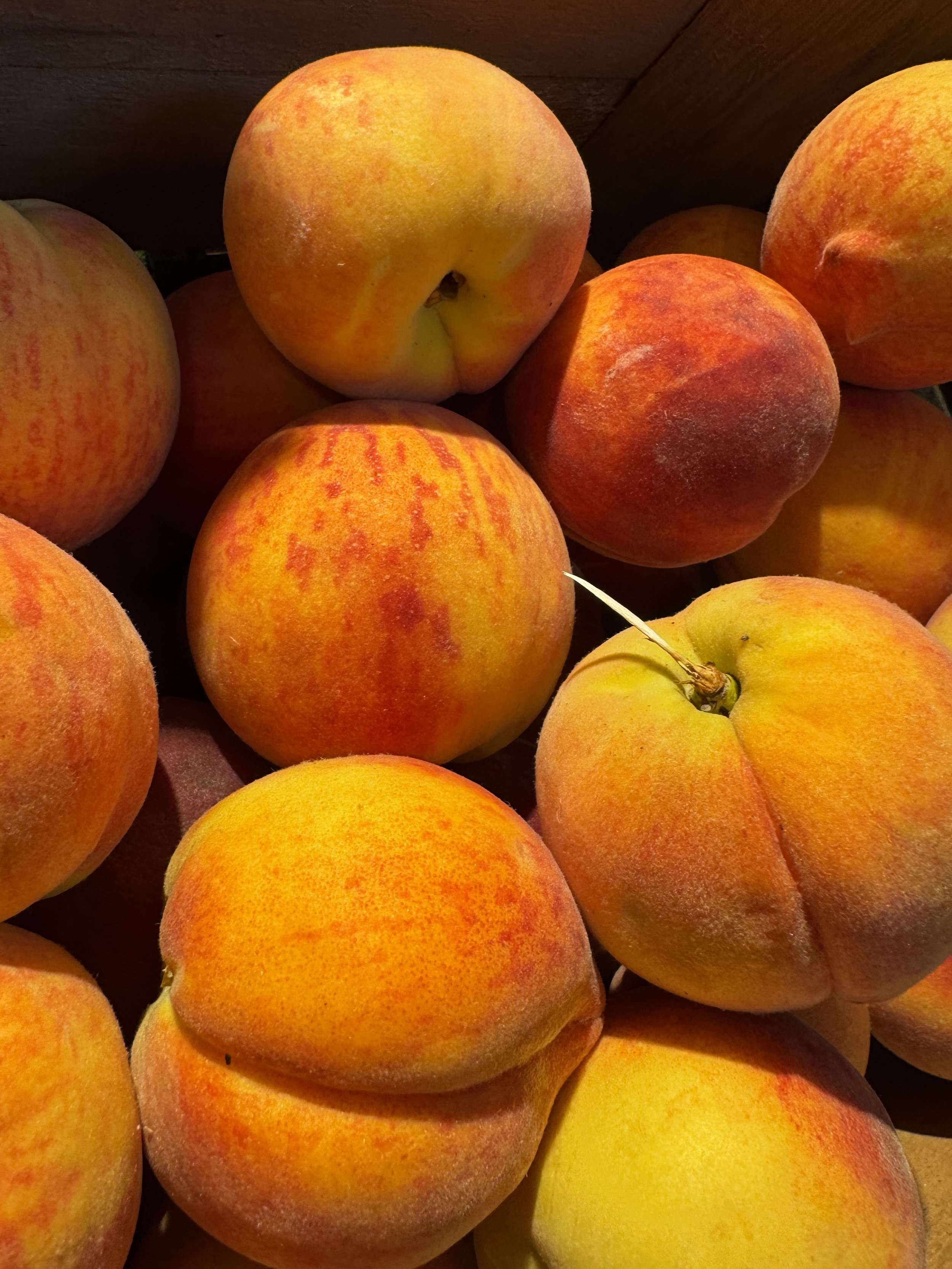
We’d bring in organic peaches if we could find them at the volume we need. We can’t, so we look for growers who use Integrated Pest Management, or IPM. IPM asks a different question than organic does. The grower has to stay on top of the orchard and have a reason for every spray, instead of following a calendar.
Organic certification is a list. It names the materials a grower may use, such as copper, sulfur and a handful of bacterial and botanical pesticides, and the ones a grower may not. A certified organic orchard can spray an approved material the same week every year, whether or not there’s a problem that week. The rule is about the substance, not about what’s happening in the orchard.
IPM asks about the orchard. Is there a problem right now, and how bad is it? It doesn’t care whether the material is organic-approved or synthetic.
Orchards hang pheromone traps for the moths that go after peaches. Growers count what’s caught every week and won’t spray until the count crosses a set number. For one of the worst moths, that’s more than five in a trap in a week. Growers call that number the economic threshold.
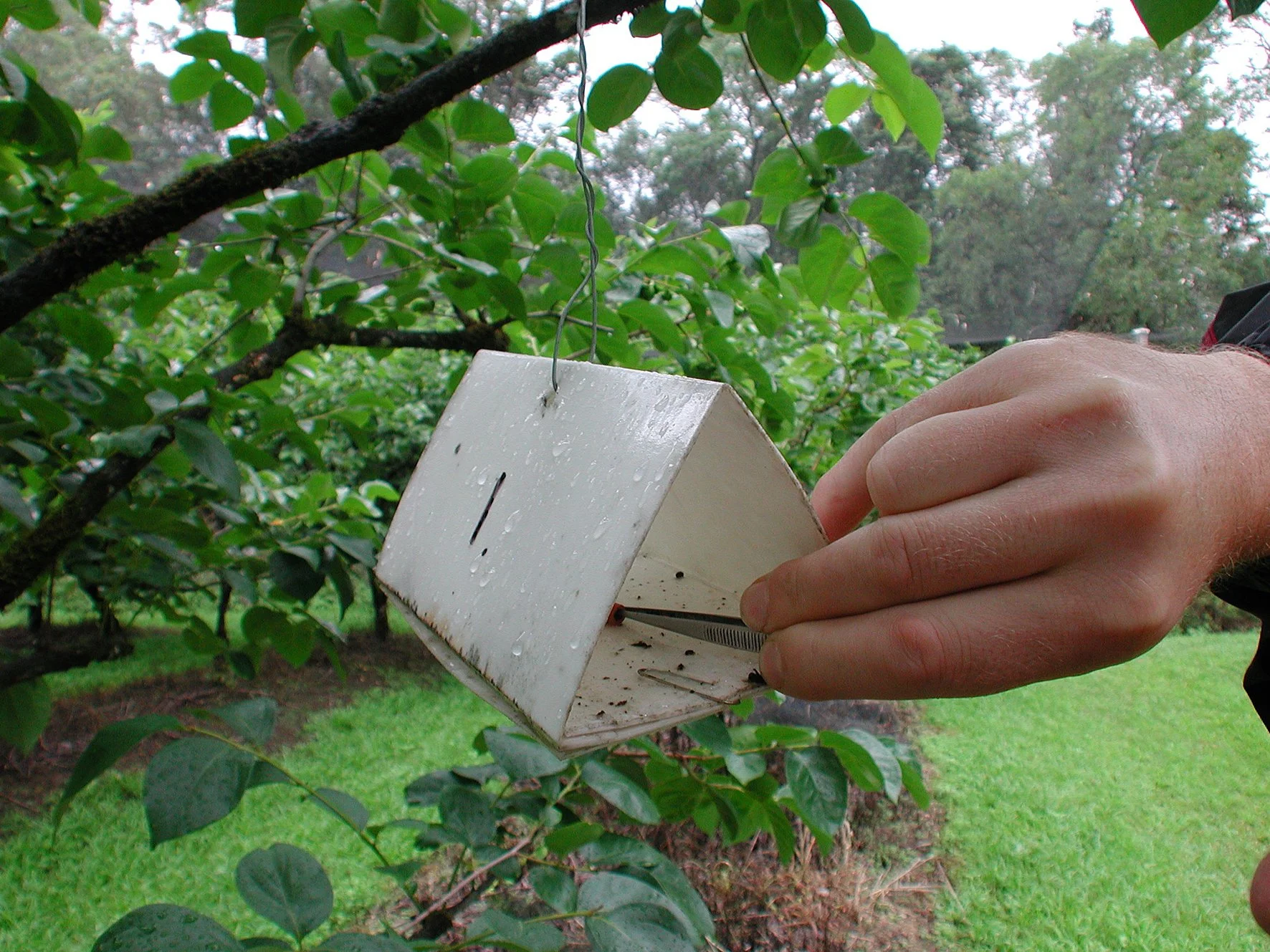
A pheromone trap in an orchard. Growers count what’s caught to decide whether to spray.
For another pest, tiny insects that cling flat to the bark and look almost like part of the tree, growers wrap a strip of sticky tape around a branch and check it under a hand lens for crawling young before they decide anything.
Spraying costs money: fuel, labor, the time to run equipment through the rows. Below the threshold, it isn’t worth it. Above it, the math changes. Nobody sprays a crop that doesn’t need it.
So when I tell her the peaches aren’t organic, it’s true, and it isn’t the whole answer.
Organic fruit gets sprayed too, and most people don’t know that. Certification limits which materials are allowed. It doesn’t ask whether a spray is needed. Spraying when nothing is wrong can also kill the wasps and other insects that already keep pests in check, and sometimes trades a small problem for a bigger one.
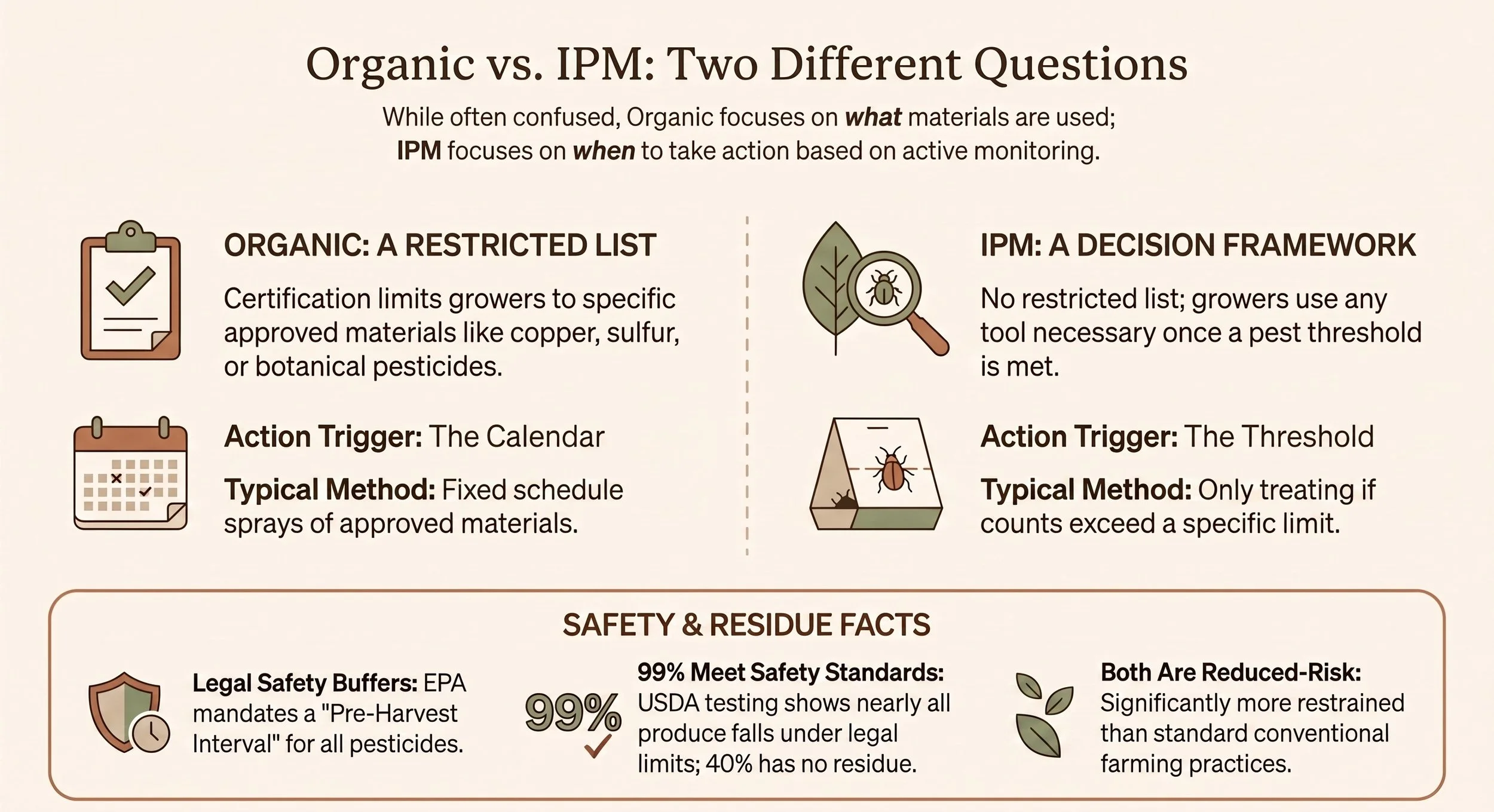
Most of the fruit in a typical grocery store is grown conventionally, without organic certification or an IPM program. Conventional growers can use a wider range of chemicals, including broad-spectrum synthetics that organic rules keep off the table, and many spray on a fixed schedule with no threshold. Organic and IPM are both more restrained than that, through different rules.
Every pesticide product, on any kind of farm, carries a pre-harvest interval: the legal minimum number of days between the last spray and harvest. The EPA sets it with a wide safety margin built in. USDA tests thousands of produce samples every year. In the most recent report, more than 99 percent came in under the safety limits, and over 40 percent showed no detectable residue at all.
Whatever you bring home, organic, IPM or conventional, rinse it under running water before you eat it. That removes residue as well as dirt. If you want fruit that has never been sprayed, ask around. There are growers who don’t spray at all, and we’re one of them. Peaches are a hard crop to bring through a Northeast season with no sprays.
Most of us set a peach back down the moment we see a mark on it, organic or not. Growers notice. Fruit that has to look perfect is part of why spraying happens at all, whatever the label says.
If you want to know how something in our farm store was grown, ask us. Questions about the CSA are welcome too. More from the farm is in Field Notes.