Winter Squash Beyond Butternut
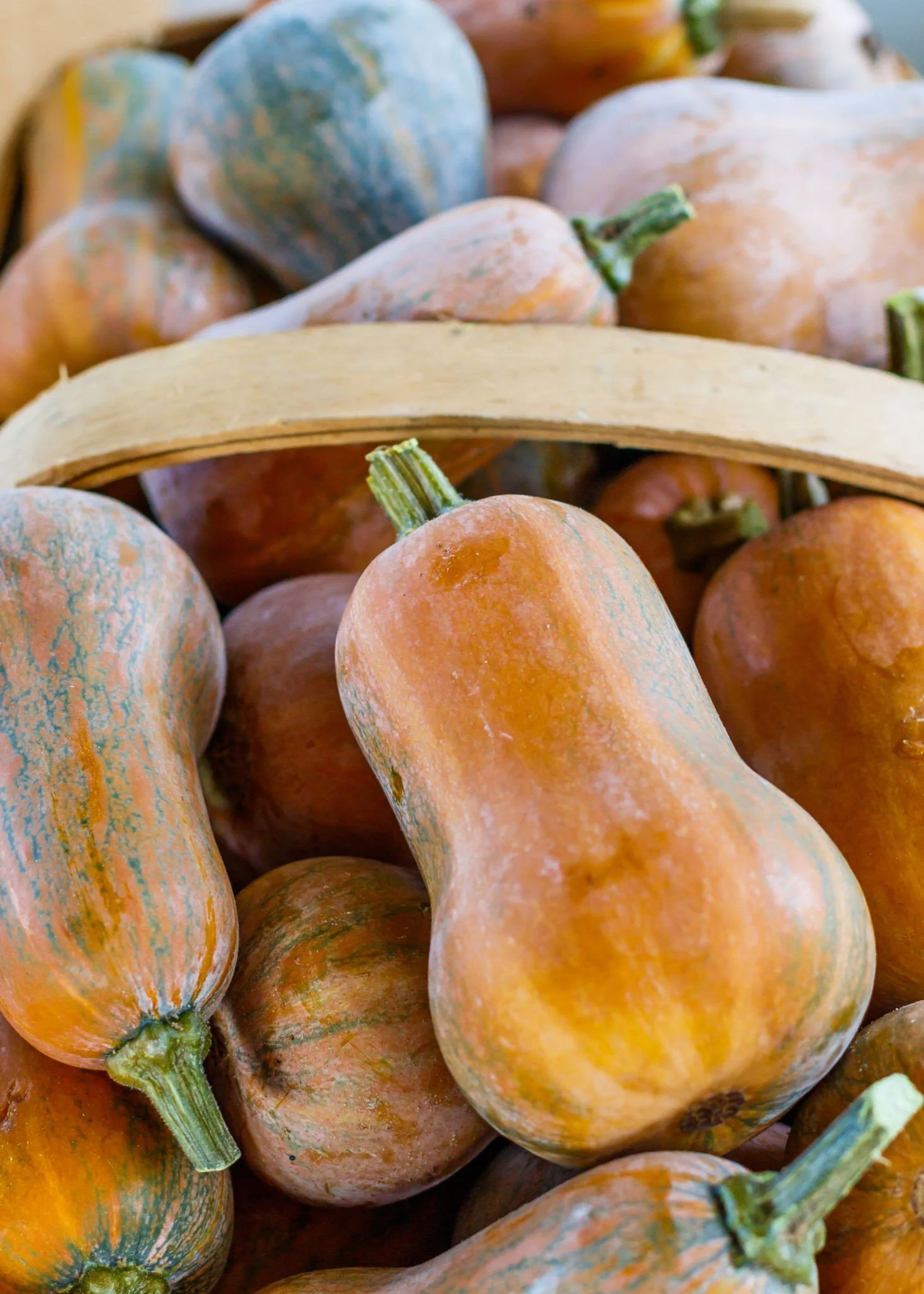
Honeynut puts Butternut to shame when it comes to flavor.
In 2009, chef Dan Barber stood in the kitchen at Stone Barns with a butternut squash in his hand. He showed it to Michael Mazourek, a Cornell plant breeder, and challenged him to make it taste better and make it smaller.
The Honeynut is what came out of that. It keeps the butternut shape at about four or five inches long, which is one serving. It is sweeter and nuttier than its parent, and the skin is thin enough to eat. It reached markets in 2015. Thin skin means it doesn’t store as long as butternut, so eat these first.
You know butternut and acorn. Spaghetti squash is the odd one: mild and faintly sweet, with a little crunch left in the strands. Halve it, scoop the seeds, rub the cut sides with oil, and bake cut-side down until a fork goes through the shell, about 40 minutes at 350 to 425 degrees. Let it rest 10 minutes, rake it with a fork, and sauce it like spaghetti. It takes a sauce well because it doesn’t compete with it.
These are the other three on our table that you may not be familiar with.
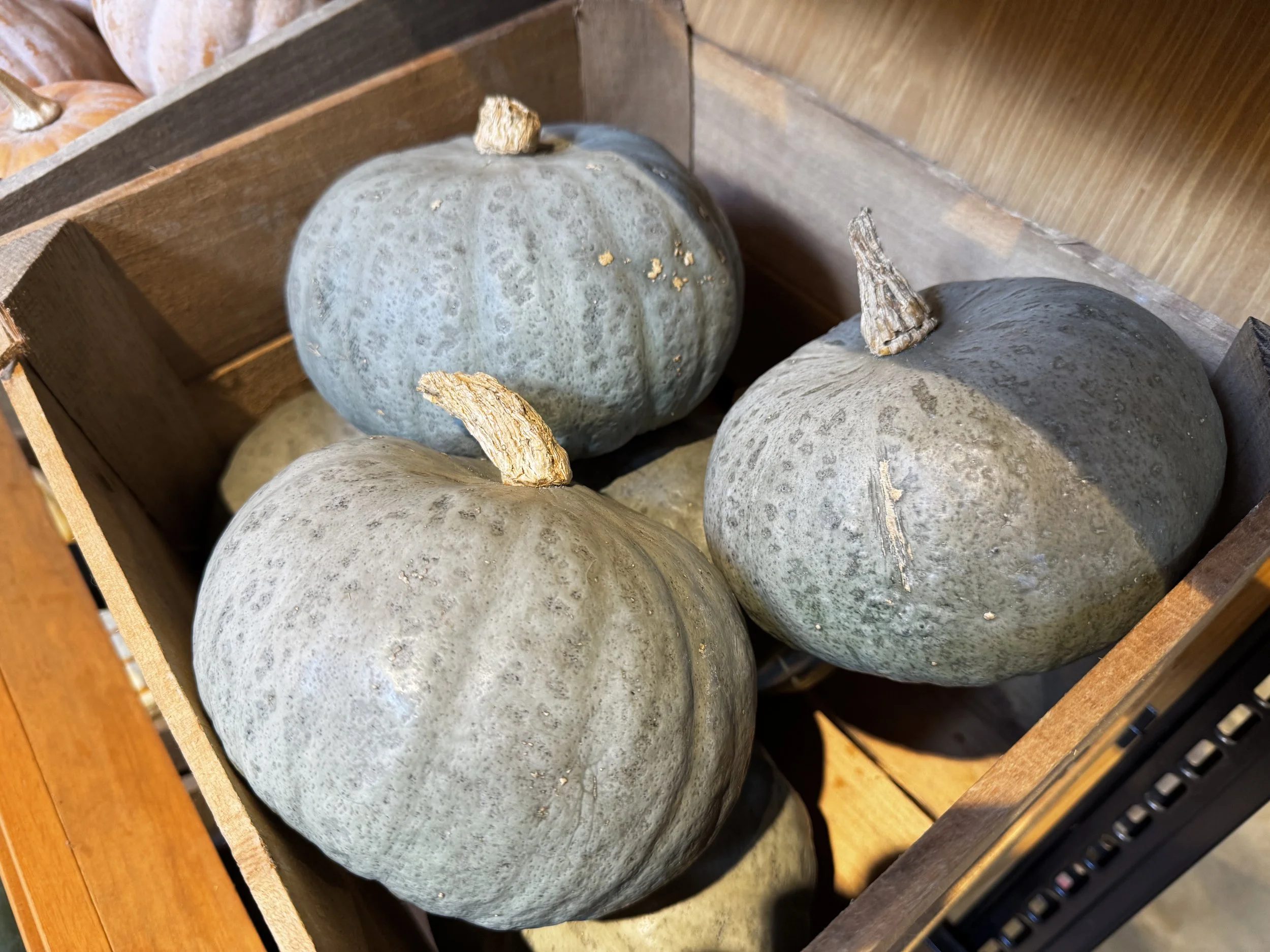
Winter Sweet Kabocha
A dark grey-green Japanese-type squash. The flesh is sweet and flaky, drier than butternut, with real depth of flavor. The skin softens when cooked and you can eat it. It stores a long time.
Because the flesh is starchy, it makes a firmer pie that doesn’t weep, with a taste like sweet chestnut, so use it anywhere a recipe calls for canned pumpkin. For something different, simmer chunks in soy sauce, mirin and a little sugar, the traditional Japanese way. They hold their shape and take up the liquid.
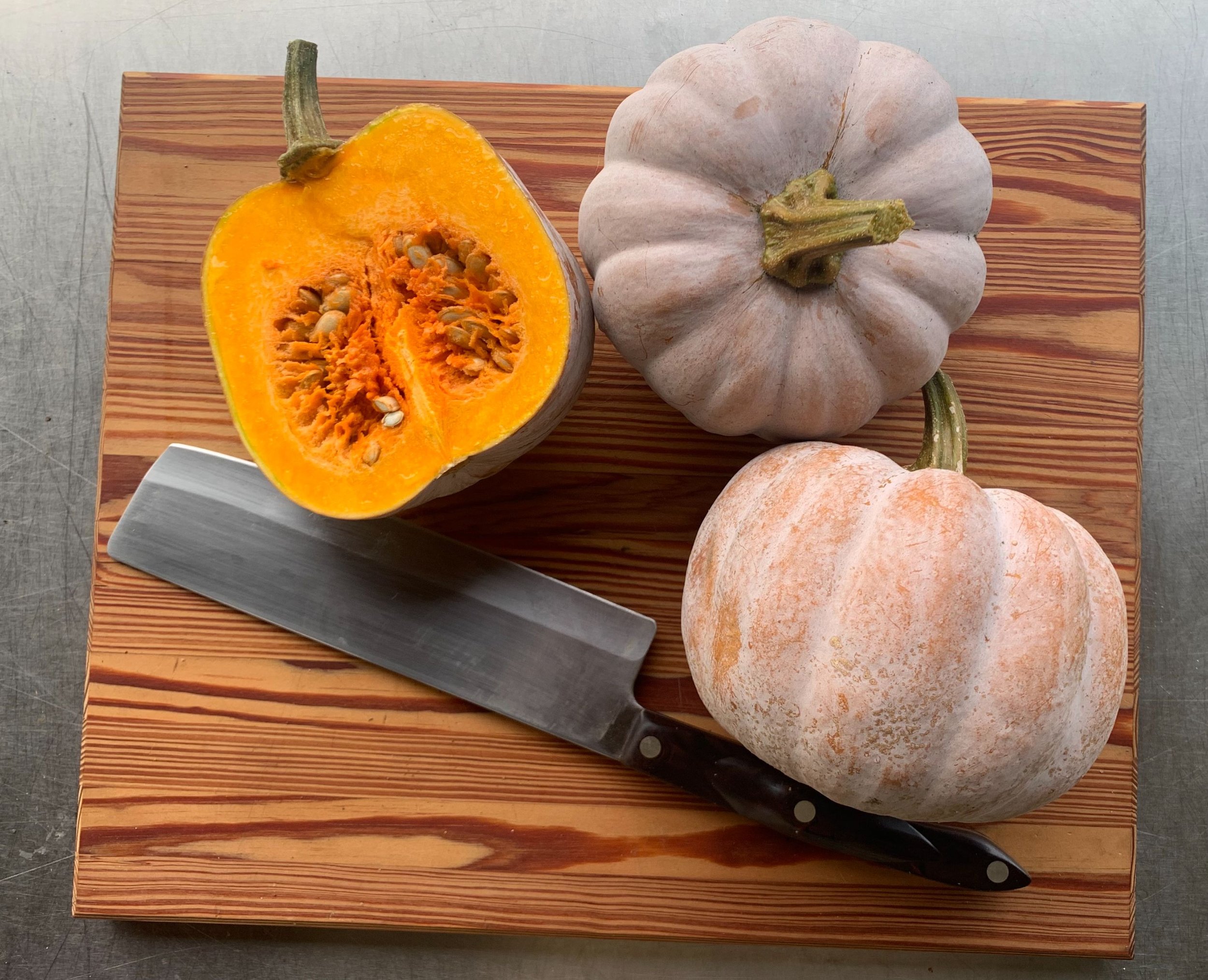
Koginut. Mazourek bred this one too. The full name is Robin’s Koginut, for Robin Ostfeld, who worked on the project. It’s a cross of two squash, one chosen for dense, dry flesh and the other for sweetness. Row 7, the seed company, calls the texture velvety and the flavor intensely squashy. Use it anywhere you’d use butternut, but expect much more flavor.
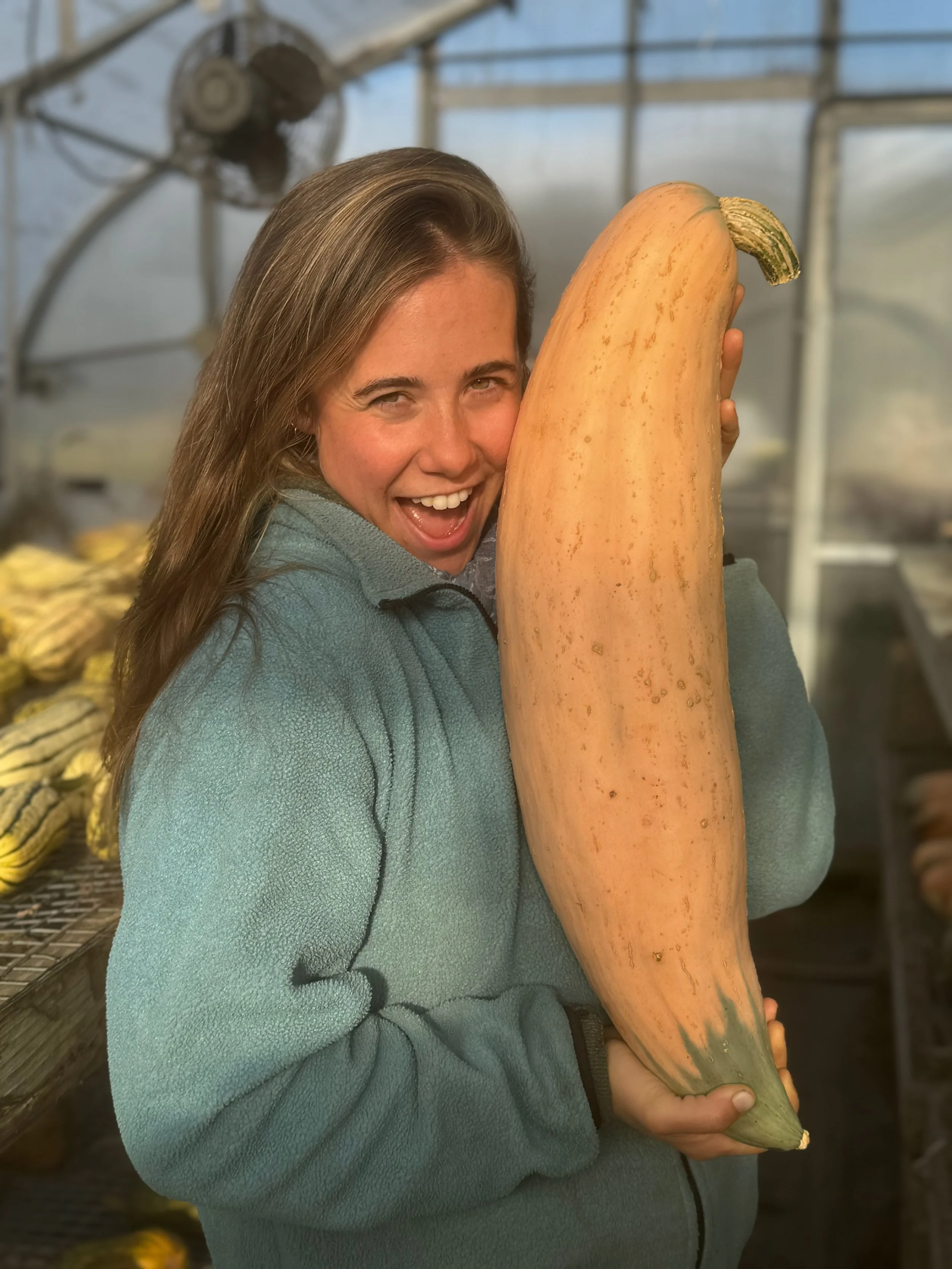
Georgia Candy Roaster. The Cherokee grew this squash in the 1800s and shared seed with settlers in Appalachia. It is long and banana-shaped, with pink skin and a blue-green tip at the blossom end. It can reach two feet and 15 pounds. The flesh is smooth and creamy, savory more than sweet at first. A fully ripe one keeps for months and gets sweeter as it sits.
It looks like a lot of squash because it is. Slice off the ends so it sits flat, halve it, then split the halves lengthwise and roast the pieces cut side down. The skin is thinner than most, so it cuts easier than it looks. If the shell fights you, warm a piece in the microwave or oven for a few minutes until it gives.