Jim Schultz’s Red Shirt Farm Is a True Success Story
Originally published on HobbyFarms.com, December 31, 2021. By Robin Hackett.
If you met Jim Schultz at a farming conference, you wouldn’t place him as a relatively new farmer. In addition to having retired from a career in education, Jim is also an absolute fount of agricultural knowledge.
After a few minutes of chatting, you’d come away convinced that Jim is an organic farming educator somewhere, as opposed to a farmer who began his own operation after retiring from a different career.
Although many people fantasize about leaving their desk jobs to start a career in agriculture, Jim not only took that leap but has found success on the other side. Red Shirt Farm is not a small, hobby operation. Rather, it is a rapidly expanding operation with big plans for the future.
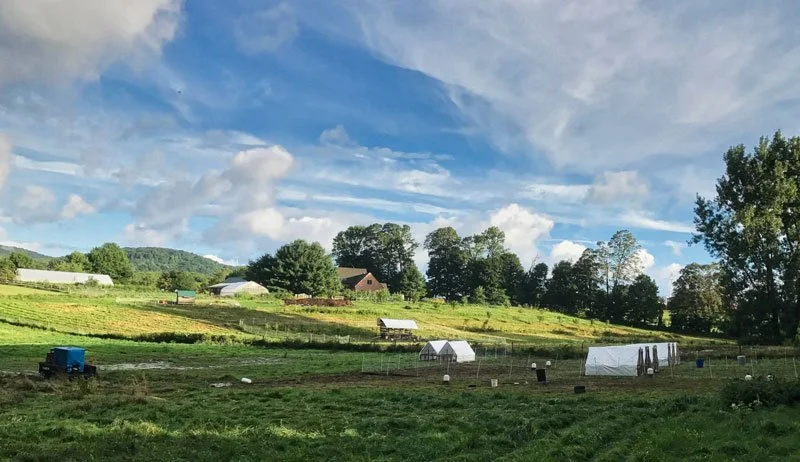
Red Shirt Farm in Lanesborough. Photo courtesy of Red Shirt Farm.
Red Shirt Farm sits on 13 acres in Lanesborough, Massachusetts, in the northwestern corner of the state. The heart of the farm is its no-till vegetable operation, which yields enough produce to support a 130-member CSA, a booth at a local farmers market and several wholesale accounts. The farm also grows herbs, flowers, berries and fruit.
Red Shirt Farm incorporates livestock into its farm ecosystem, too. The farm raises pastured pigs annually and breeds pastured chickens and turkeys for both meat and egg production. While Jim has been quietly improving and expanding the farm for years, more and more people have started to take notice — ACRES USA recently profiled the farm in a cover story, and Jim is a not-infrequent speaker for organizations like NOFA Massachusetts.
“I worked at Red Shirt Farm for two seasons starting in 2017,” writes journalist Robin Hackett, a young farmer with a background in environmental policy. “The farm was different back then, but its future successes also felt inevitable. During my time there, the farm built its second high tunnel, opened its first wholesale accounts, and grew its CSA membership by 30 percent.”
“Beyond just working hard, Jim also works ‘smart’ in a way that I’ve seen few other farmers pull off. His substantial knowledge of regenerative farming means that he wastes little time on tasks that aren’t necessary. Despite the many challenges associated with starting a new farm business, Jim’s story is a testament to the fact that it still can be done — and even after retirement at that.”