Our CSA started about 15 years ago with a handful of friends and outdoor distribution.
When I think back to my early days at Caretaker Farm in Williamstown, I remember the rhythm of the place: neighbors arriving each week to fill their baskets, the clatter of crates, the quiet focus of the work.
I was a young aspiring farmer then, learning from Sam and Elizabeth Smith, pioneers of one of the first Community Supported Agriculture programs in the country. Years later, I raised my own two children on that same farm.
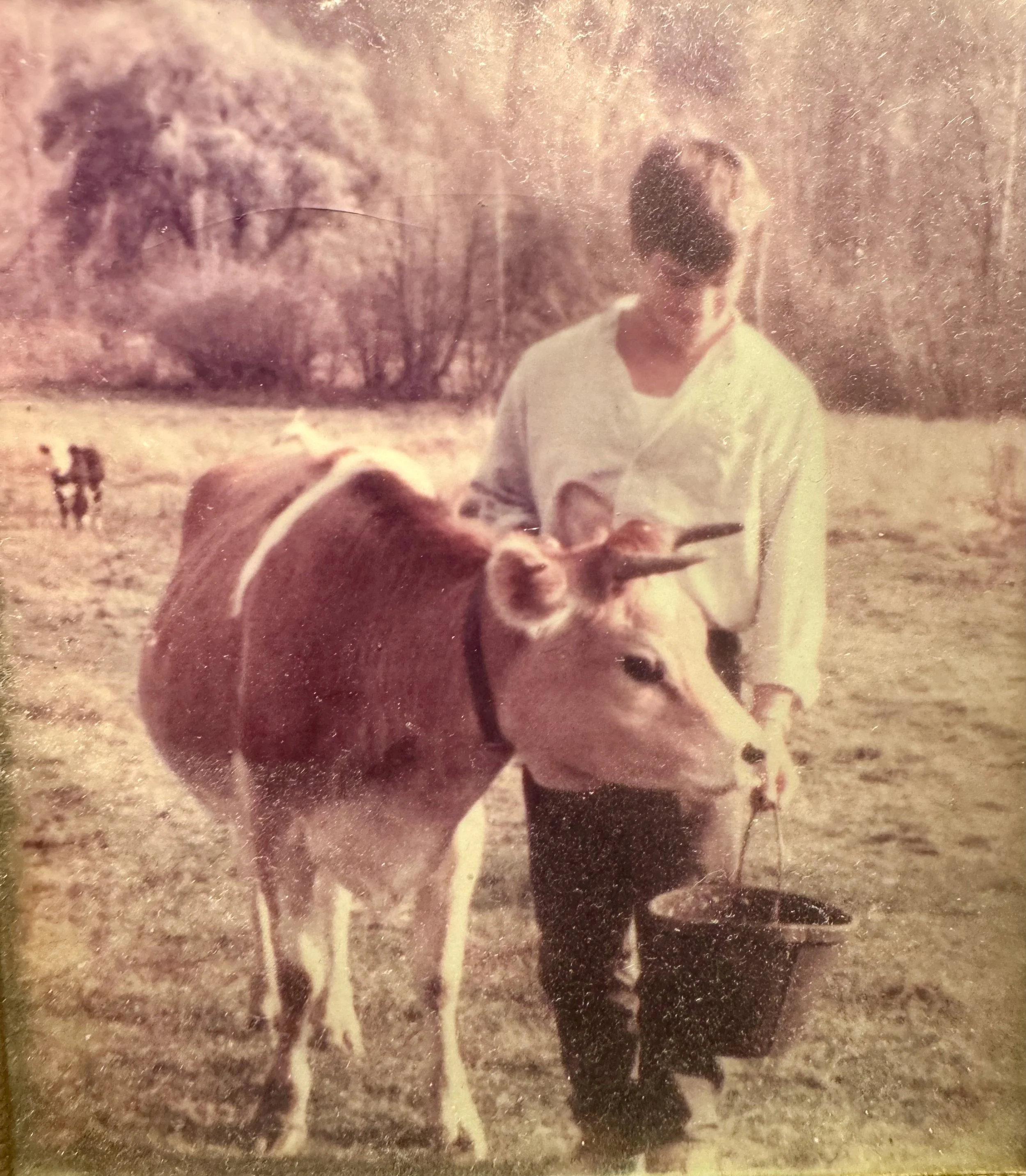
A 20-year-old Jim got exposed to farming at Caretaker Farm, one of the first CSAs in the region.
Those seasons taught me what CSA is really about: a mutual trust between farmer and community.
Where CSA began
The CSA idea itself was born right here in the Berkshires. In 1985, Robyn Van En launched one of the first CSAs in the United States at Indian Line Farm in Great Barrington. It was a radical idea at the time: eaters would invest in a farm at the start of the season, sharing both the risk and the reward. The point was that the farm would still be there next year, no matter what the weather or economy threw at it.
Robyn used to say the goal of CSA was to “put the farmer’s face on your food.”
When you join a CSA, you enter a relationship. You know who grows your food, how it’s grown, and what your dollars make possible: living soil, clean water, biodiversity and good jobs in your own community.
What got blurred
Somewhere along the way, that idea blurred. CSA came to mean a bargain on good vegetables. But farming is still risky. Floods, heat waves, drought and rising costs can upend a season overnight. We keep planting because we want to feed our neighbors and keep small farms alive.
Your early commitment each season pays for seeds, staff, equipment and compost, months before the first carrot or tomato appears. When cash is low in the spring, it’s what lets us buy seeds and potting soil. In return, you get the freshest food possible and a share in something real.
How ours works
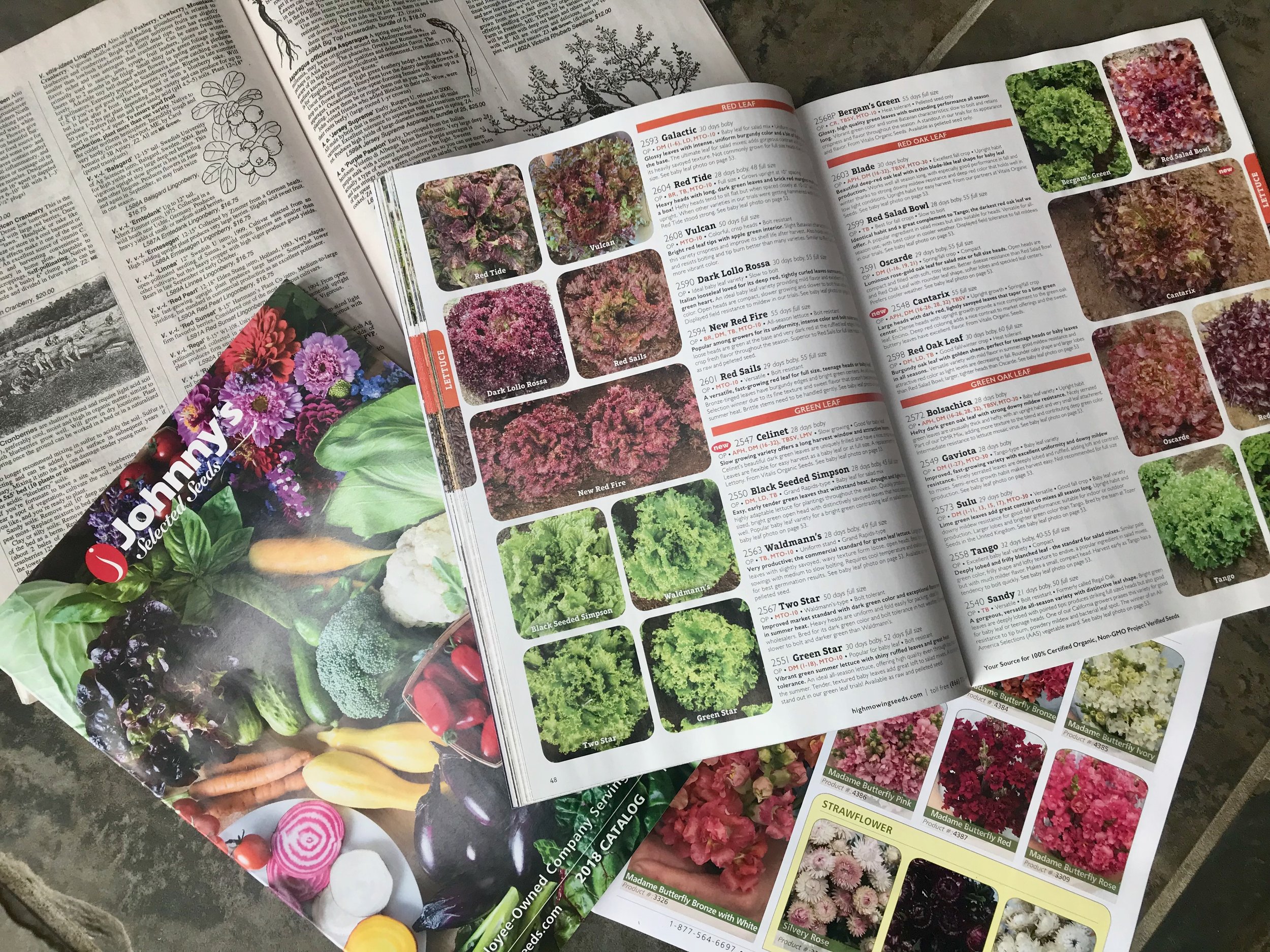
At Red Shirt Farm, we’ve carried that idea forward while adapting to modern life. Our CSA uses a flexible store card system. Instead of receiving a pre-packed box each week, you shop when it suits you and choose exactly what you want. It’s the same shared commitment, built for busy families.
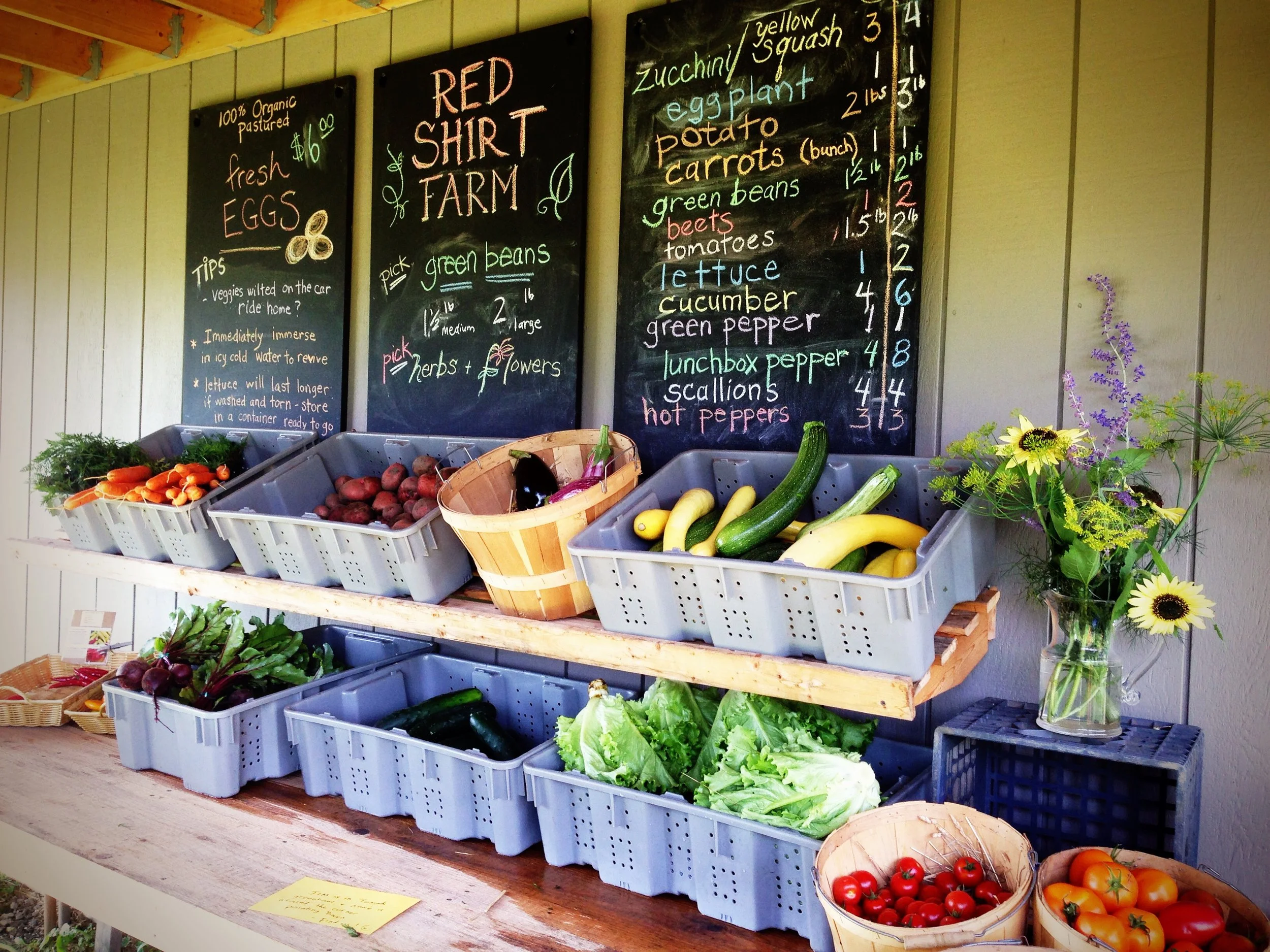
Farming isn’t the postcard people imagine. It’s muddy boots, long days, broken equipment and a constant argument with the weather. When a community shares that risk, the farm gets through the bad years.
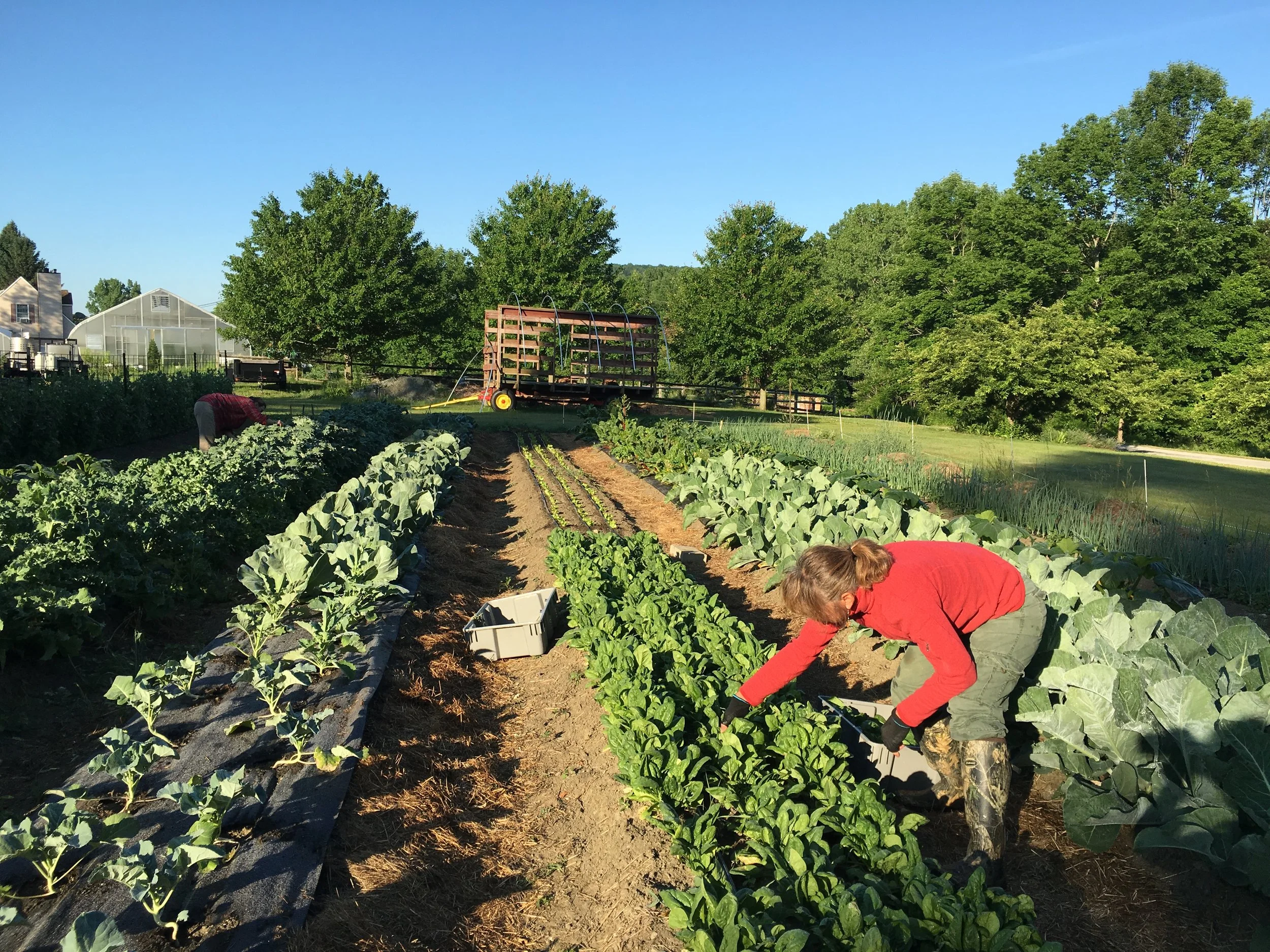
Sarah and I are grateful to everyone who has walked this path with us, through droughts and floods, bumper crops and lean years.
CSA registration is open. The farm store is open year-round. For what grows in the cold months, see Greens in February. More from the farm is in Field Notes.