Today is the pigs’ last day.
They’ve lived a good life, maybe the best a pig could hope for.
They came to us back in May as 25-pound piglets from a small farm in Worthington that raises heritage breeds. We set them up with a hut in the middle of a four-acre pasture, right next to a big old cottonwood tree that shades them through the heat of the day. They spent their summer grazing, rooting, wallowing and napping in the dappled light.
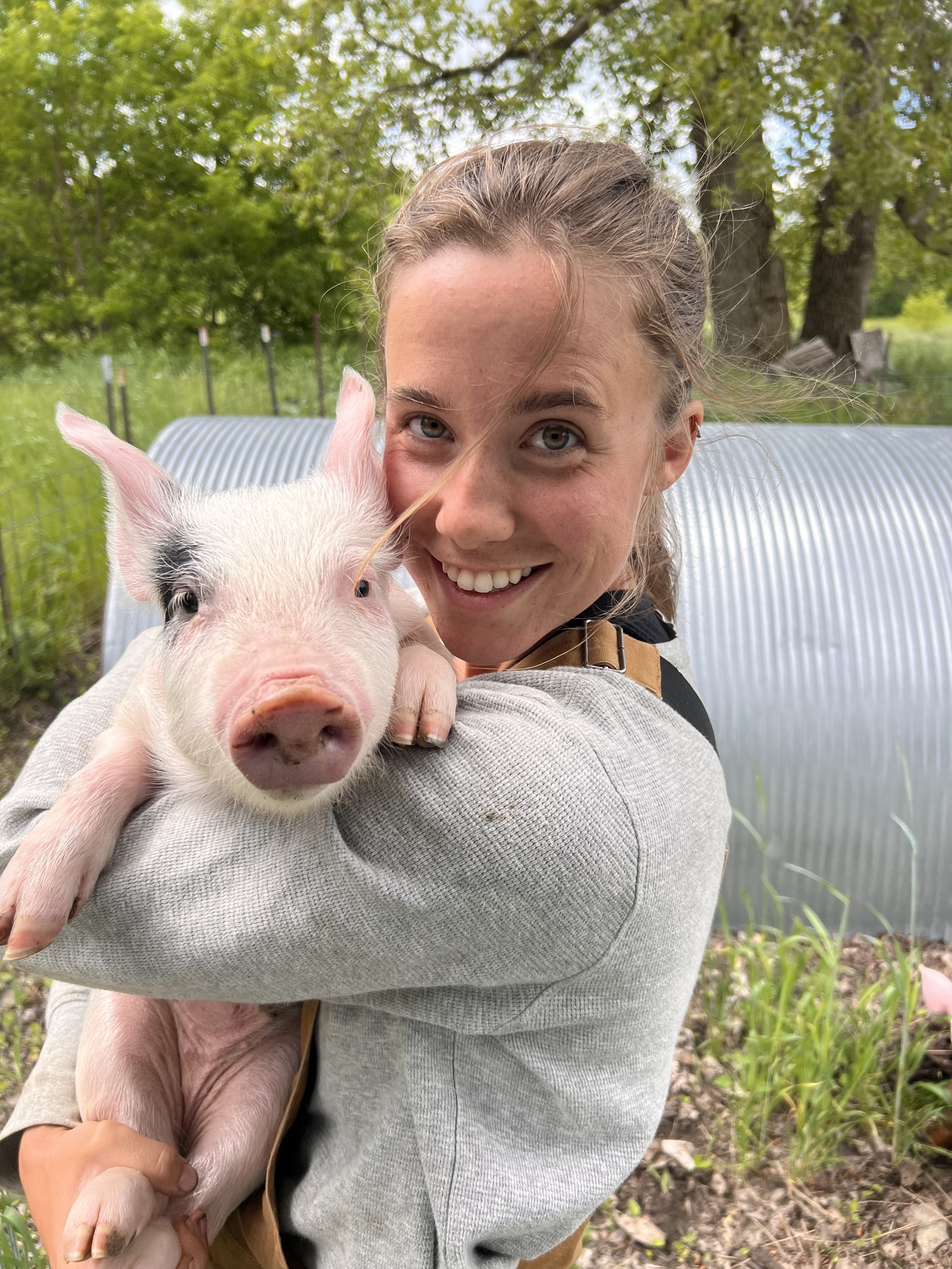
Piglets arrive on the farm in May at 25 pounds and grow to 250 by October.
Pigs are social animals, so we get seven every year from the same litter.
If you’ve never watched pigs root, it’s a joy. Their whole body gets involved. The ears twitch, the tail curls and uncurls, the snout digs deep into the soil as if they’re following a trail only they can smell. Rooting isn’t a habit. It’s what pigs are built to do.
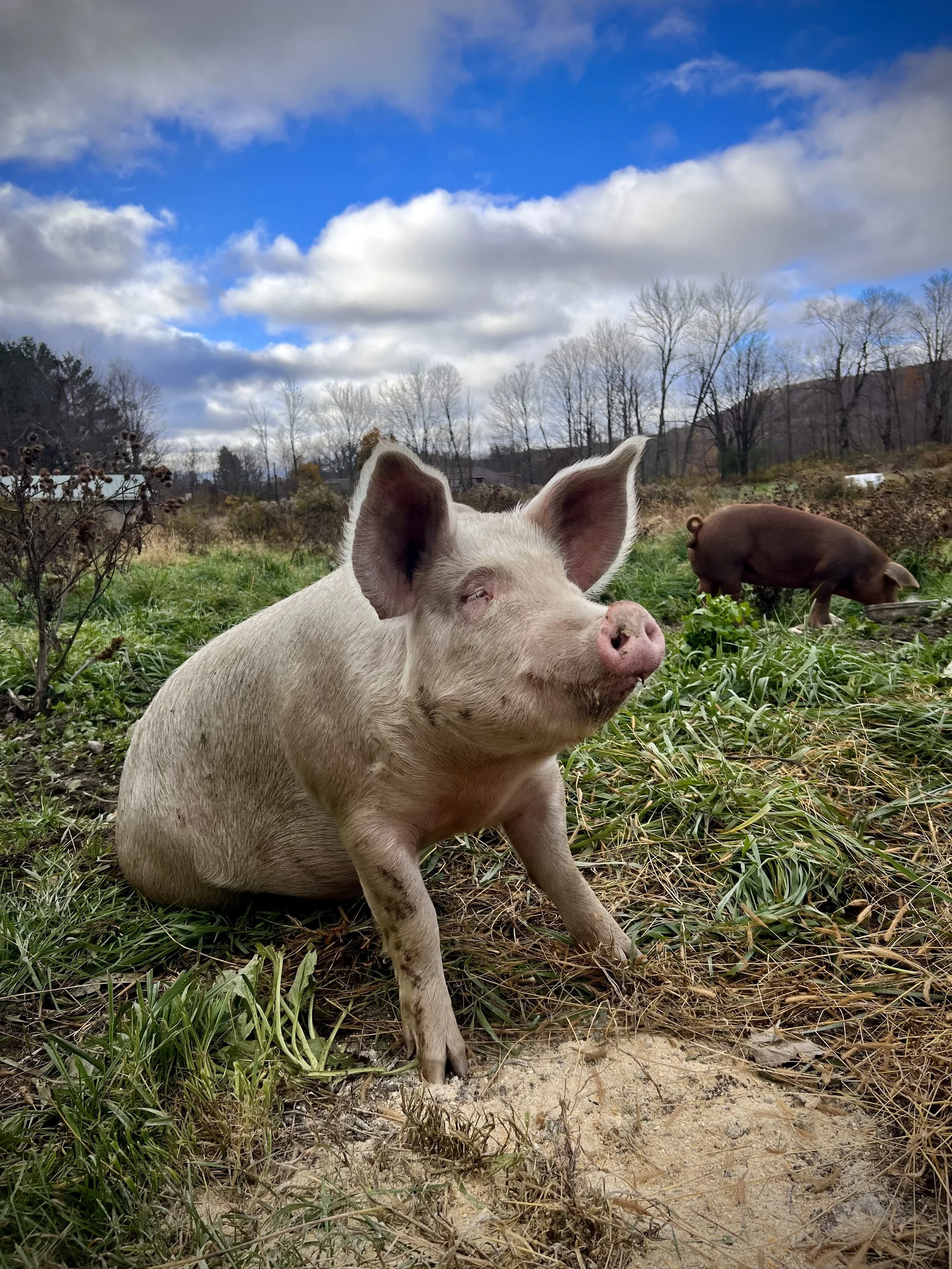
They grow fast, from 25 pounds to 250 by fall, on good grain, vegetable scraps and pasture grass. They come running when they hear the feed bucket and lean in for scratches behind the ears or an occasional belly rub.
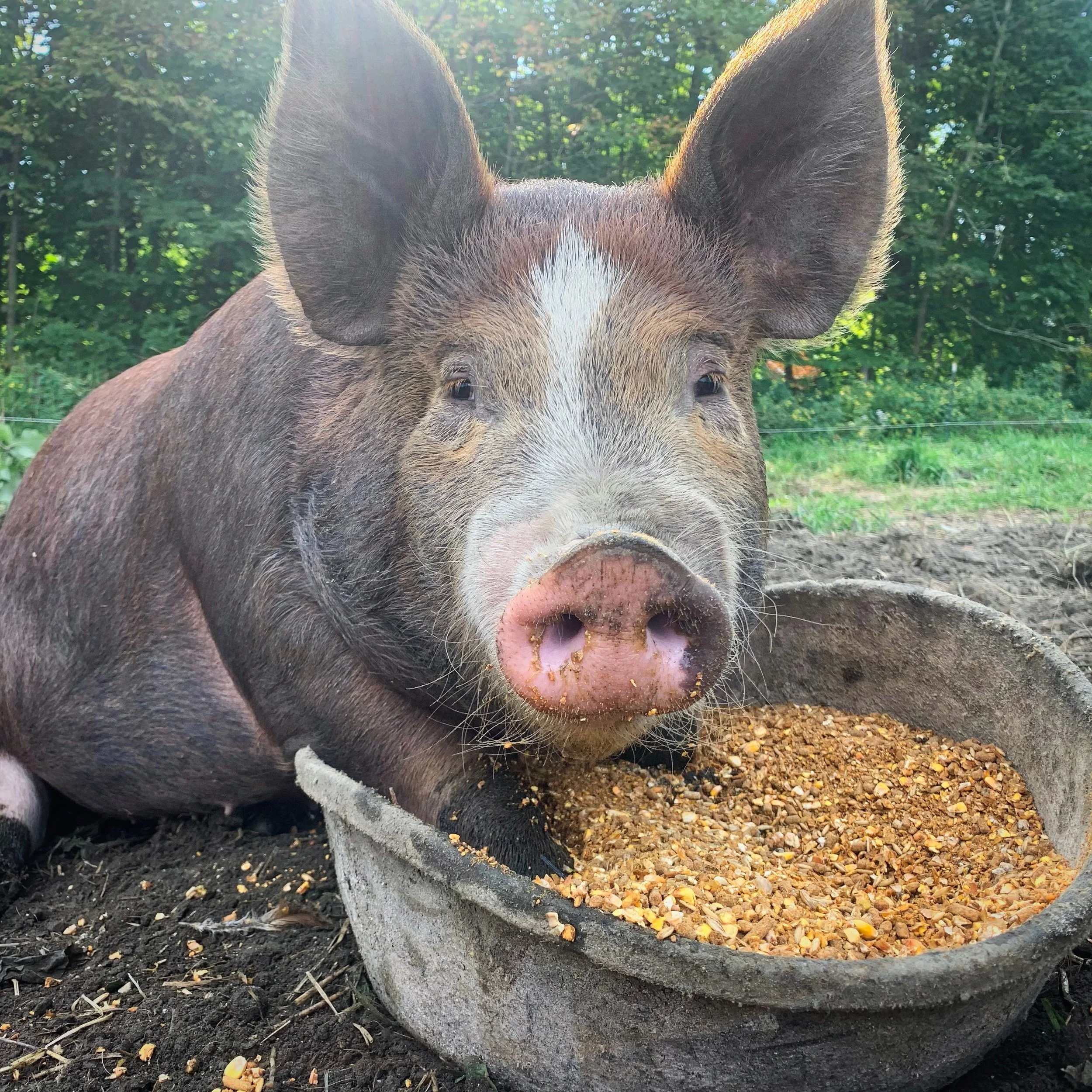
Each has a personality. One bold, one shy, one endlessly curious about our boot laces and water buckets. Twice a day we visited them and fed them, and every other week we moved their fence to fresh grass and watched them grow into themselves. Pasture makes up about 20 percent of their diet. The rest is good grain and organic vegetable leftovers.
One bad day
Today, they’ll be harvested here on the farm. It’s a hard day for us, but we believe it’s the most humane way. They stay in their familiar pasture until the very end, with no trailer ride and no unfamiliar place. We stay with them right up to that final moment. We don’t take it lightly, and we feel a responsibility to be there.
We often say our animals have “one bad day.” The rest of their days are good ones.
How most pigs live
That’s not true for most pigs in this country. Nearly all are raised in small pens inside enormous warehouses: no sunlight, no soil, often standing on slatted concrete floors above manure pits.
To keep them growing in those conditions, they’re often fed additives that speed weight gain and given antibiotics to fend off disease that crowding brings on.
Their tails are docked so other pigs, stressed and bored, can’t bite them off. A pig uses its tail to swish flies and to show that it’s relaxed or alarmed.
Michael Pollan has written that if the walls of the meat industry became transparent, we would not long keep raising, killing and eating animals the way we do.
What it does for the land
Our pigs live differently, and so does our land.
Rotational grazing keeps them on fresh pasture, spreads their manure naturally and prevents over-disturbance. You can see it: pastures that once held weeds now hold grasses, clover and wildflowers, and the soil smells alive. Without adding a drop of fertilizer, we’re cutting early, rich hay off those fields.
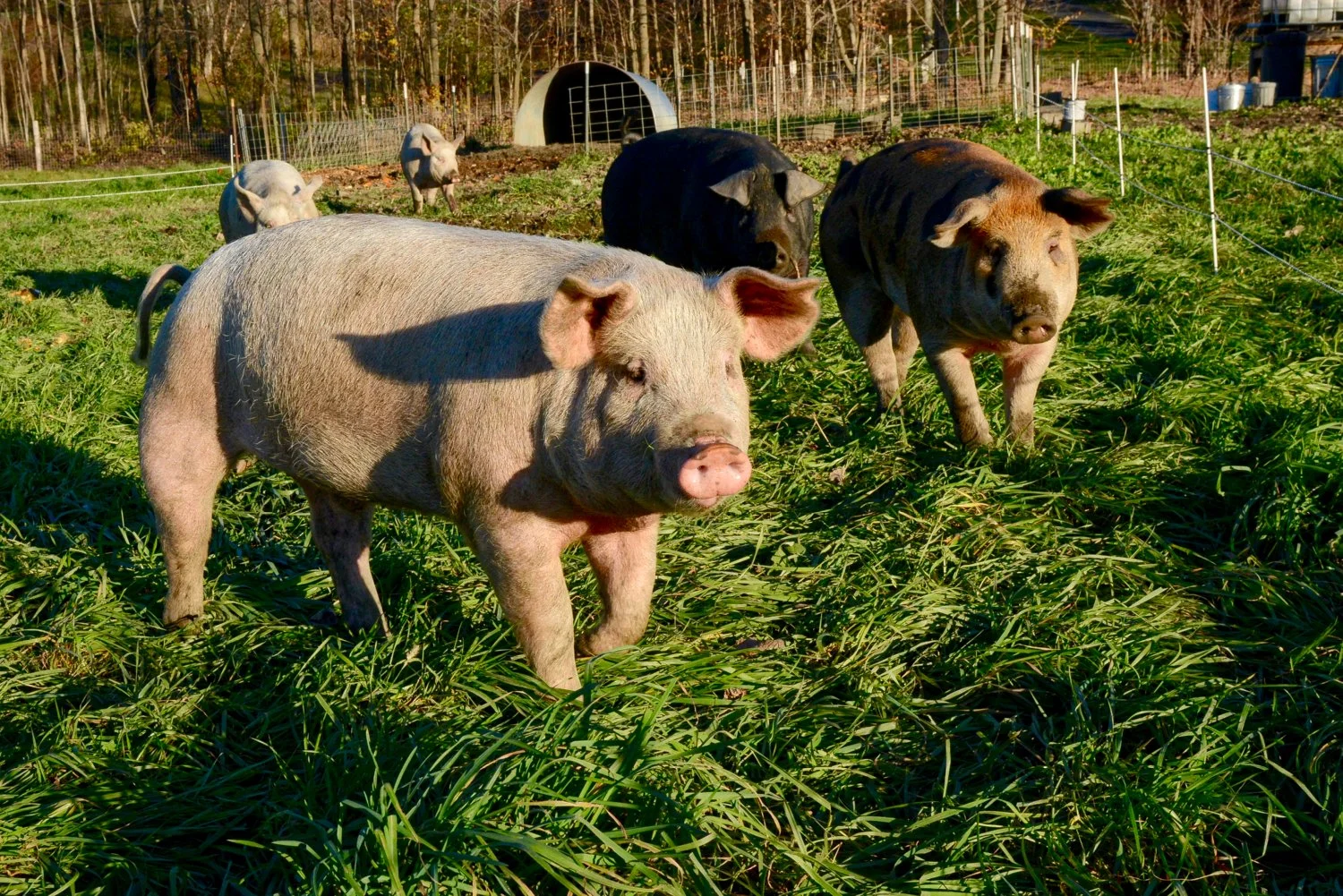
There’s no ecosystem in nature without animals. The pigs eat what grows, return nutrients to the soil, and feed the next generation of plants.
Meat gets blamed for health problems and for climate change. A lot of that blame belongs to the system that produces it. It’s not the cow, it’s the how. Or in this case, the pig.
Animals raised on pasture can build soil carbon and restore fertility, and they turn plants we can’t eat into food we can. The meat tends to be richer in omega-3s and deeper in flavor, and you can know where it came from.
We sell our pigs by the half or whole, in part to encourage nose-to-tail eating: the whole animal, including the cuts nobody asks for. When you cook that way, you waste less and you taste more.
If you eat meat, you should know how it was raised, how it lived and what it gave.
We know not everyone shares our comfort with raising and eating animals. We respect that. We, too, are deeply opposed to the cruelty and pollution of industrial meat production. What we’re trying to show is that there’s another way.
Our pigs had a good life. One bad day, many good ones. As hard as today is, I take comfort that their time here left the land better than they found it.
All of our pork is spoken for this year. If you’d like to get on the waiting list for next season, email us. Or support other farms raising animals the right way: Square Roots Farm (Lanesborough), Holiday Brook Farm (Dalton), Sweet Brook Farm and East Mountain Farm (Williamstown).
The farm store is open year-round. For another pig story, read Freddy. More from the farm is in Field Notes.