He was straight out of central casting. Tall, sinewy, bald, square-jawed, the kind of man who looks like he’s never been late a day in his life. A baseball cap pulled low over piercing blue eyes. He carried himself with a quiet Marine confidence.
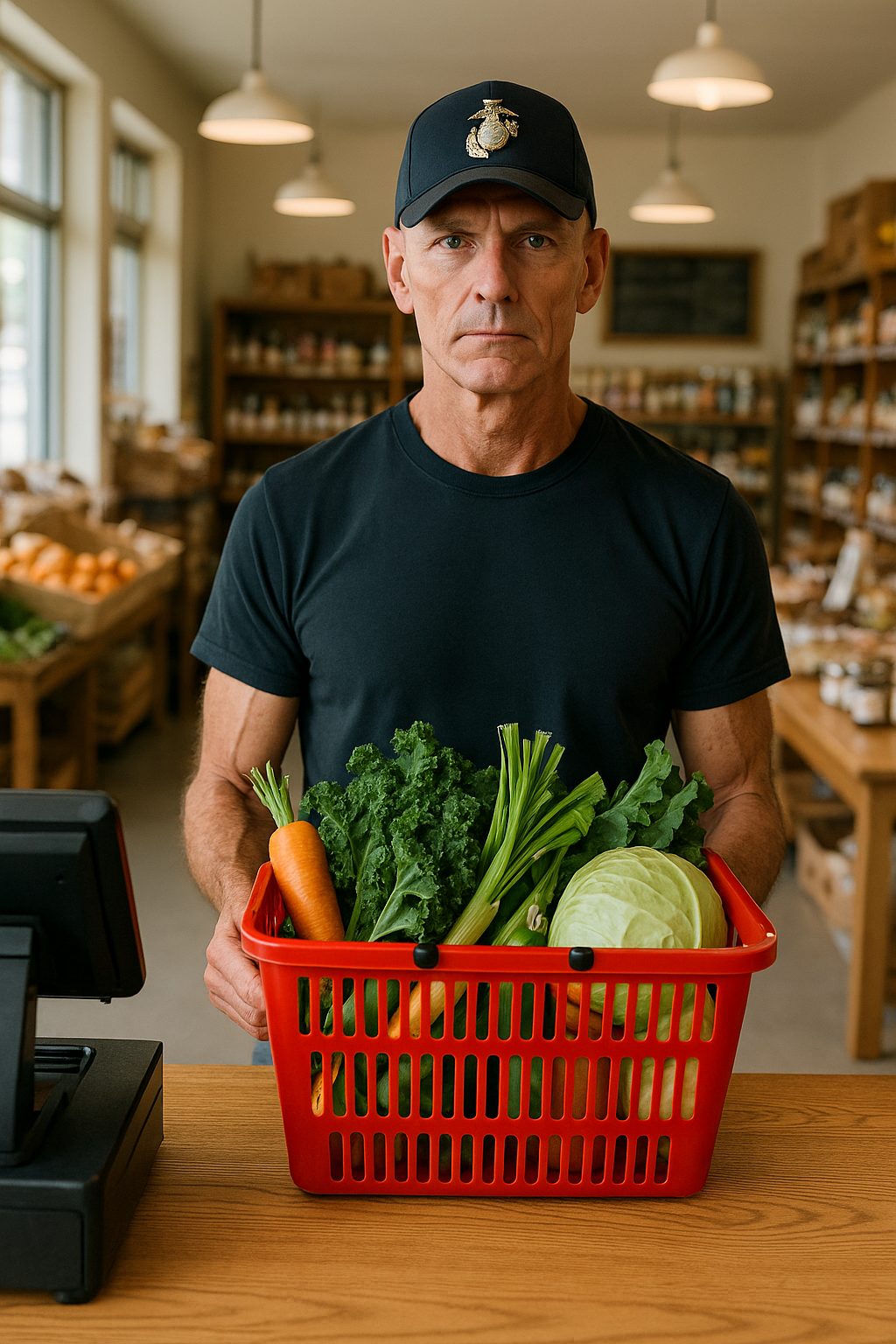
He moved through the store with purpose. Picked up a bunch of carrots, turned an onion in his hand, checked the weight of a squash. Each choice deliberate. By the time he reached the counter, his basket was full of color and life.
“What are you making with all this?” I asked.
“It’s the way I eat,” he said. Then he looked me square in the eye. “I shouldn’t really be alive.”
He told me his story. He’d served at Camp Lejeune, where the water and air were thick with toxins. Years later came the cancers, more than one. But he was still here, 63 years old, strong and standing tall. He said he’d healed his body with food and faith, one good meal at a time.
We talked for a while about health, about what we put into our bodies. It didn’t take long to realize we were on opposite sides of the political spectrum. Yet there we were, two men the same age, talking respectfully, disagreeing agreeably. In the end we shook hands, and he said, “It’s good to be able to have a discussion with someone you disagree with.”
That line stuck with me.
A real conversation and a little curiosity can remind us that we want the same things: health, family, community. Good food has a way of bringing us back to that. Sometimes it starts with getting over our fear of the unfamiliar, whether that’s a person we think we disagree with or a vegetable we don’t yet know how to cook.
Every week, we see folks hesitate over a squash they’ve never cooked or a leafy green they don’t recognize.
Don’t fear the veggies
We get it. Some of the vegetables in our bins look intimidating. Not everyone grew up eating kabocha squash or bok choy. The unfamiliar shapes are some of the most flavorful food we grow.
Winter squash, beyond the basics
Koginut: a cross between butternut and kabocha, with silky flesh and a naturally sweet, nutty flavor. Roast until caramelized and golden.
Buttercup: deep orange inside, dense and rich. Good for soups, curries, or mashing with butter and salt.
Wintersweet kabocha: very sweet after curing, with a creamy texture that makes good pies and purées.
Honeynut: butternut’s smaller, sweeter cousin. Split, roast and eat straight from the skin.
Delicata: the easiest of all. The skin is tender enough to eat, and roasting brings out a brown-sugar sweetness.
Asian vegetables worth knowing
Bok choy: crunchy stems, tender leaves, mild and versatile. Good in stir-fries and soups, or grilled and brushed with sesame oil.
Asian greens mix: tatsoi, mizuna, mustards and more, peppery and bright. Eat raw in salads or wilt quickly with garlic.
Daikon radish: the big white and purple roots you may have eyed warily. Crisp, juicy, slightly sweet. Slice thin for slaw, roast like potatoes, or pickle.
This week, roast the strange squash. Pick up the daikon.
Come say hello at the farm store counter. If you’re curious why real food costs what it does, read The Real Cost of Real Food. More from the farm is in Field Notes.