We’ve been hearing the question a lot lately: “So, when do you close for the season?”
We don’t.
Most gardens have gone dormant by now. We keep growing food through the coldest months, with resourcefulness, patience and a bit of clever design.
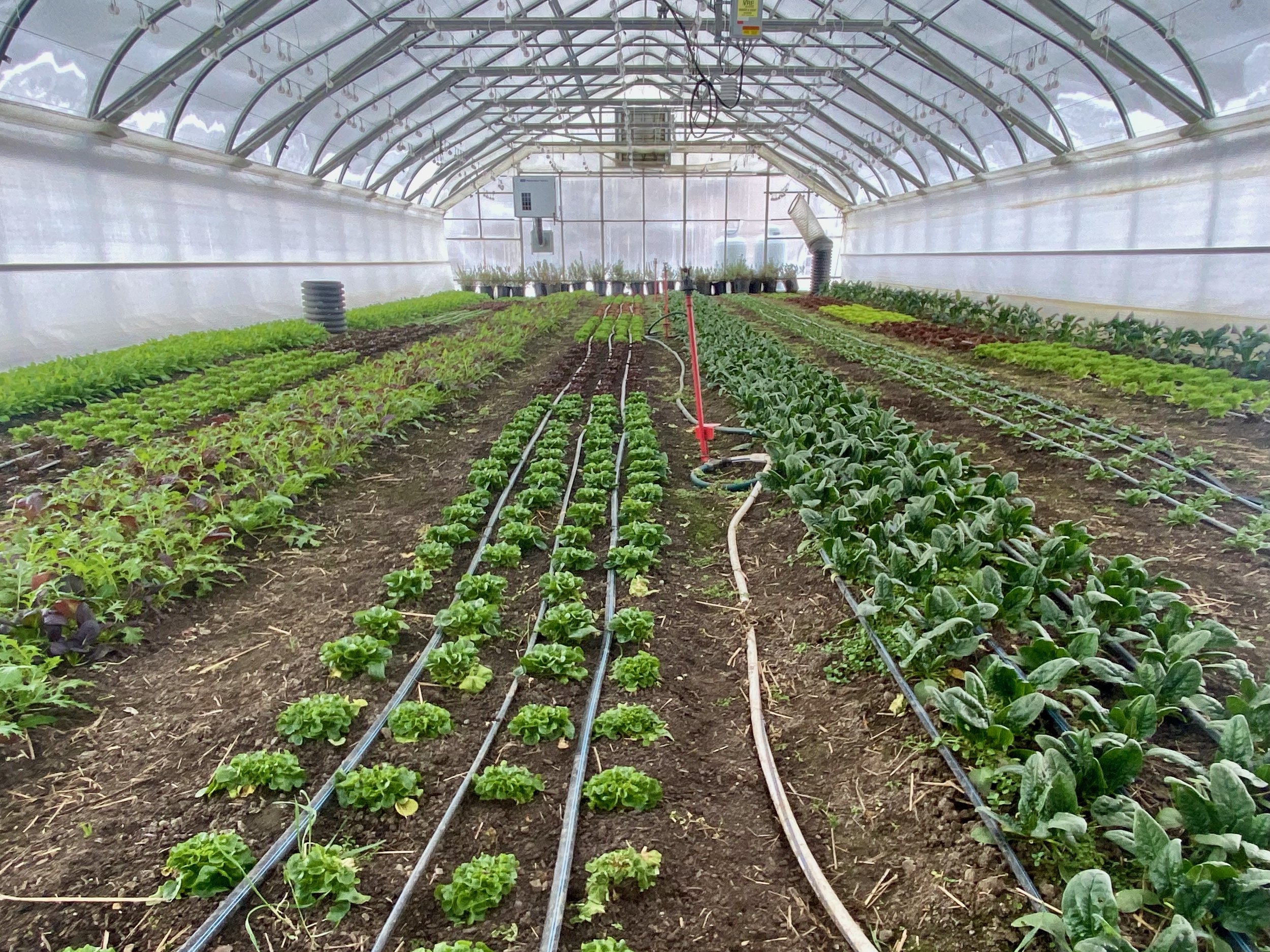
At the heart of our winter system is a Climate Battery greenhouse, a 30-by-72-foot structure that captures the sun’s energy and stores it in the soil beneath. Think of it as a giant rechargeable battery buried underground.
All summer long it soaks up heat, then releases it through the winter, keeping the greenhouse above freezing even on the coldest nights. When temperatures drop below zero, we add a little propane heat to protect what’s stored in the soil. On sunny days, the battery even recharges itself.
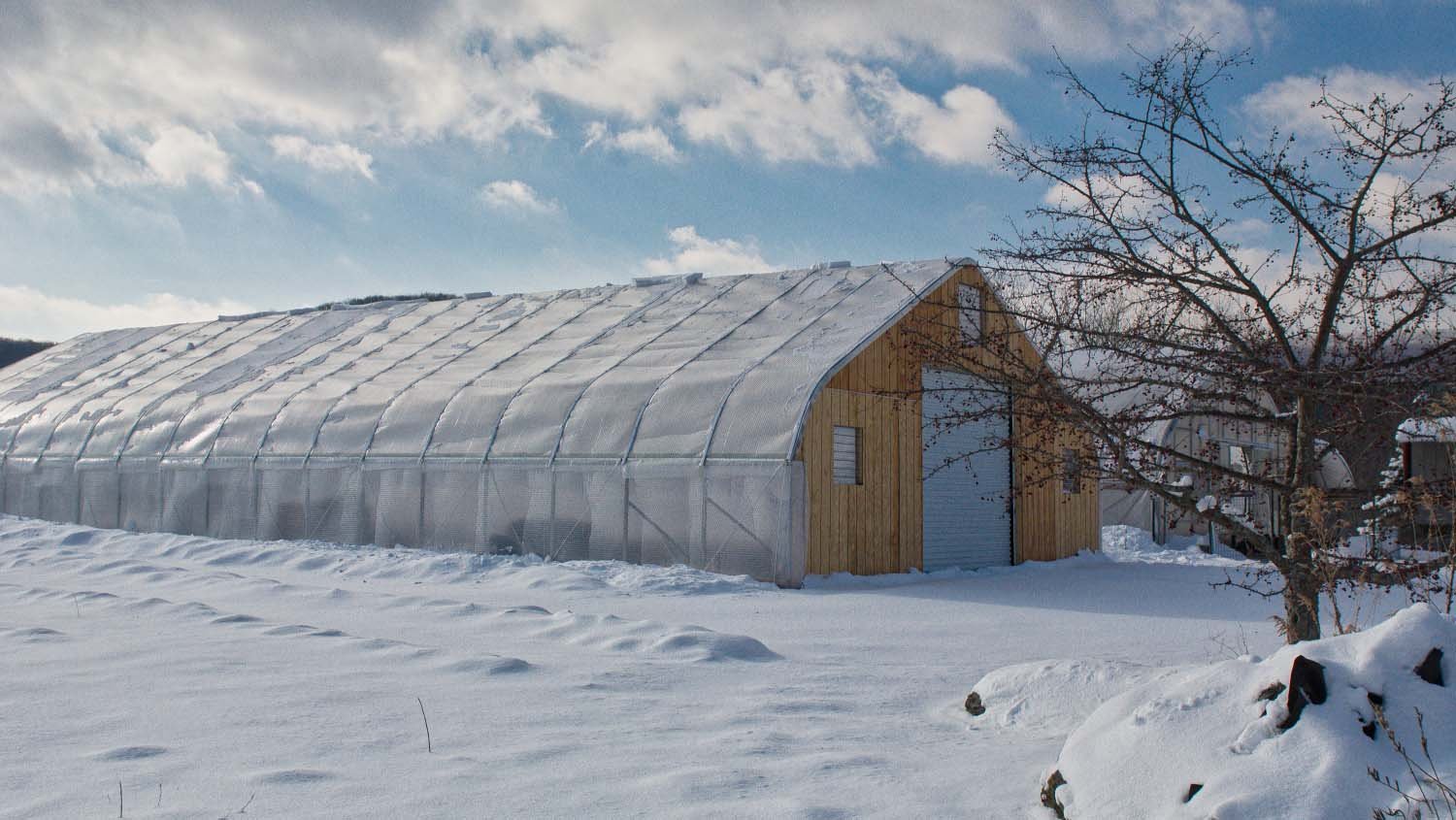
Our Climate Battery stores summer heat in the soil to warm the greenhouse in the winter.
Our other greenhouses are minimally heated, kept at 33°F, just warm enough to prevent freezing but cool enough to conserve energy and reduce emissions.
Inside, rows of spinach, kale, chard, lettuce mix, bok choy and other hardy greens grow under row cover, a thin fabric that works like a blanket, holding warmth and humidity while letting in light.
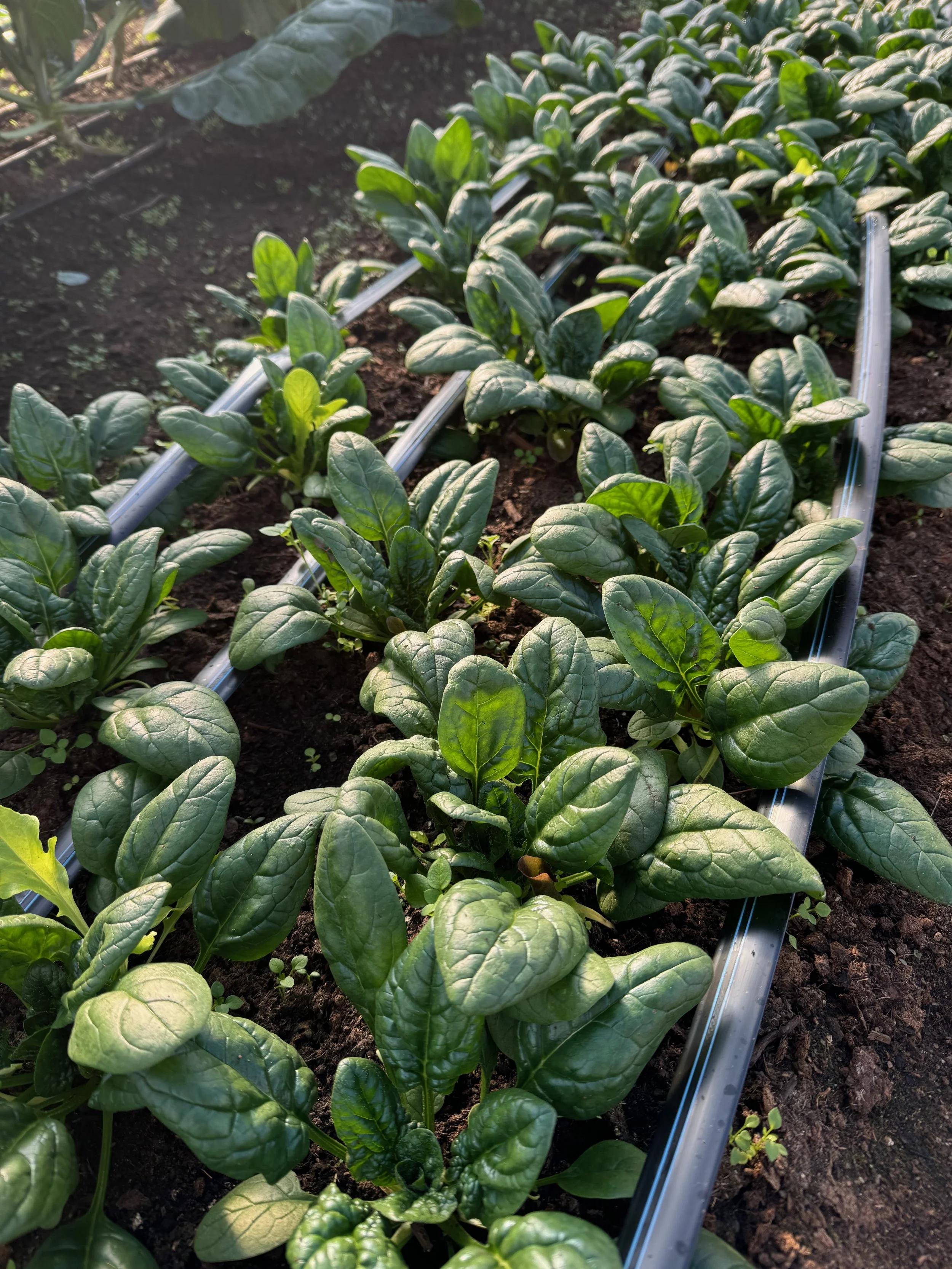
Spinach is the star of winter growing, producing for months even in freezing temperatures.
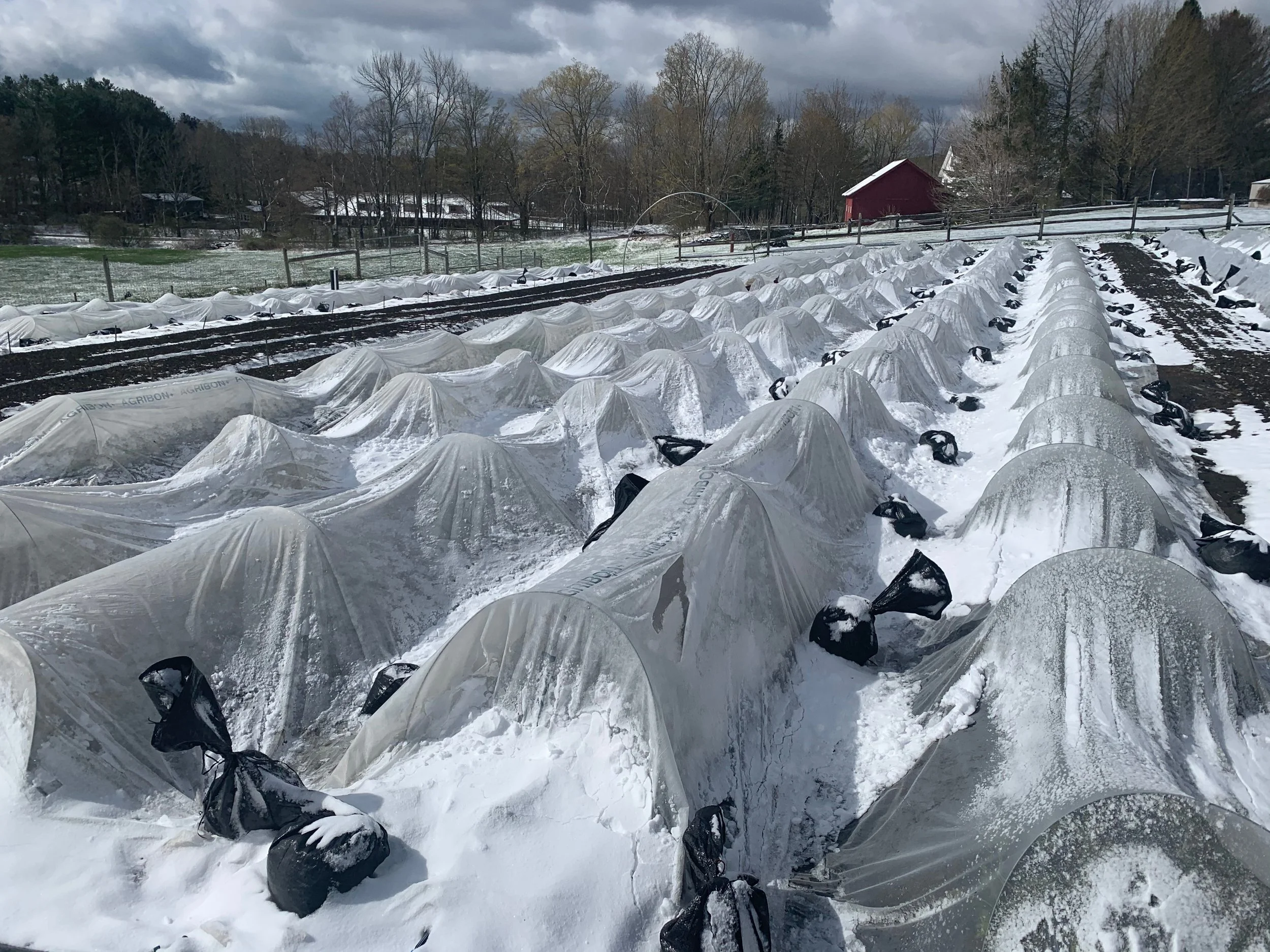
Row cover acts like an insulating blanket protecting crops underneath.
What limits winter growing is light, not cold. Once daylight drops below ten hours a day, plants nearly stop growing. We call this stretch the Persephone Period. The crops don’t die. They wait.
On bright days we uncover the beds to give them every bit of light and air, then cover them again at dusk to hold in the warmth. We choose “cut-and-come-again” varieties, which regrow after cutting, so we can harvest two or three times before replanting. That matters when regrowth takes weeks instead of days.
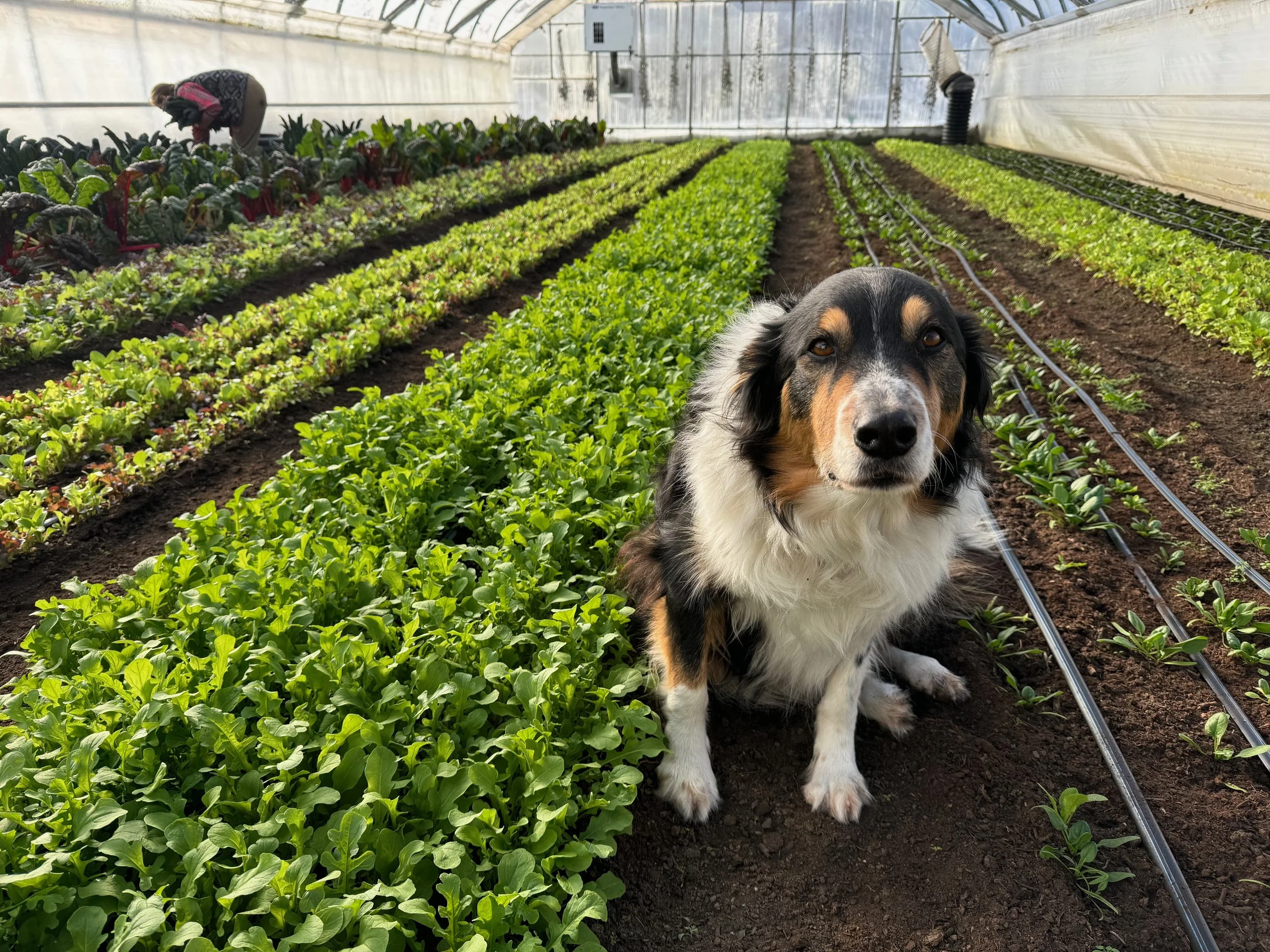
Cut-and-come-again crops let us get multiple cuttings off of one bed.
Alongside the greens, we store winter squash, potatoes, sweet potatoes, onions, beets and radishes from fall.
January strawberries from California may look tempting, but they’ve traveled thousands of miles and taste like it.
Year-round farming isn’t easy. It takes early mornings, cold hands and a stubborn belief that good food should be available in every season.
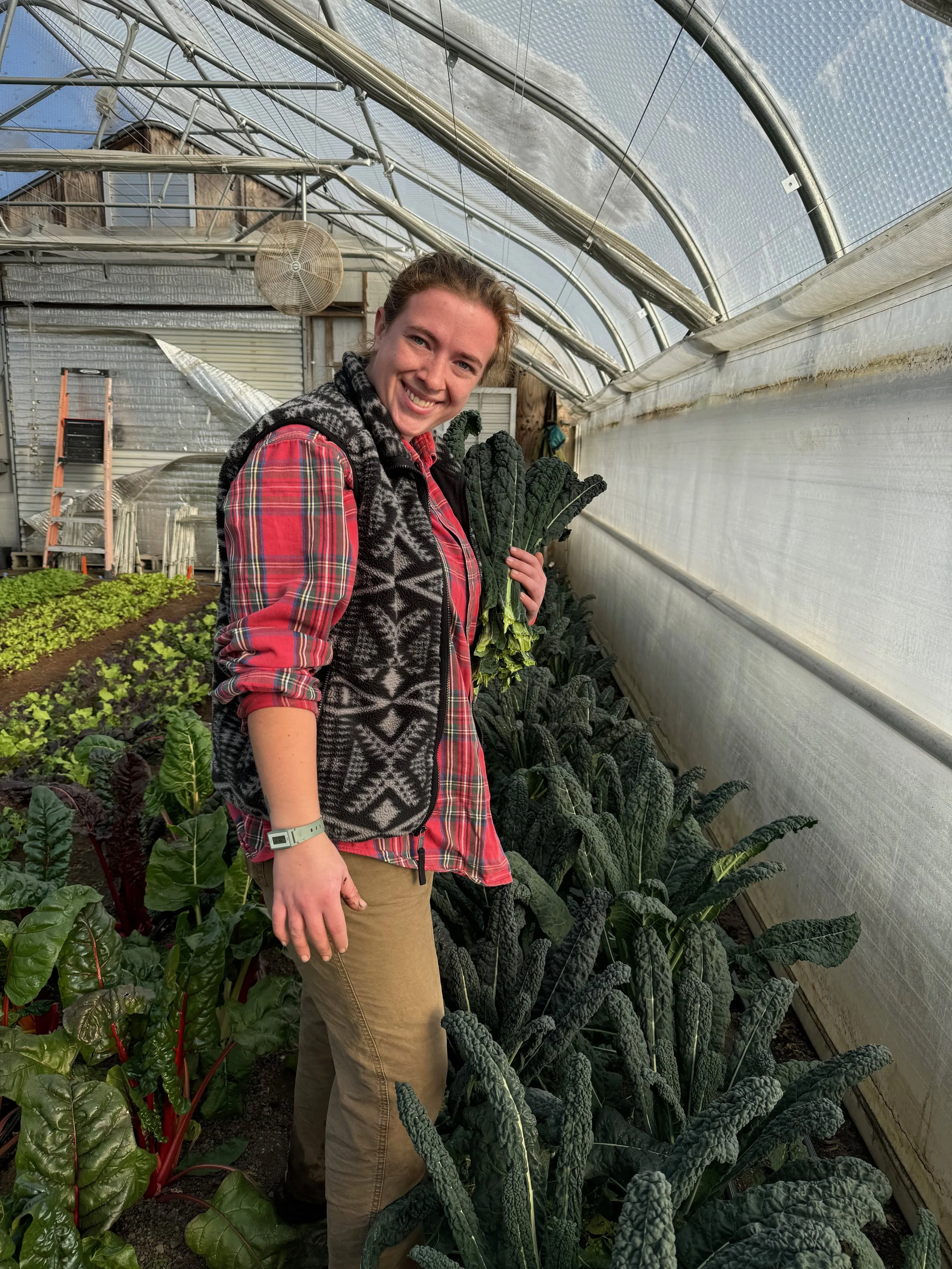
When the sun is shining, the greenhouse is a very pleasant place to work no matter how much snow is outside.
When we can’t grow it ourselves
Even with all our greenhouses and row covers, there are limits to what we can grow once the days shorten and the soil cools. That’s where our friends and neighbors come in.
Through Atlas Farm in Deerfield and MX Morningstar Farm in Hudson, two certified organic farms with more capacity than ours, we keep our bins full with fresh, regional produce all winter. Marty’s Local helps us source from smaller farms that share our values but can’t deliver directly.
You’ll also find apples from Hilltop Orchard in Richmond, and organic citrus from a small family orchard in Georgia, one of the few things that travels far to reach us. We chose it for its quality.
We want Red Shirt Farm Market to be your one-stop shop for real food year-round.
The greenhouse greens are in the farm store all winter. More from the farm is in Field Notes.