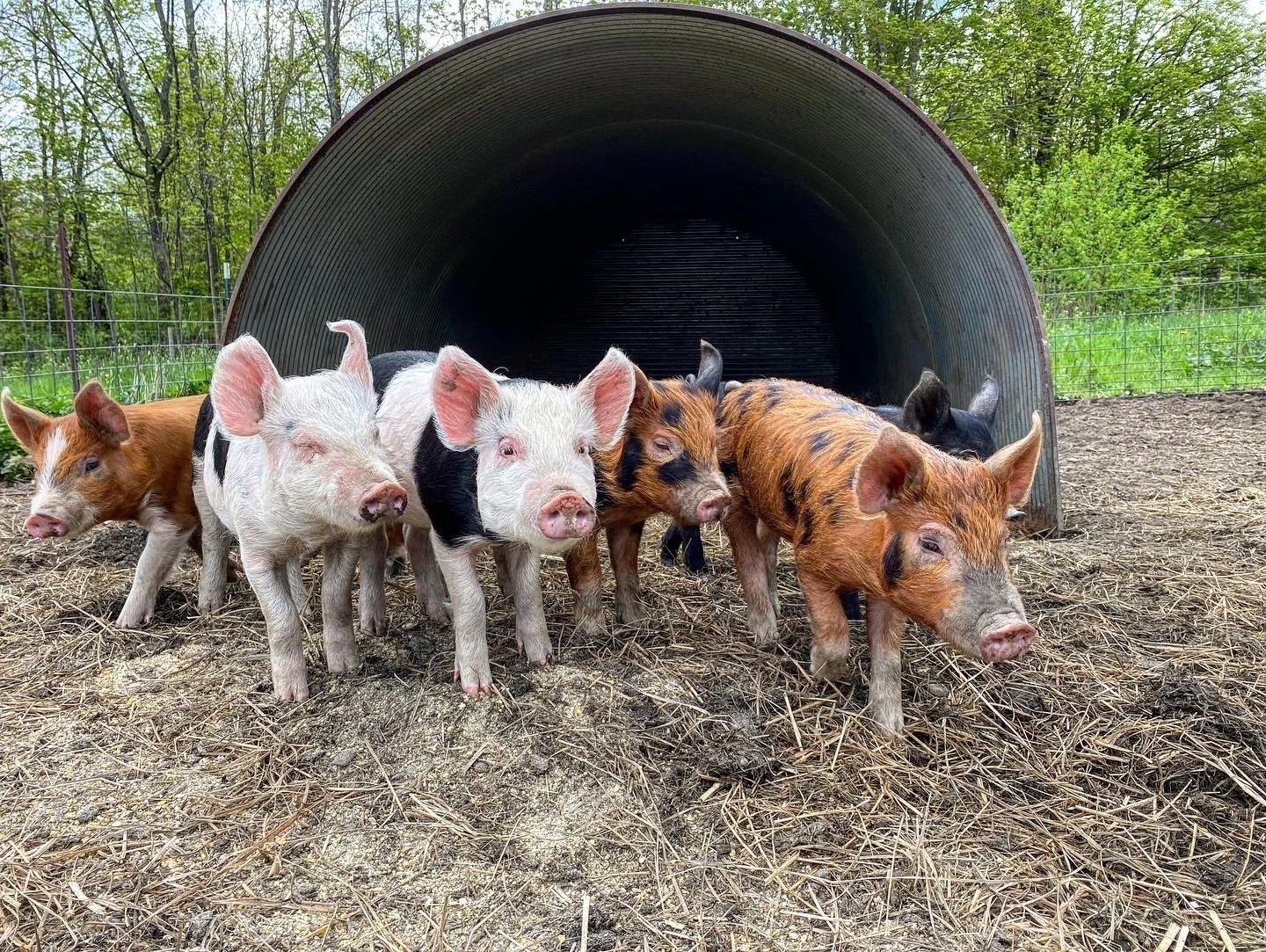
In the next couple of weeks, we’ll make the drive to Worthington and come home with seven piglets in a crate in the bed of the truck. They’re a cross of Duroc, Hampshire and Berkshire, heritage breeds: slower growing, better marbled, built for outdoor life.
Our dogs, Jansen and Ripley, will be waiting when we pull in. They make it to the field before we do. By the time we get the piglets out of the truck and into the pen, dogs and piglets are already touching noses through the fence.
The piglets are shy for a few minutes. Then they’re everywhere.
The wagon wheel
The pig hut sits at the center of the rotation, in the shade of the only tree in an otherwise open field, a massive cottonwood that’s been here longer than we have. With no other shelter from the summer sun, that tree matters. From that hub, we run electric fencing outward in sections, each one a wedge of the larger circle. Two acres total.
The pigs work one wedge at a time. When they’ve rooted and grazed and manured a section, but before they’ve done any real damage, we move them forward to fresh ground. The pasture behind them recovers. Seven is what this land can carry without taking damage.
We’ve had pigs on this ground for fifteen years. A pig’s sense of smell is far more sensitive than ours, and the pen already smelled like pigs, like this particular earth, like fifteen years of the same rotation. The new piglets hit the ground and within minutes they were racing the fence line, rooting at the corners, figuring out where everything is.
What most pigs never get
Most commercial pigs spend their entire lives indoors, standing on slatted concrete above manure pits. They never touch soil.
Pigs have an urge to root, to dig with their snouts in search of grubs and roots. On concrete, they can never do it.
They can’t sweat, so they cool themselves and protect their skin by rolling in mud. Most never see a wallow.
Many have their tails docked so that other pigs, bored and agitated in cramped conditions, can’t bite them off.
Mother pigs are kept in farrowing crates so tight they can’t turn around.
Pigs are intelligent, social animals.
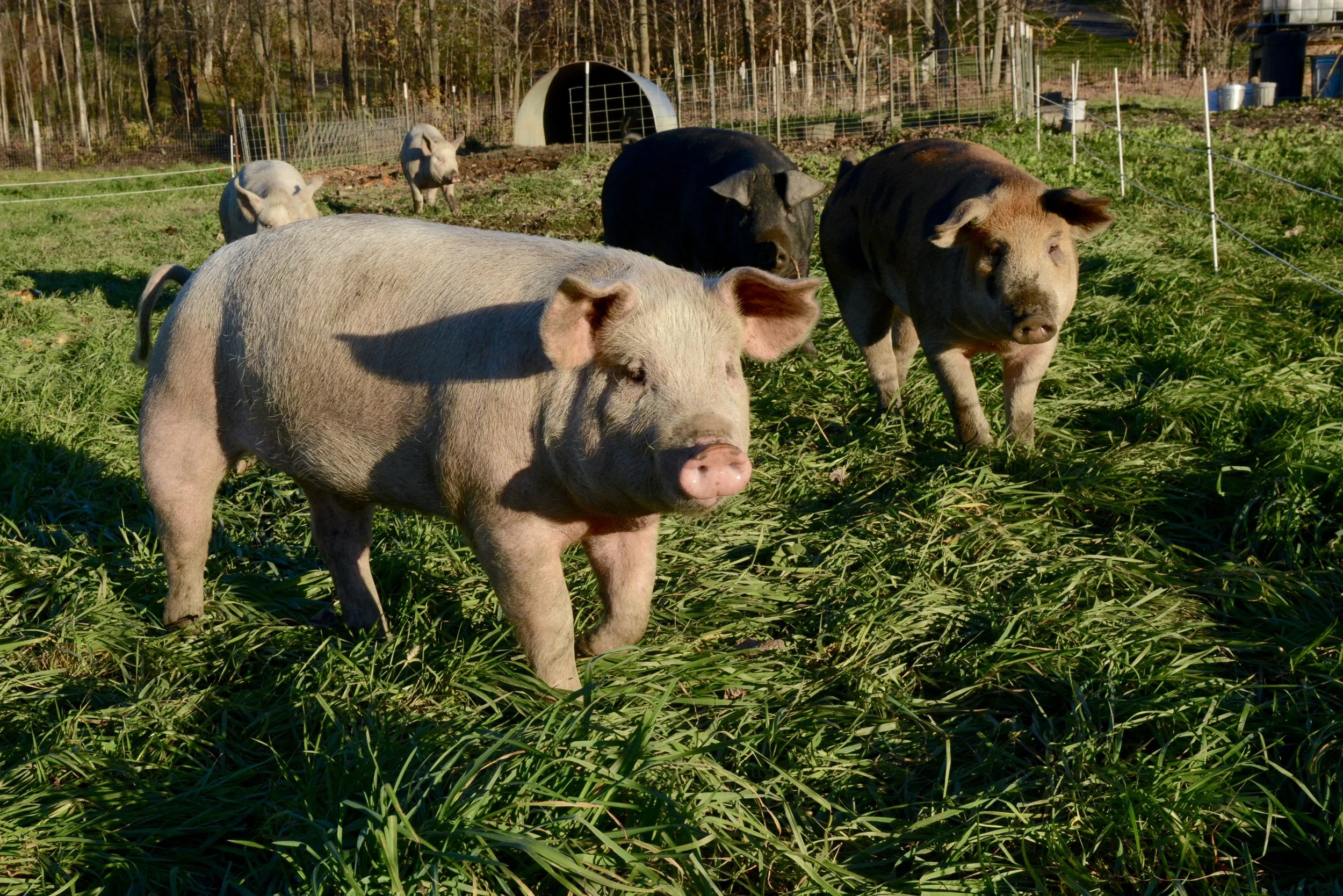
Our pigs root. They wallow. They rest and play on pasture. We see them every day, and they like having their ears scratched and their bellies rubbed.
What you’re actually buying
When you buy a half or whole pig from us, we connect you with our custom butcher to choose your cuts and any smoking you want.
Most people think bacon, chops, ham. A half pig also includes shoulder, belly, ribs, loin, hocks, organs, bones and lard. The whole animal is there if you want it.
Buying this way shortens the chain between you and the farm. You know where this animal lived, what it ate and how it was raised.
We still have pigs available for this year. If you’re interested in a half or whole, reach out soon.
Our pork is in the farm store. More from the farm is in Field Notes.