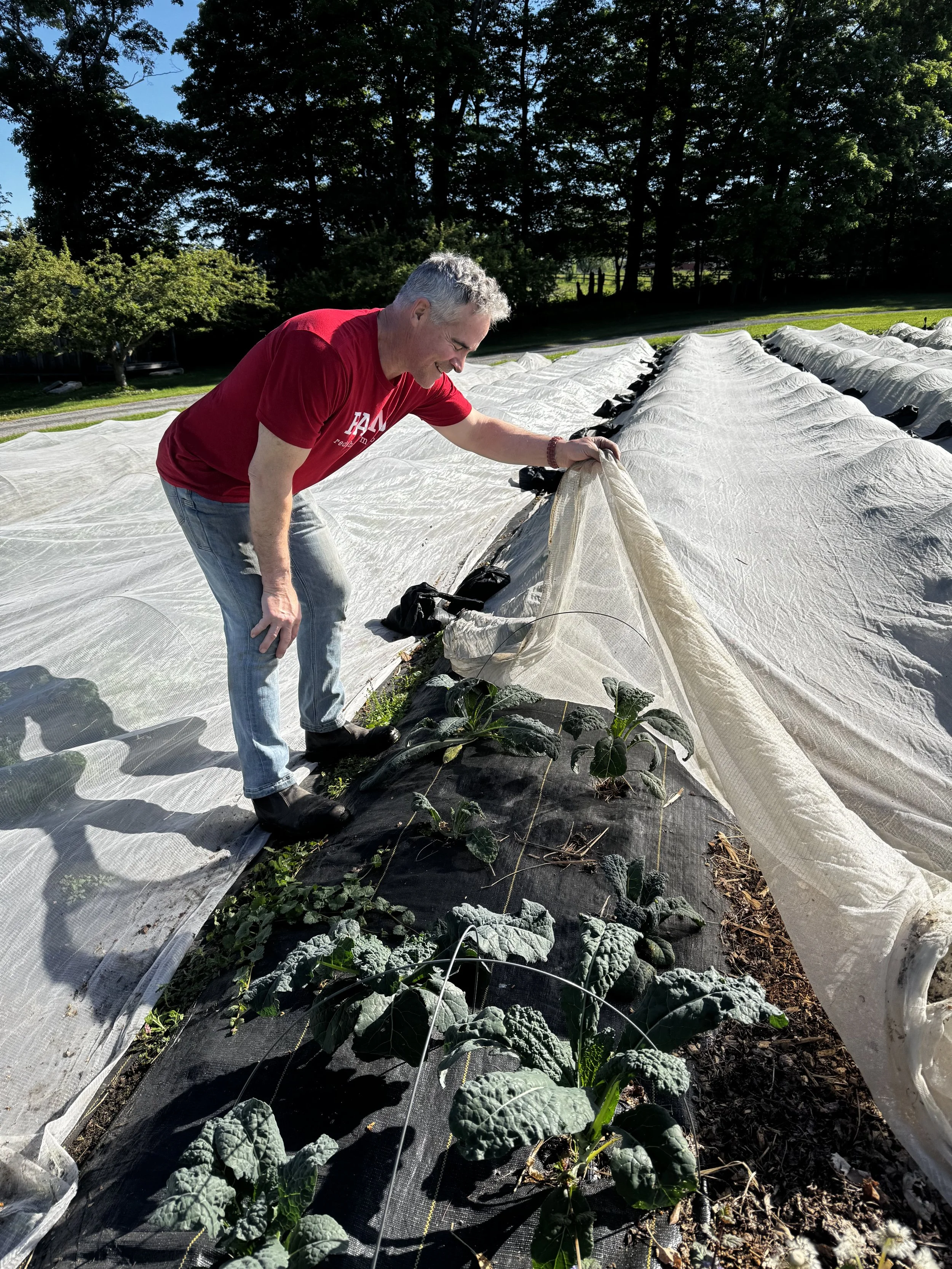
I pulled the netting back off the kale this morning and stood there a while.
Lifted a leaf. Palm-sized, which is about right for kale in the first week of June. I knew that going in. I still gave the bed the look you give a kid who’s taking his time. All these years and I still want it bigger when I lift the netting.
The netting keeps the flea beetles and cabbage moths off without a spray. It works. It also means I only see the kale when I lift it.
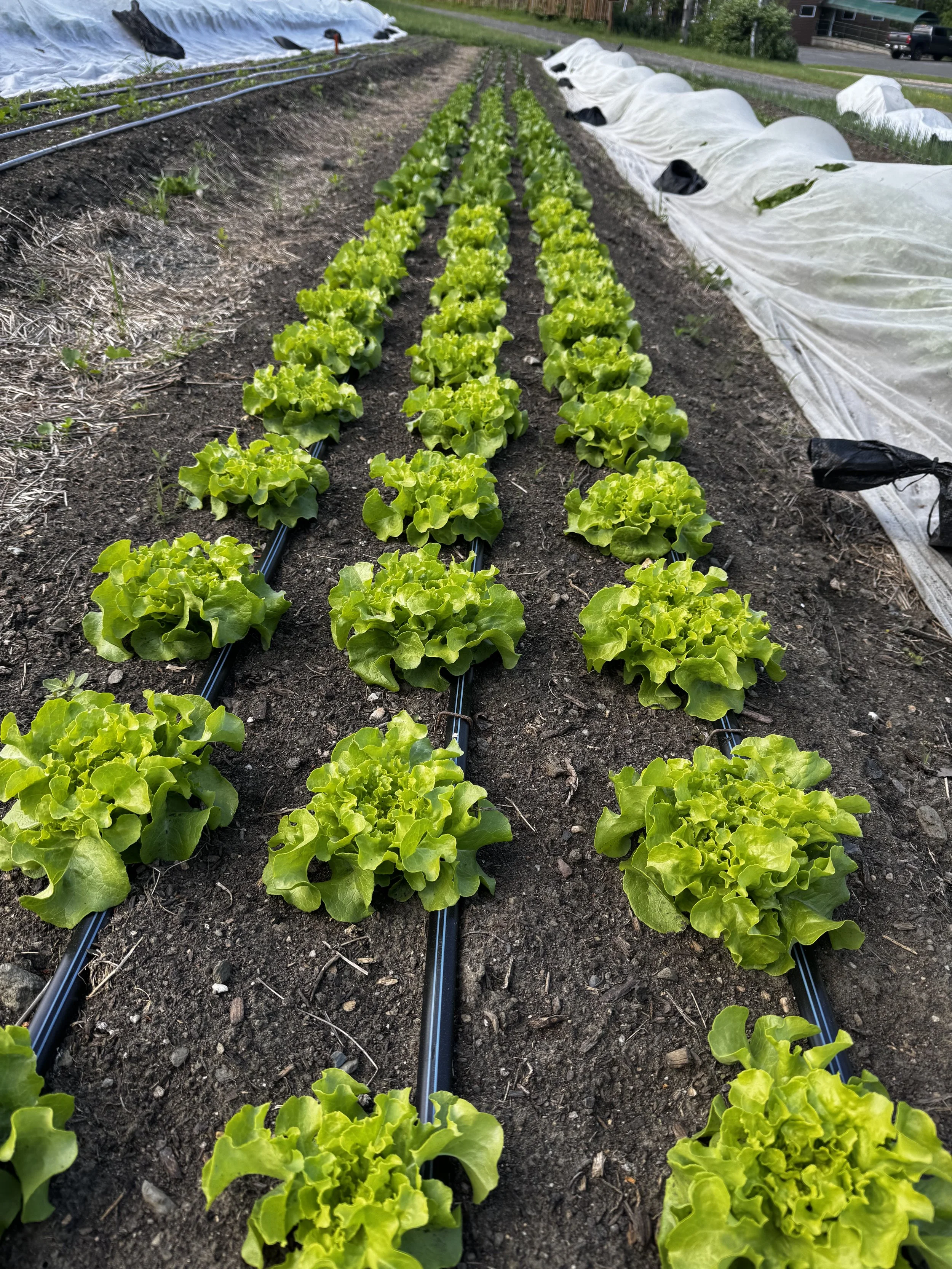
Step back from the bed and the whole place is green. Everything is growing and the valley is lit up with it. It looks like peak summer, but the crops that make it, full-size heirloom tomatoes, peppers, beans and corn, are still weeks off.
Farmers call this the hungry gap. The winter storage is gone, the squash and potatoes and onions that carried us through. The summer crops aren’t ready. They’re in the ground, growing hard, weeks from your plate.
A lot is almost there: arugula, head lettuce, carrots and peas.
The head start happens where you can’t see it. That kale went into trays in the greenhouse in late February, weeks before the bed it would live in had thawed. We set the transplants out at the end of March, under row cover against the late frosts. We did everything you can do to get ahead of the season.
Put a transplant into cold ground and it just sits. The roots won’t run until the soil warms, and soil warms slower than air. It lags behind the first warm afternoons that fool all of us into planting. Nights this week have been in the low forties.
Then there’s the clock nobody counts. Take that kale. Ten days or so just to germinate in the tray. Then sixty days, give or take, to grow a leaf the size of your hand. Then another two to three weeks to come fully into itself. The bunch of kale you’d actually want to cook is the better part of three months of waiting. And kale is one of the quicker ones.
Unless you garden, you’ve probably never had reason to think about any of that. The grocery store is built to hide the clock: everything, always, no season, no wait. A tomato in February costs about what it costs in August and tells you nothing about either.
Every bunch of kale is a couple of months somebody stood around waiting for. June is the month you can see the waiting.
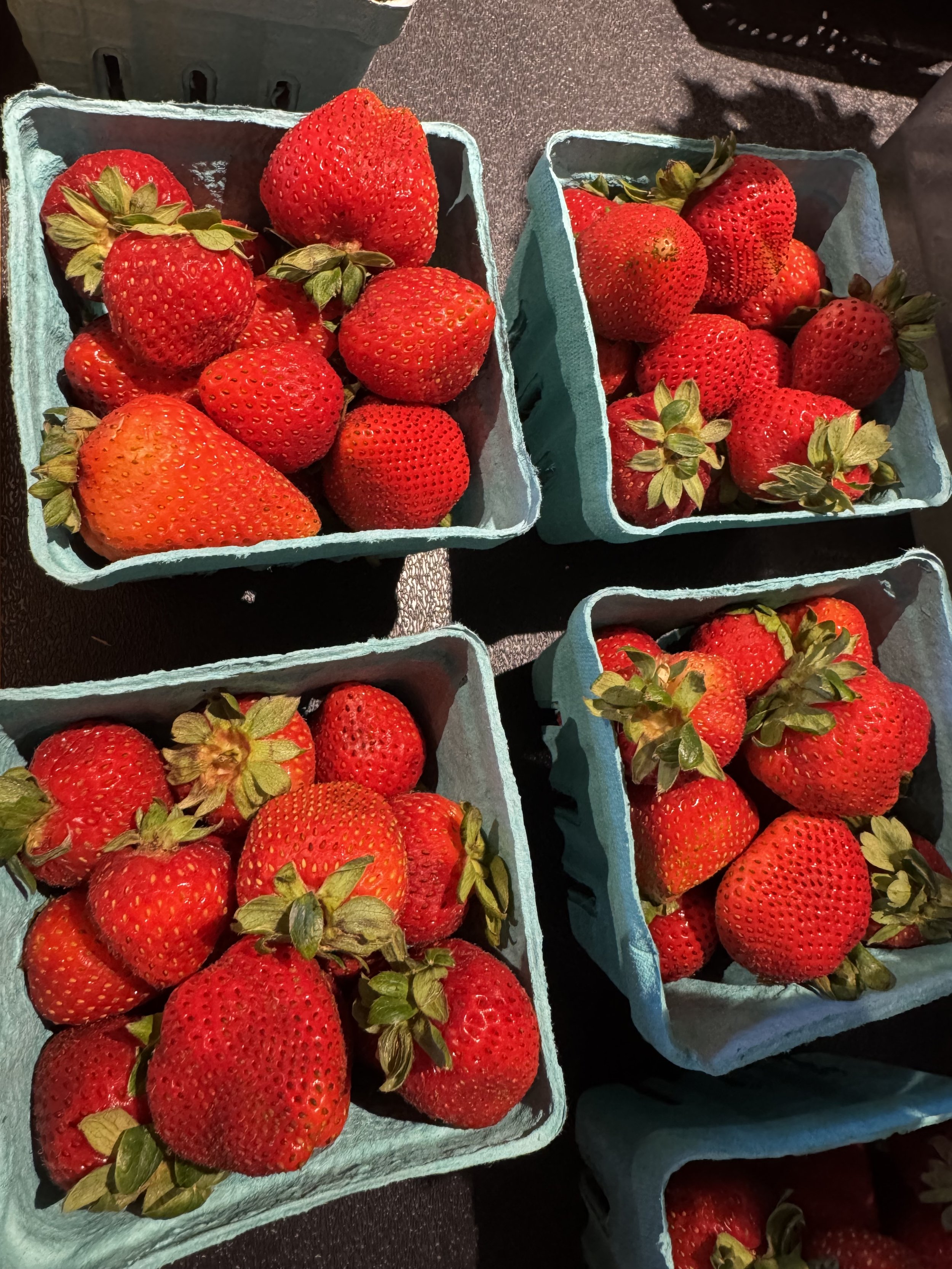
What is ready: spinach, lettuce mix, arugula, Asian greens and chives, plus the first young chard and kale while they last. Rhubarb, a perennial, has been up for weeks, and we have organic strawberries to go with it, the pairing rhubarb has been waiting for all spring. It’s time for strawberry rhubarb pie.
What we pick in the gap is in the farm store as it comes in. More from the farm is in Field Notes.