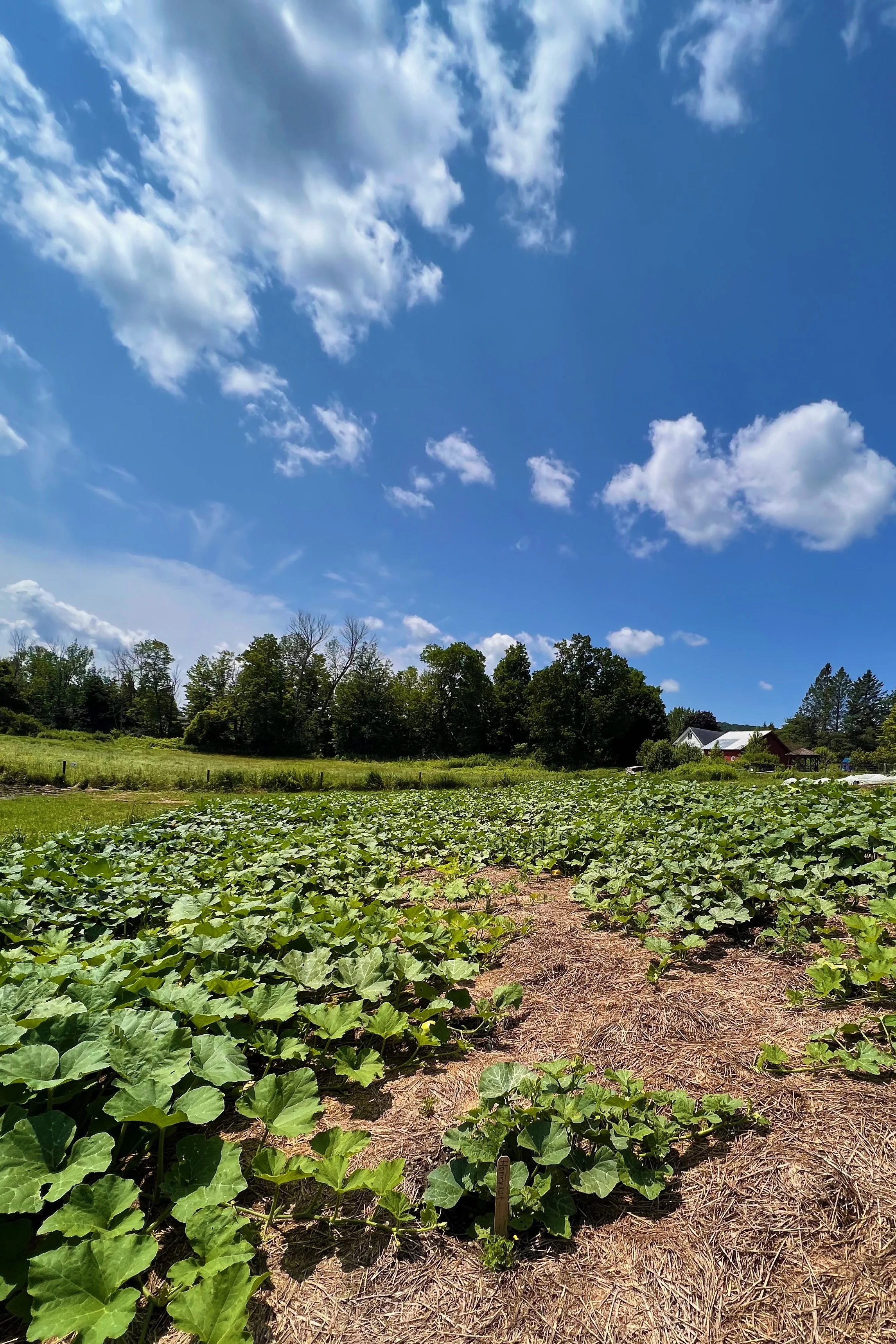
The spaghetti squash didn’t make it. It rotted on the vine, and the stems had gone to mush. The rest of the squash in that bed came in smaller and more sparse, and what we left in the field was either unripe or damaged. A field 100 yards away grew great squash last year, so I know what this plant can do on the farm. In this bed, this year, it didn’t, and I couldn’t tell you why.
I was still turning that over when Sarah and I went to our birthing class, where we practiced swaddling and diapering and went through the checklist for a fussy baby. Wet, too hot, too cold, hungry, gassy, or just wanting attention. A baby can’t tell you which one. You go down the list and try something and watch what happens.
It was the same list I’d been running on the squash bed. Too wet? The season was wet, though not by much, and there was never any standing water or mud. Hungry? The bed grew potatoes last year, which is a normal thing to follow with squash and we had composted and fertilized. Burdock likes one corner of it, and its root goes deep to mine nutrients, so I wondered whether the ground was short of minerals. I could have run a soil test, but we pay more attention to how the soil lives than to what a lab can measure. Or it needed attention. The old saying is that the best fertilizer is the farmer’s footprints. We had walked that field many times over the season.
A class can teach you the checklist. It can’t tell you which item it is on any given night. There is no manual for raising a child and no manual for farming, and what you have in place of one is experience, and watching, and a kind of sense that builds up over time. I have heard that a man’s brain changes when he becomes a father: the parts that read what other people are feeling grow, and other parts shrink. I’m hoping the first part works on fields, and that the part that shrinks is nothing I need.
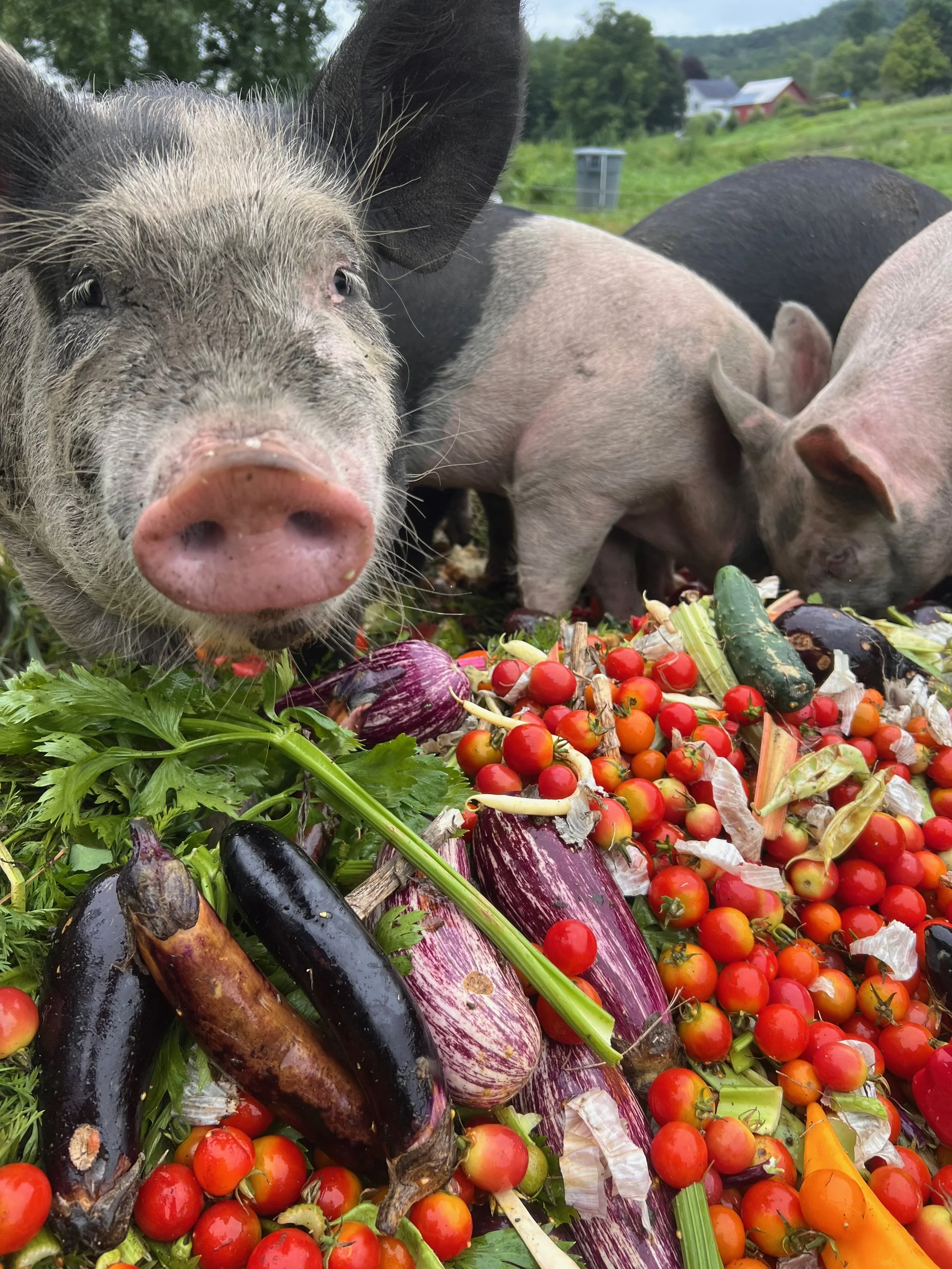
Pigs doing what pigs do. In the squash bed, they’ll clear the weeds and old plants and work them into the soil.
Then there was the question of what to do with the bed. We could have left it fallow, which means resting it with nothing planted. We passed, because the weeds would have kept growing and we wanted to knock them back and put something into the soil. We could have spread compost, which would have added fertility and left everything else: the debris, the weeds, and a bed we’d have been managing all spring. A cover crop was the right idea in September, but it’s too late for one now.
So we put in six pigs. They have spent the week doing what pigs do. They eat the squash we left, which feeds them, and the seeds have a reputation as a natural dewormer. They root up the weeds and the old plants and the debris, and their hooves and snouts work all of it down into the soil, along with their manure and urine. Doing the same with equipment means driving over the bed, and the weight of the machine packs the soil down. The pigs do the work, and the ground stays loose.
We’ve watched this ground answer pigs before. When we came here in 2000, this field was weeds and brush, and the farmer next door wouldn’t even cut it for mulch hay. We ran pigs and chickens and turkeys on it for a couple of years, and the weeds gave way to grasses, clover, and other plants that belonged there.
The pigs will be in the bed for a couple of weeks. After they’ve worked it, we’ll spread our own compost over the surface to feed the soil and tarp it, which keeps weeds from coming up before we’re ready to plant. Next year this bed will be in mixed vegetables.
I don’t know that the pigs are the right answer. I know why we chose them. They feed the soil, they clear the bed, and they spend their days doing what a pig most wants to do, which is why they do it so well.
A child’s needs are simple: nourishment, a safe place, room to explore, and someone paying attention. Whoever arrives in January will come with a will and talents and a nature of their own, and nothing in the class gives me control over any of it. The same goes for a field. We can only feed it, protect it, give it room to do its work, and keep looking. In May I’ll be out at this bed, looking.